
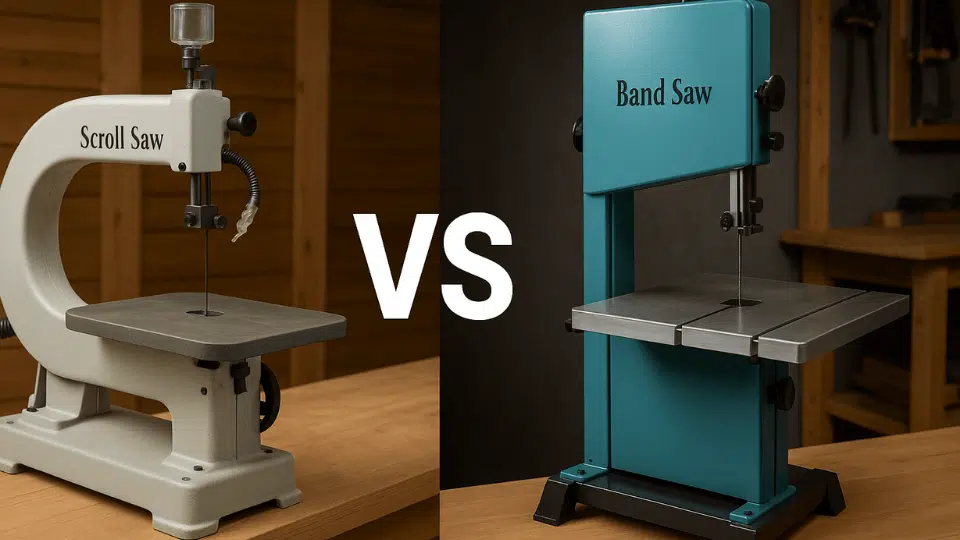
Scroll saws and band saws look similar, but they hide very different secrets.
These tools may look alike, but one masters impossibly tight curves while the other powers through thick material, and choosing the wrong one could ruin your project.
I’m going to reveal what sets these saws apart, which cuts each was designed for, why pros choose one over the other, and the hidden strengths most beginners miss.
Let’s unlock these secrets and find your perfect saw.
What Is a Scroll Saw?

The scroll saw stands as the precision artist of cutting tools, designed specifically for intricate work that demands control over raw power.
1. How Does a Scroll Saw Works
A scroll saw uses a reciprocating blade that moves up and down, similar to a sewing machine needle. The fine blade stays stationary while you guide the workpiece, allowing you to control cuts.
Its vertical motion is ideal for tight curves, sharp corners, and interior cuts without entry points.
Woodworkers use scroll saws for intricate projects such as intarsia, puzzles, fretwork, and ornamental designs that require precision.
It handles materials such as thin hardwoods, softwoods, plastics, and non-ferrous metals with the proper blades. Compared to band saws, the scroll saw’s motion provides unmatched accuracy for detailed pattern work.
2. Advantages of Using a Scroll Saw
The scroll saw offers unique advantages that no other tool can match. Here’s why it belongs in your workshop.
- Extreme precision and control for intricate designs and tight curves that other saws cannot achieve.
- Smooth and intricate cuts with minimal sanding or finishing required after completing your pattern.
- Minimal material waste, as the thin blade removes less material per cut.
3. Disadvantages of Using a Scroll Saw
The scroll saw has serious limitations that could make it the wrong choice for your project; here’s what holds this tool back.
- Limited cutting depth and power restrict you to thinner materials, typically under two inches.
- Slower for thick or large materials makes it impractical for basic stock preparation or heavy-duty cutting tasks.
What Is a Band Saw?
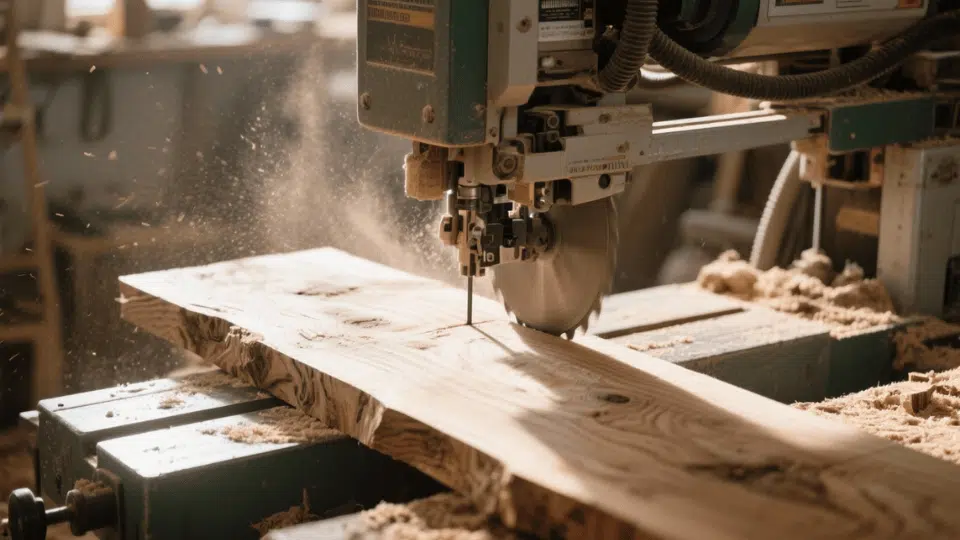
The band saw dominates as the powerhouse workhorse, built for cutting capacity and adaptability across diverse woodworking tasks.
1. How Does a Band Saw Works
A band saw uses a continuous-loop blade that rotates around wheels, providing constant cutting, unlike the reciprocating action of a scroll saw.
This design offers better power for cutting thick hardwoods, resawing, and production tasks. Band saws are available as benchtop models for hobbyists or floor models for professionals who need greater throat depth.
The downward cut pushes material against the table, improving stability. Compared to scroll saws, band saws’ continuous blades offer speed and power for tough jobs while maintaining reasonable accuracy for curved cuts.
2. Advantages of Using a Band Saw
The band saw brings raw power and diversity, changing what’s possible in your workshop. Here’s why this tool dominates heavy-duty work.
- Greater power and cutting capacity handle demanding tasks that would overwhelm a scroll saw.
- Can handle thicker materials and resawing operations, cutting stock up to 12 inches or more, depending on the model.
- Versatile for straight and curved cuts, making it adaptable for various woodworking projects from rip cuts to gentle curves.
3. Disadvantages of Using a Band Saw
Even the mighty band saw has its limits, here are the challenges and drawbacks that come with all that power.
- Less precision for intricate patterns compared to scroll saws, with a wider blade kerf limiting tight detail work.
- More expensive and requires more space, particularly floor-standing models that demand dedicated workshop real estate.
Components of Scroll Saw vs Band Saw
Understanding the distinctions requires examining how each tool performs across critical woodworking factors that impact your project outcomes.
| FEATURE | SCROLL SAW | BAND SAW |
|---|---|---|
| Blade Motion | Reciprocating up-and-down action; workpiece guided across the blade | Continuous rotating loop with constant downward pressure |
| Cutting Capacity | Limited to 2 inches thick; low-power motor | Cuts 6-12+ inches thick; high-power motor |
| Precision | Exceptional accuracy for intricate patterns and tight curves | Moderate precision; suitable for gentle curves and straight cuts |
| Maintenance | Quick blade changes; minimal setup; easier learning curve | Complex tensioning and tracking; steeper learning curve |
Real World Applications
The debate becomes crystal clear when you examine how each tool performs in actual workshop scenarios and specific project types.
Scroll Saw for Crafts and Fine Woodwork

Scroll saws excel in soft crafting applications where precision matters most.
Puzzle makers rely on them for interlocking pieces with tight tolerances, while ornament crafters produce intricate holiday decorations and personalized name plaques.
Fretwork artists create Victorian-style brackets and elaborate wooden lace patterns impossible with other tools.
The scroll saw’s ability to make interior cuts without edge entry points makes it essential for negative space designs in signs and artistic panels.
Band Saw for Heavy-Duty and Professional Use
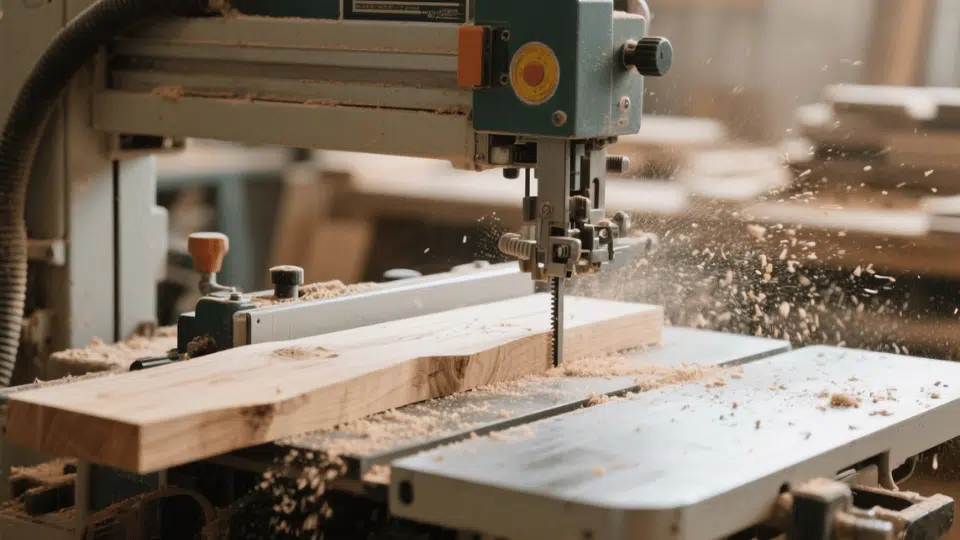
Band saws dominate professional workshops requiring production efficiency and cutting capacity.
Furniture makers depend on them for resawing thick lumber into bookmatched panels, cutting curved components, and breaking down rough stock.
Luthiers rough-cut guitar bodies while knifemakers slice through dense hardwoods for handle scales and metal stock for blade blanks.
The continuous cutting action maintains a consistent production speed that scroll saws cannot match for volume work.
Which One Should You Choose?
The scroll saw vs band saw decision ultimately depends on your specific woodworking needs, skill level, budget, and the projects you’ll tackle most frequently in your workshop.
- For Beginners: Scroll saws offer safer operation, better visibility, and greater control, making them ideal for learning precision cutting techniques without the intimidation factor of larger machinery. The lower cost and smaller footprint also make entry into woodworking easier.
- For Professionals or Heavy Projects: Band saws deliver the speed, cutting thickness, and production volume that professional workflows demand, paying for themselves through efficiency when processing lumber and handling multiple daily projects.
- For Hobbyists and DIY Enthusiasts: The scroll saw vs band saw decision depends on your projects: choose a scroll saw for intricate decorative work, or a band saw for adaptability, furniture building, and general cuts if space allows.
Conclusion
Now you know the truth: scroll saws and band saws aren’t competitors, they’re specialists.
I’ve revealed how each saw master different tasks; now it’s your turn to match the tool to your project and watch your woodworking skills reach new levels.
Some workshops need both. Others thrive with just one. The secret is knowing what you’ll build most often and choosing the saw that makes those projects possible.
Pick your saw, start your project, and let your work speak for itself.