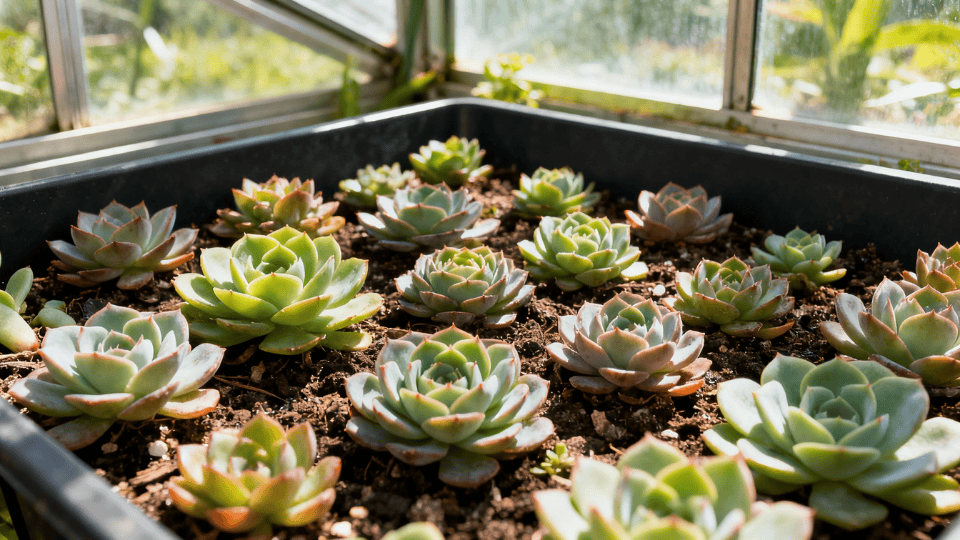
Succulents have captured the hearts of plant lovers everywhere with their unique shapes, vibrant colors, and low-maintenance nature.
Learning how to propagate succulents opens up exciting possibilities to expand any collection without spending money on new plants.
Propagation is simply the process of creating new plants from existing ones, and it’s one of the most rewarding aspects of succulent care.
Here, learn everything needed to successfully multiply these plants with proven techniques for growing succulents from leaves, stems, and offsets.
Overview of Common Succulent Varieties and Their Classification
Understanding the botanical relationships between different succulent varieties helps gardeners select appropriate propagation methods and care techniques for each plant family.
| Common Name | Family | Genus | Common Species |
|---|---|---|---|
| Hen and Chicks | Crassulaceae | Echeveria | E. elegans, E. agavoides |
| Burro’s Tail, Jelly Bean Plant | Crassulaceae | Sedum | S. morganianum, S. rubrotinctum |
| Jade Plant, String of Buttons | Crassulaceae | Crassula | C. ovata, C. perforata |
| Flaming Katy, Panda Plant | Crassulaceae | Kalanchoe | K. blossfeldiana, K. tomentosa |
| Houseleek, Cobweb Houseleek | Crassulaceae | Sempervivum | S. tectorum, S. arachnoideum |
| Aloe Vera, Lace Aloe | Asphodelaceae | Aloe | A. vera, A. aristata |
| Zebra Plant, Cooper’s Haworthia | Asphodelaceae | Haworthia | H. fasciata, H. cooperi |
| Ox Tongue, Warty Aloe | Asphodelaceae | Gasteria | G. bicolor, G. verrucosa |
| Living Stones | Aizoaceae | Lithops | L. aucampiae, L. karasmontana |
| Ladyfinger Cactus | Cactaceae | Mammillaria | M. elongata, M. gracilis |
| Bunny Ear Cactus, Prickly Pear | Cactaceae | Opuntia | O. microdasys, O. ficus-indica |
| String of Pearls, String of Bananas | Apocynaceae | Senecio | S. rowleyanus, S. radicans |
Factors That Influence Succulent Longevity
Multiple environmental and care factors directly impact plant health and lifespan, determining whether these strong specimens grow for years or decades.
Under optimal conditions, many succulent species can survive for extended periods, with some varieties, like jade plants, living for over 100 years.
- Adequate sunlight (4-6 hours daily) prevents etiolation and maintains compact growth, while insufficient light weakens plants and shortens their lifespans.
- Well-draining mixes prevent root rot, the leading cause of premature succulent death, ensuring roots remain healthy throughout the plant’s life.
- The soak-and-dry method prevents overwatering, the leading cause of succulent death, supporting decades of growth.
- Regular inspection and treatment for mealybugs, scale, and aphids protects plant vitality and prevents infestations that compromise longevity.
- Multiplication techniques create genetic continuity, allowing gardeners to preserve favorite varieties indefinitely through successive generations of offspring.
When and Why to Propagate Succulents?
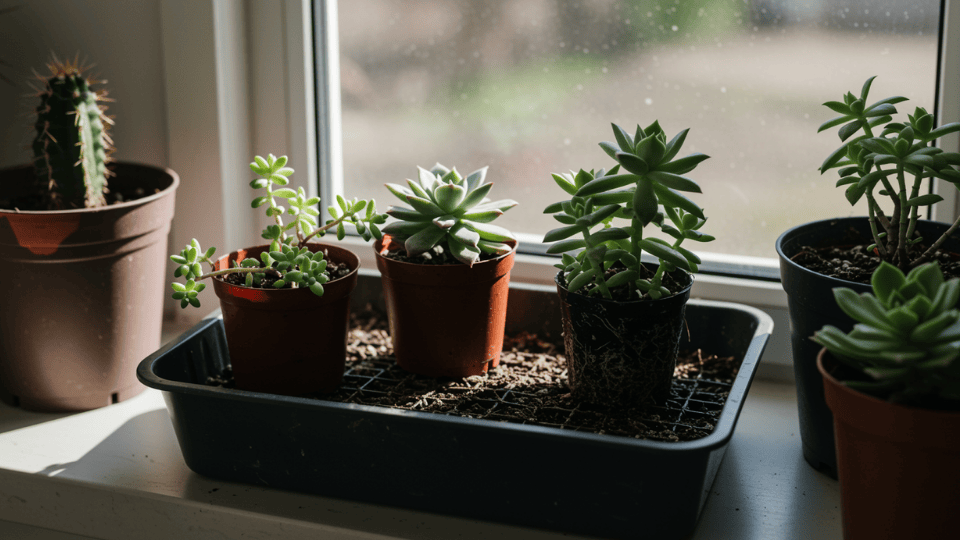
Timing is crucial for successful succulent propagation. Understanding when these plants are most receptive to reproduction and recognizing the benefits of multiplication helps gardeners achieve better results.
Best Seasons for Propagation
Spring and summer provide optimal conditions for those learning how to propagate succulents successfully.
During these warmer months, succulents experience active growth phases, directing energy toward root development and new leaf formation.
Higher temperatures and increased daylight hours accelerate the healing process for cuttings and encourage faster establishment.
Understanding how to grow succulents during their natural growing season significantly improves propagation success rates.
Reasons to Propagate
- Expanding Your Collection: Multiplication allows gardeners to create dozens of new plants from a single parent plant without purchasing additional specimens, thereby building a diverse collection economically.
- Saving Leggy or Damaged Plants: Etiolated succulents stretching toward light can be beheaded and propagated, producing compact, healthy growth while salvaging the original plant.
- Producing Fresh, Compact Growth: Propagation rejuvenates older plants by creating vigorous offspring with tighter rosettes and more vibrant colors than their aging parents.
- Sharing or Gifting Succulents: Propagated plants make thoughtful, personalized gifts for fellow plant enthusiasts while spreading the joy of succulent gardening to friends and family.
Tools and Materials Needed to Propagate Succulents
To propagate succulents successfully, you only need a small collection of basic tools and materials that make the process cleaner, simpler, and more effective.
These essentials help you take healthy cuttings, prepare the soil correctly, and create the ideal environment for new roots to grow.
| Item | Purpose |
|---|---|
| Scissors or pruning shears | For cutting stems and leaves |
| Small pots or trays | For placing cuttings |
| Succulent or cactus soil | For fast drainage |
| Perlite or pumice | To improve soil aeration |
| Spray bottle | Light watering of new cuttings |
| Rooting hormone (optional) | Helps some cuttings root faster |
| Paper towels | For drying and callousing cuttings |
How to Propagate Succulents Correctly?
Mastering various propagation techniques ensures success with different succulent varieties, allowing gardeners to multiply their collections using methods suited to each plant’s natural growth patterns.
1. Propagating Succulents from Leaf Cuttings
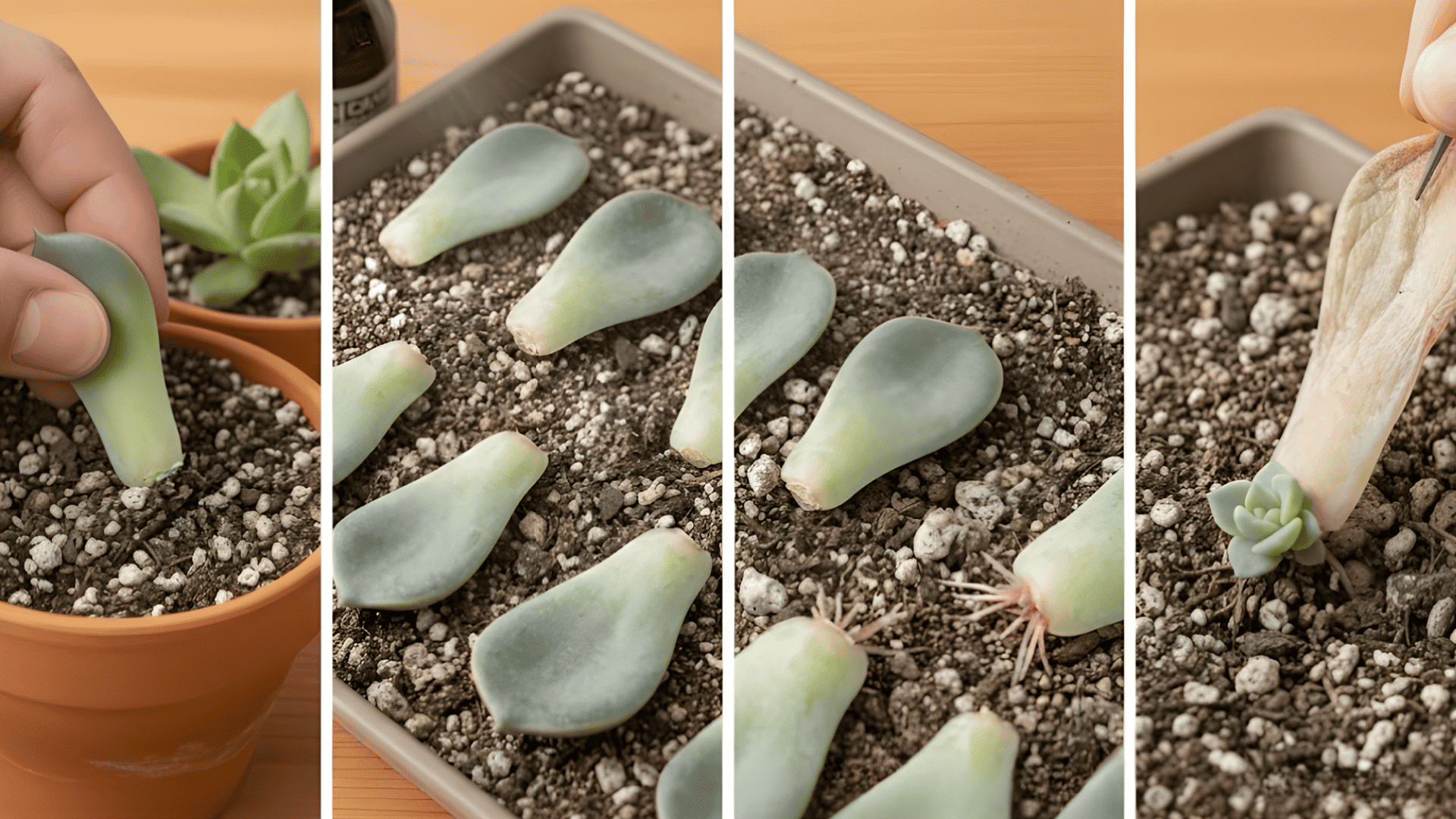
Learning how to propagate succulents from leaves works exceptionally well with Echeveria, Sedum, and Crassula varieties.
Select plump, healthy leaves and gently twist them from the stem, ensuring the entire base detaches cleanly. Allow leaves to callous for 2-3 days on dry soil before misting.
Tiny roots appear within 1-2 weeks, followed by miniature plantlets emerging after 3-4 weeks of patient care.
2. Propagating Succulents from Stem Cuttings
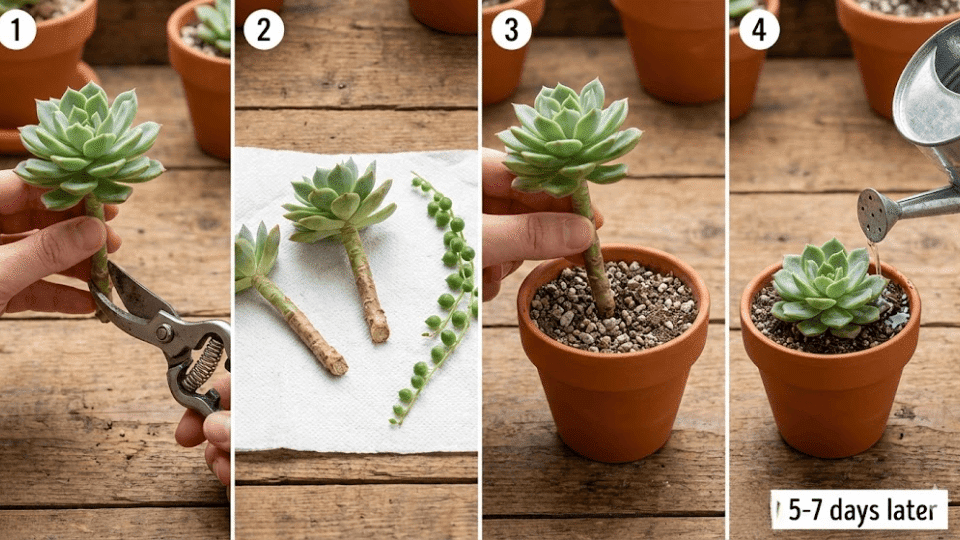
Stem propagation rescues leggy plants and works perfectly for trailing varieties like String of Pearls.
Cut 3-4 inches below the rosette using sterilized scissors, then let the cuttings dry for 3-5 days until the wound callouses completely. Plant stems in well-draining soil, burying them one inch deep.
Understanding how to grow succulents from cuttings prevents rot. Wait 5-7 days before the first light watering to encourage root development.
3. Propagating Using Offsets or Pups
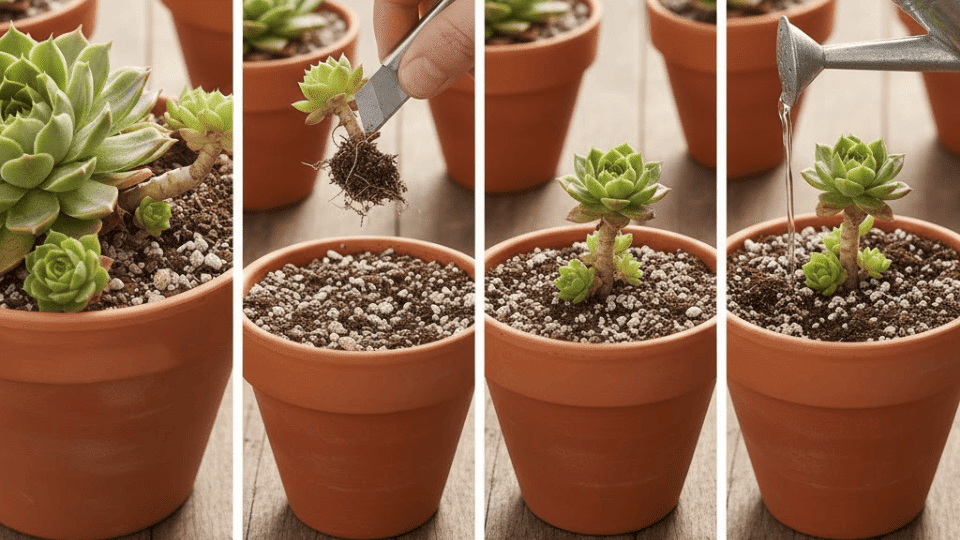
Aloe, Haworthia, and Sempervivum naturally produce baby plants, called offsets, around their bases. Gently separate pups with established roots using a clean knife, ensuring each offset maintains its own root system.
Plant immediately in succulent soil mix and place in bright, indirect light.
Water sparingly until roots establish over 2-3 weeks, creating independent plants that bloom for years when asking how long do succulents live.
4. Other Optional Methods (Water or Air Propagation)
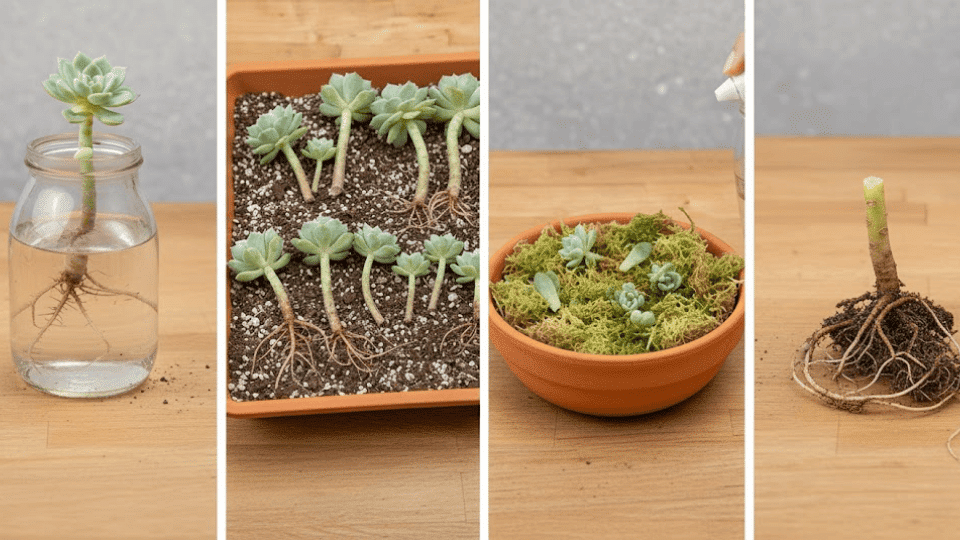
Water propagation suspends cuttings above water, encouraging rapid root growth for certain Crassula and Echeveria species, though success varies significantly.
This method risks rot if stems come into direct contact with water and requires eventual soil transition. Air-dry propagation works universally by allowing cuttings to develop roots before planting.
Moss propagation provides moisture control for varieties but demands careful monitoring to prevent fungal issues in humid environments.
Aftercare for Newly Propagated Succulents
Young succulents need different care than established plants, focusing on light, watering, and conditions that promote healthy root growth during their early, vulnerable stages.
- Indirect Light for Early Growth: Young propagations need bright, indirect light to prevent leaf burn during their first 2-4 weeks. Gradually introduce cuttings to direct sunlight over several days, increasing exposure by one hour daily until they tolerate full sun conditions.
- Proper Watering Techniques: Understanding how to grow succulents from propagation requires restraint with water. Mist-leaf propagates every 2-3 days until roots develop, then moves to the soak-and-dry method. Overwatering causes mushy leaves, while underwatering creates wrinkled foliage.
- Soil Mix and Container Selection: Well-draining soil combining potting mix, perlite, and coarse sand prevents rot. Drainage holes are essential for moisture escape. Repot propagations into larger containers once roots fill the current pot or after 6-8 weeks.
- Supporting Healthy Development: Optional diluted fertilizer applied monthly during the growing season encourages vigor. Inspect regularly for pests or root rot. Treat propagations as mature succulents after 2-3 months to ensure decades of growth, given how long succulents live with proper care.
Conclusion
Learning how to propagate succulents unlocks the ability to grow your collection sustainably and economically.
By mastering techniques such as leaf cuttings, stem cuttings, and offsets, even beginner gardeners can successfully multiply their plants.
Providing the right light, watering sparingly, and using well-draining soil during propagation ensures healthy roots and vigorous growth.
These hardy plants, when cared for properly, can thrive for decades, offering lasting beauty and satisfaction.
Propagation not only preserves your favorite varieties but also spreads the joy of succulent gardening to others, making it a rewarding and evergreen hobby.