Ever walked into a room and felt your eyes drift upward, drawn by something you couldn’t quite name?
That soaring space above you, curved, arched, or dramatically angled, holds a secret architects have known for centuries.
These dramatic ceilings have changed spaces from cathedrals to homes, but what makes them special? The differences and similarities, what sets these designs apart, and how they help you decide which one fits your vision.
What Are Vaulted Ceilings?
So what is a vaulted ceiling? It’s any ceiling that angles upward above the standard flat plane, creating extra vertical space and visual interest.
The term “vault” comes from old architecture; think arched stone ceilings in medieval churches and Roman halls. You’ll spot them in living rooms, great rooms, and entryways where drama counts.
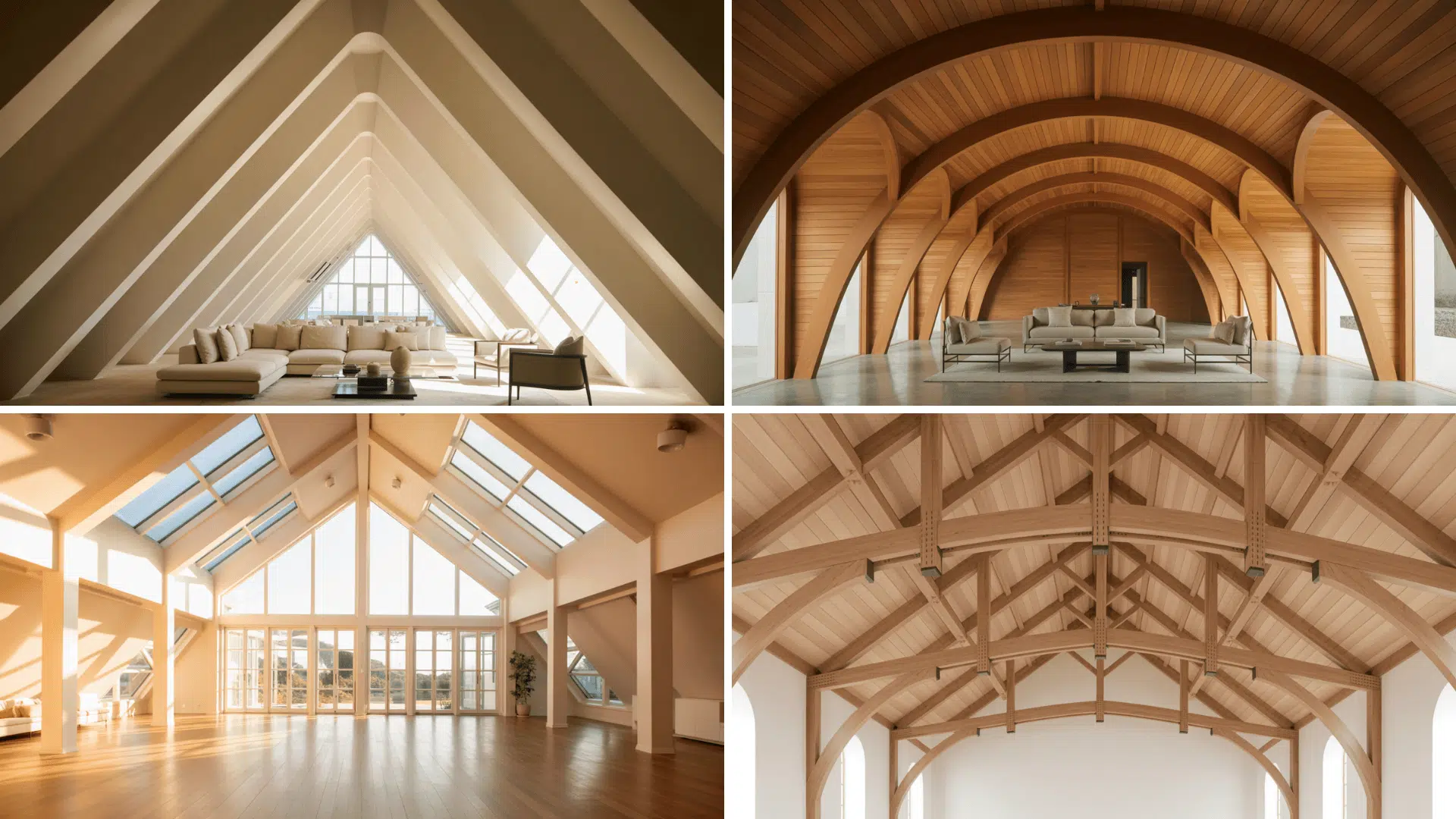
Vaulted ceiling meaning covers a range of styles:
- Barrel vaults (continuous arches)
- Groin vaults (intersecting arches)
- Rib vaults (framework of arches)
Now that you know what defines a vaulted ceiling, let’s find out how this architectural feature impacts your home’s aesthetics, energy efficiency, and maintenance needs.
Key Characteristics of a Vaulted Ceiling
The key characteristics of a vaulted ceiling go beyond “tall and angled”; they encompass structure, light, energy, and style. Understanding these traits helps you see why vaulted designs stand out and if they’re right for your home.
1. Raised and Angled Design
Vaulted ceilings rise higher than your standard 8- or 9-foot flat ceiling, often peaking well above 10 feet. They feature sloping or curved surfaces that draw the eye upward, making a room feel more expansive.
This upward angle isn’t just for show; it fundamentally changes how a space feels, turning even modest rooms into something grander. The slope can be symmetrical or asymmetrical, depending on the design you’re after.
2. Architectural Variety
One of the key characteristics of a vaulted ceiling is its flexibility. You’re not locked into one look; barrel vaults offer smooth, continuous curves, groin vaults bring intersecting arches, and dome vaults add a dramatic, rounded crown.
Ribbed vaults introduce framework details that highlight structure and style. This variety means you can match vaulted ceilings to almost any refinement, from rustic farmhouse to sleek contemporary.
3. Improved Lighting and Space
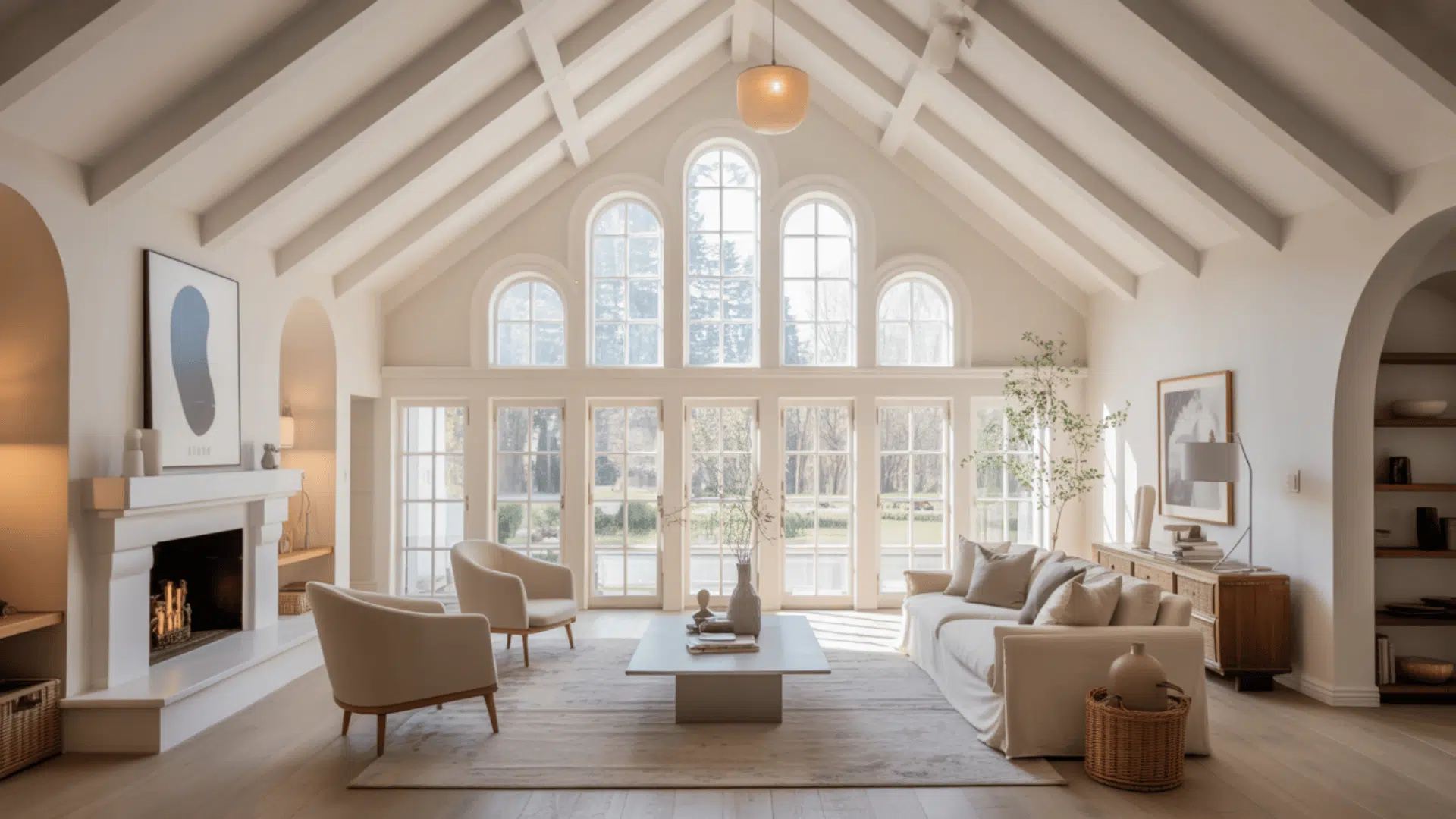
Vaulted ceilings open up room for tall windows, clerestory glass, or skylights that flood interiors with natural light. The added vertical space makes rooms feel airier and less confined, which is a game-changer for open-plan layouts.
Light bounces differently off angled surfaces, creating softer shadows and a brighter atmosphere overall. If you crave a light-filled, open feel, vaulted ceilings deliver that in spades.
4. Structural Independence from Roofline
Unlike cathedral ceilings, vaulted ceilings can stand alone. They might use independent framing, trusses, or false ceiling structures to achieve their shape, even if the roofline above is different.
This gives designers and builders more creative freedom. It also means upgrading a vaulted ceiling in an existing home is sometimes easier than forcing a cathedral design.
5. Energy and Maintenance Considerations
Here’s the trade-off: all that extra volume means more air to heat and cool, which can nudge your energy bills higher if insulation isn’t spot-on. Vaulted ceilings also make maintenance trickier.
Changing a lightbulb or dusting a ceiling fan requires a ladder, and possibly a tall one. Proper insulation and strategic HVAC planning help, but it’s worth factoring in these practical realities before you commit to the style.
How Vaulted Ceilings Differ from Other Ceiling Types
Understanding the meaning of vaulted ceilings becomes easier when you compare them directly with the ceiling styles most homeowners consider.
- Flat Ceilings: Flat ceilings stay standard, lower, and easier to maintain
- Tray Ceilings: Tray ceilings rely on shallow recessed layers for subtle depth
- Coffered Ceilings: Coffered ceilings focus on decorative grid patterns and formality
- Suspended (Drop) Ceilings: Drop ceilings lower the plane to hide ducts and wiring for practicality
- Dome Ceilings: Dome ceilings form a rounded, bowl-shaped crown that creates a central, sculptural focal point
Cathedral Ceilings and Their Distinctive Traits
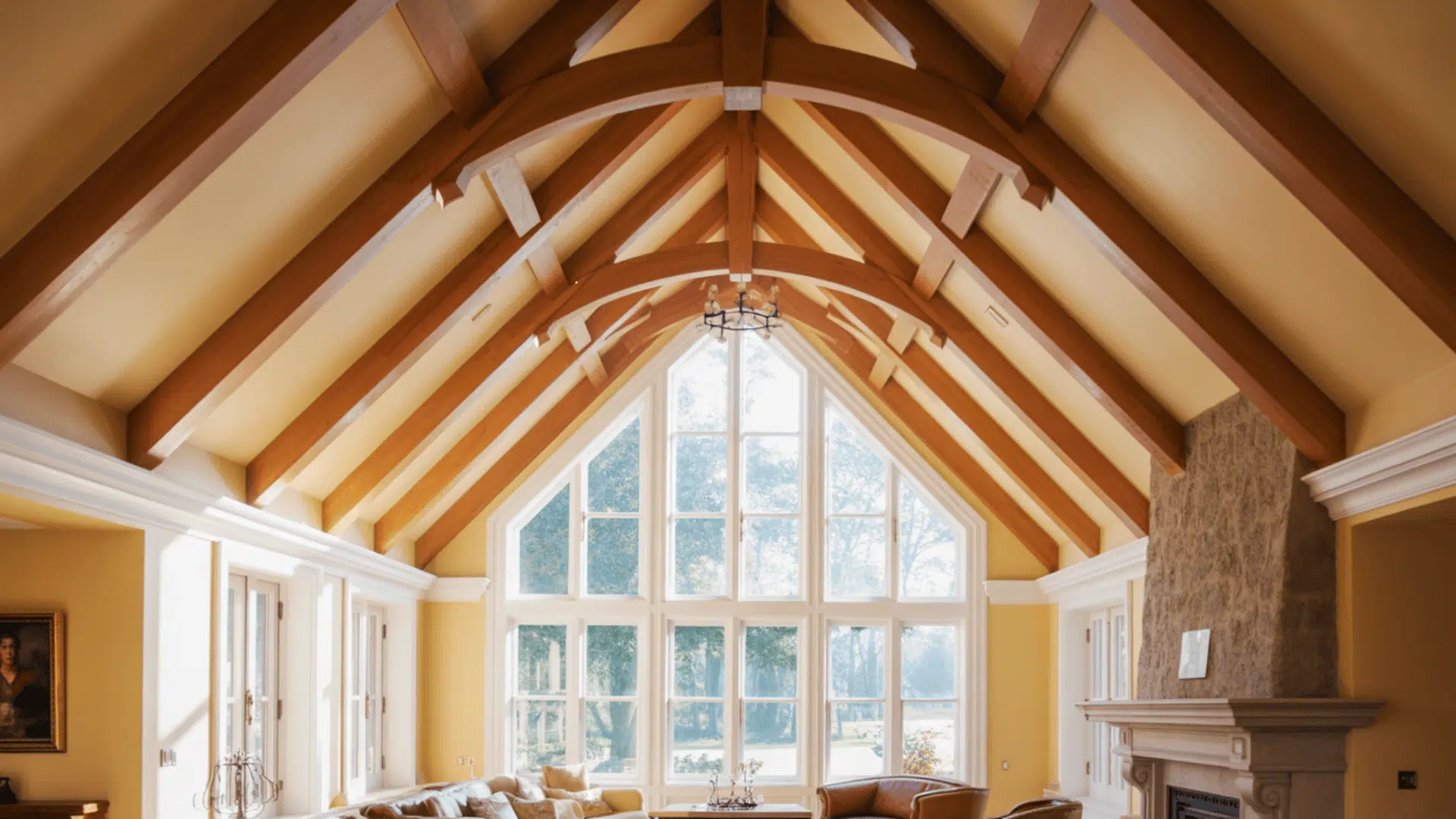
Cathedral ceilings are an ageless architectural feature known for their grand symmetry and seamless alignment with a home’s roofline.
- Roofline Alignment: The ceiling mirrors the roof’s pitch, with two equal slopes meeting at a central ridge.
- Perfect Symmetry: Each side rises at the same angle, creating a clean, balanced shape.
- Architectural Roots: Inspired by church and cathedral architecture, these ceilings simulate a sense of grandeur.
- Sense of Space: The tall peak enhances volume, creating an airy, expansive atmosphere in the rooms.
- Light and Atmosphere: High points allow for large windows or skylights, flooding interiors with natural light.
- Structural Simplicity: Built directly along the roof’s framework, making construction relatively straightforward.
- Design Factor: Works beautifully in both traditional and modern homes seeking a classic, cohesive ceiling style.
Cathedral vs Vaulted Ceiling
Both styles uptake space and light, but subtle distinctions in shape, symmetry, and structure set them apart. Here’s a quick side-by-side look to help you choose wisely.
| SIMILARITIES | DIFFERENCES |
|---|---|
| Both are raised ceiling designs that create height, openness, and natural light. | Cathedral ceilings follow the roof’s pitch exactly; vaulted ceilings may stand independently. |
| Add a sense of drama and spaciousness, ideal for living rooms or open layouts. | Cathedral ceilings are perfectly symmetrical; vaulted ceilings can be curved or asymmetrical. |
| Improve natural light flow through tall windows or skylights. | Vaulted ceilings offer multiple styles: barrel, dome, and groin, while cathedral ceilings stick to a fixed two-slope form. |
| Both improve architectural appeal and overall home value. | Vaulted ceilings may need extra framing and can be harder to insulate, while cathedral designs are simpler but less customizable. |
On average, you’re looking at US $18,000–50,000 for installing a vaulted or cathedral ceiling in a 20 × 20 ft room; vaulted ceilings tend to sit near the higher end due to custom shaping and framing.
Design Inspiration for Vaulted Ceilings
Vaulted ceilings give you freedom in shape, angles, and lighting, which opens up plenty of creative design possibilities. Below are practical ideas that make the most of their height and architectural flexibility.
1. Exposed Wooden Beams
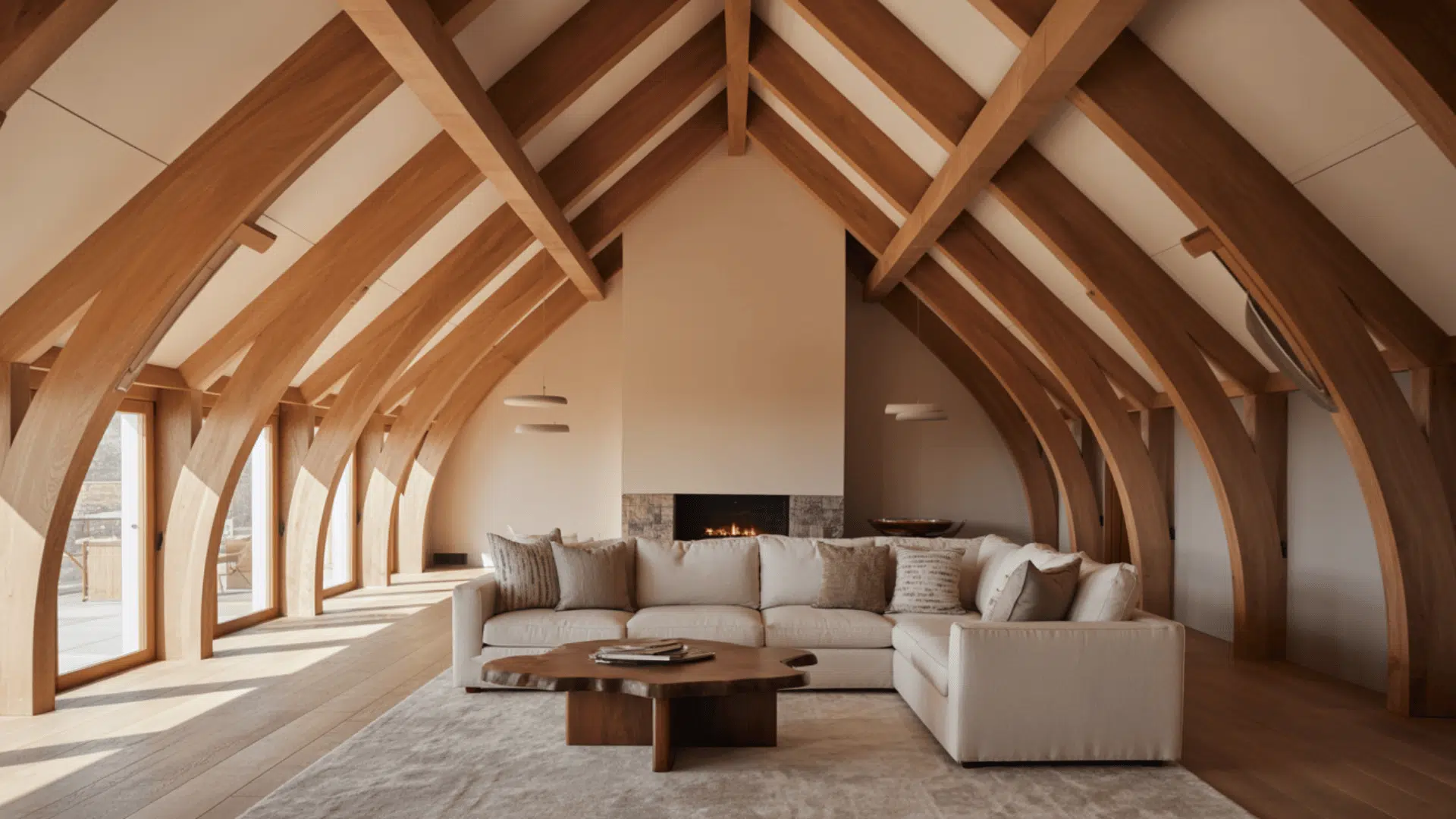
Exposed beams add instant character to a vaulted ceiling, grounding the height with warmth and texture. They work especially well in rustic, farmhouse, or cabin-inspired interiors.
You can stain them dark for contrast or keep them light for a more natural look. This detail makes the space feel inviting while still embracing the drama of a vaulted design.
2. Skylights and Clerestory Windows
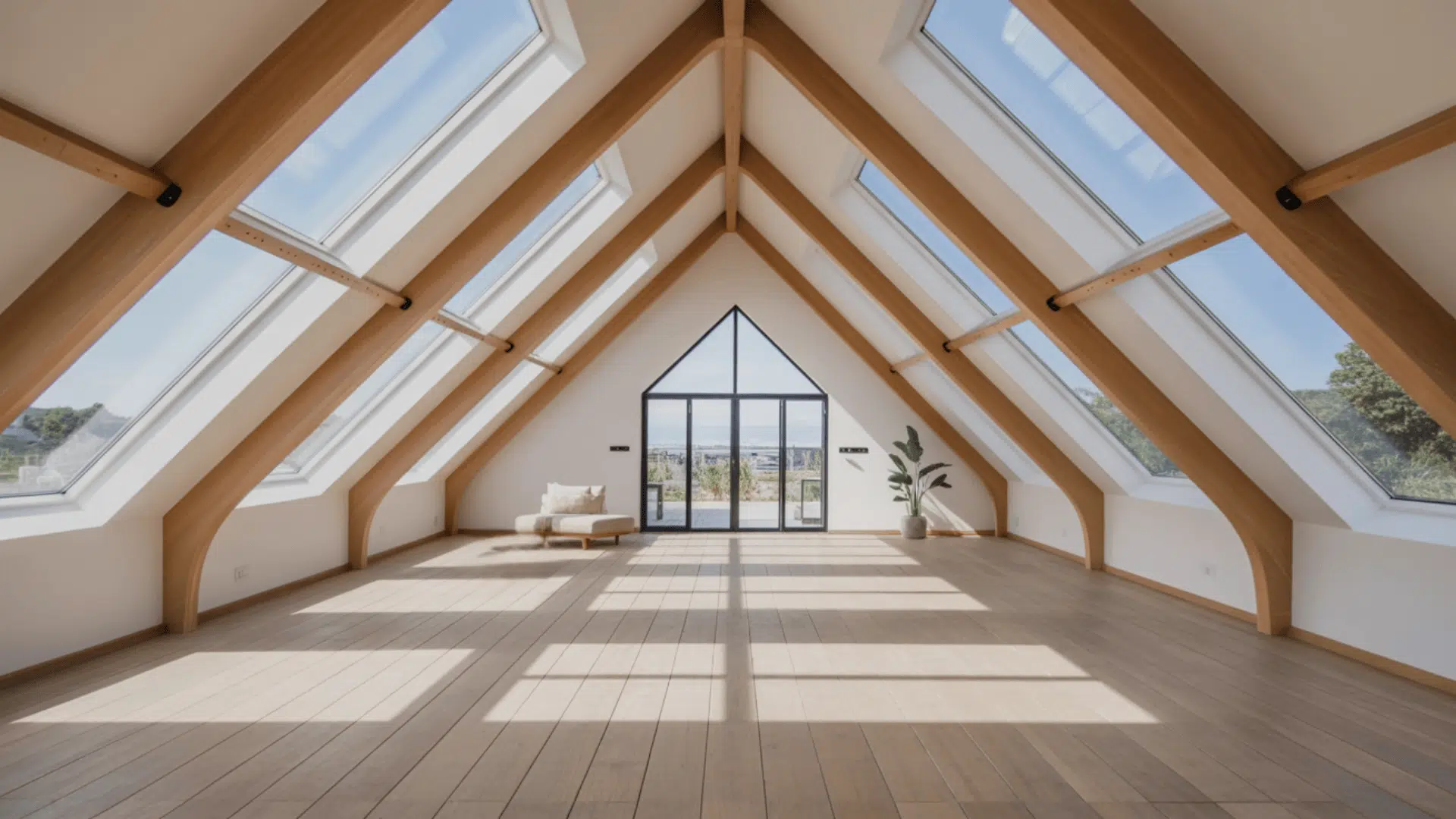
Vaulted ceilings pair naturally with high-positioned windows that channel light deep into the room. Skylights brighten the vertical plane and can reduce the need for artificial lighting during the day.
Clerestory windows offer privacy while still letting in soft, even light. Together, they impact the openness for which vaulted ceilings are known.
3. Accent Lighting Along the Slope
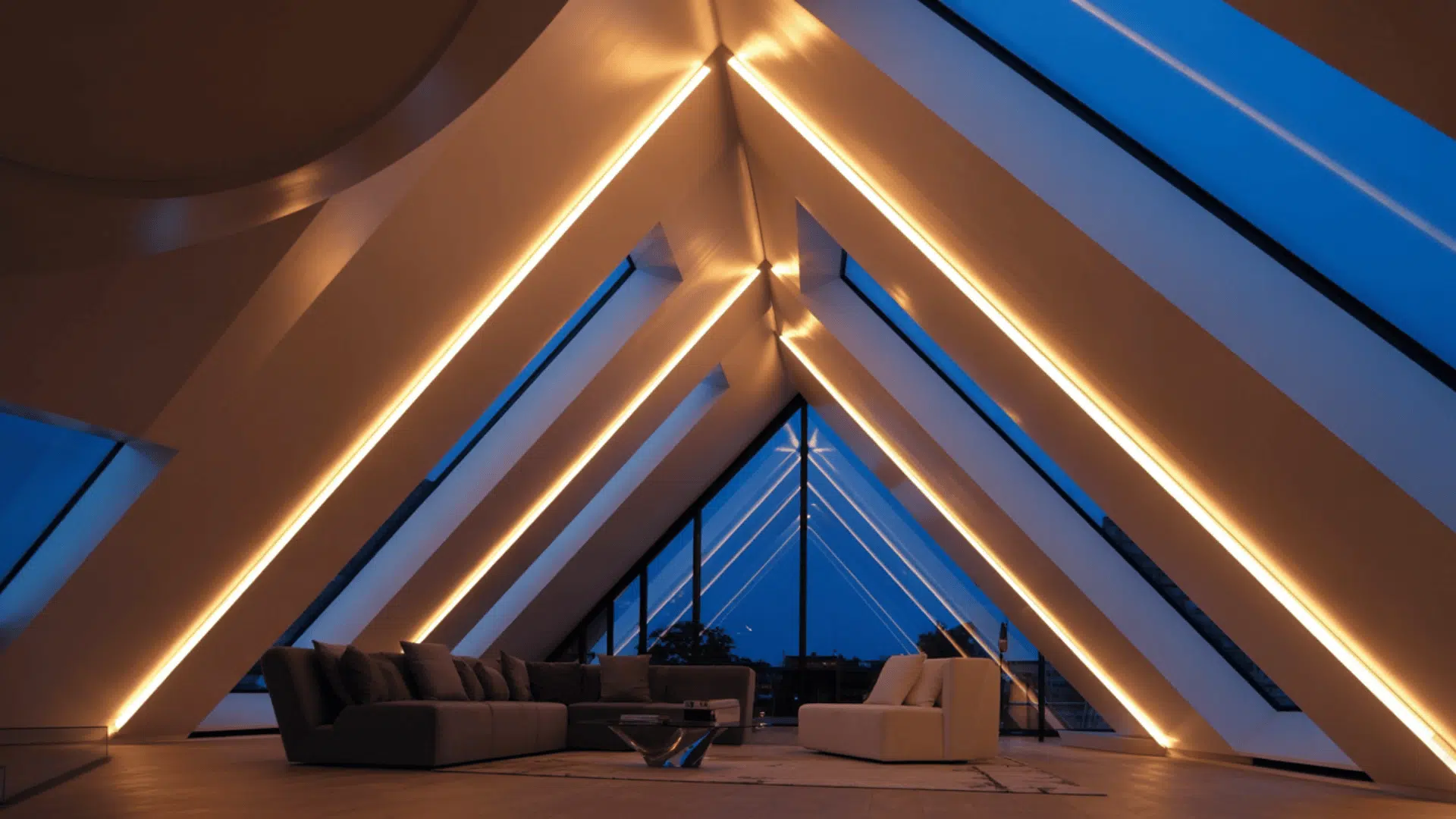
Installing LED strips or recessed fixtures along the sloped surfaces highlights the architecture. It creates depth and shadow play that makes the ceiling feel even more lively.
This lighting strategy is especially useful in the evenings when you want a warm, layered glow. It also draws attention to the ceiling’s angles without overwhelming the room.
4. Floating Shelves or Upper Wall Niches
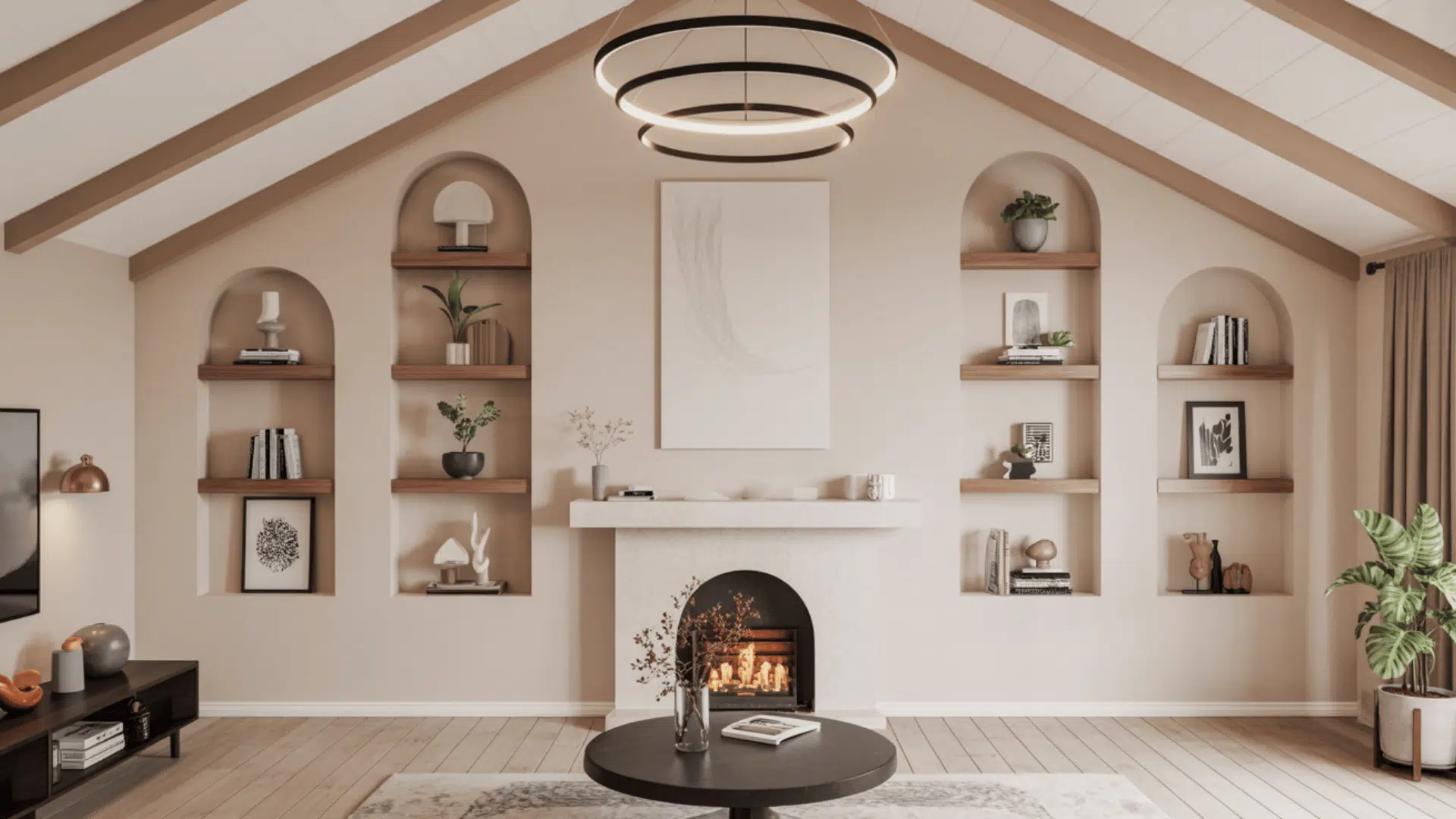
With extra wall height, vaulted ceilings offer space for elevated shelves or recessed display niches. These elements let you showcase art, plants, or sculptural decor without crowding eye-level surfaces.
They turn unused vertical space into a design feature. This approach keeps the room functional while celebrating its height.
5. Feature Chandeliers
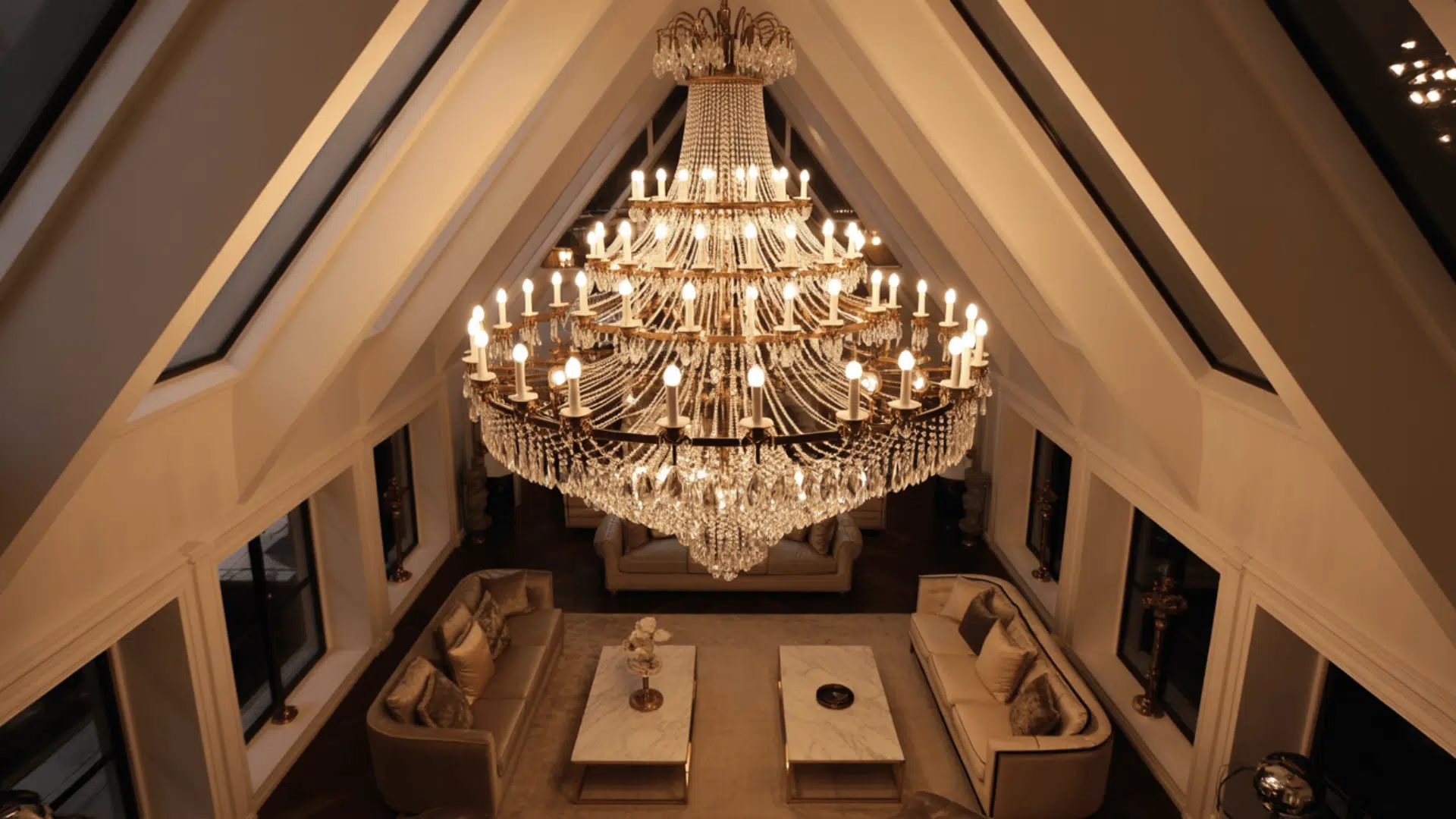
Tall ceilings can handle bold lighting, so oversized chandeliers or multi-pendant clusters work beautifully here. They fill vertical space and serve as a striking focal point.
Choose materials that suit your overall style, from modern glass to wrought iron. The goal is to anchor the height with purposeful illumination.
Cathedral Ceiling Ideas
Cathedral ceilings offer symmetry, balance, and a strong visual axis that you can highlight with the right design choices. The ideas below help you highlight their clean lines and classic structure.
1. Symmetrical Beam Patterns
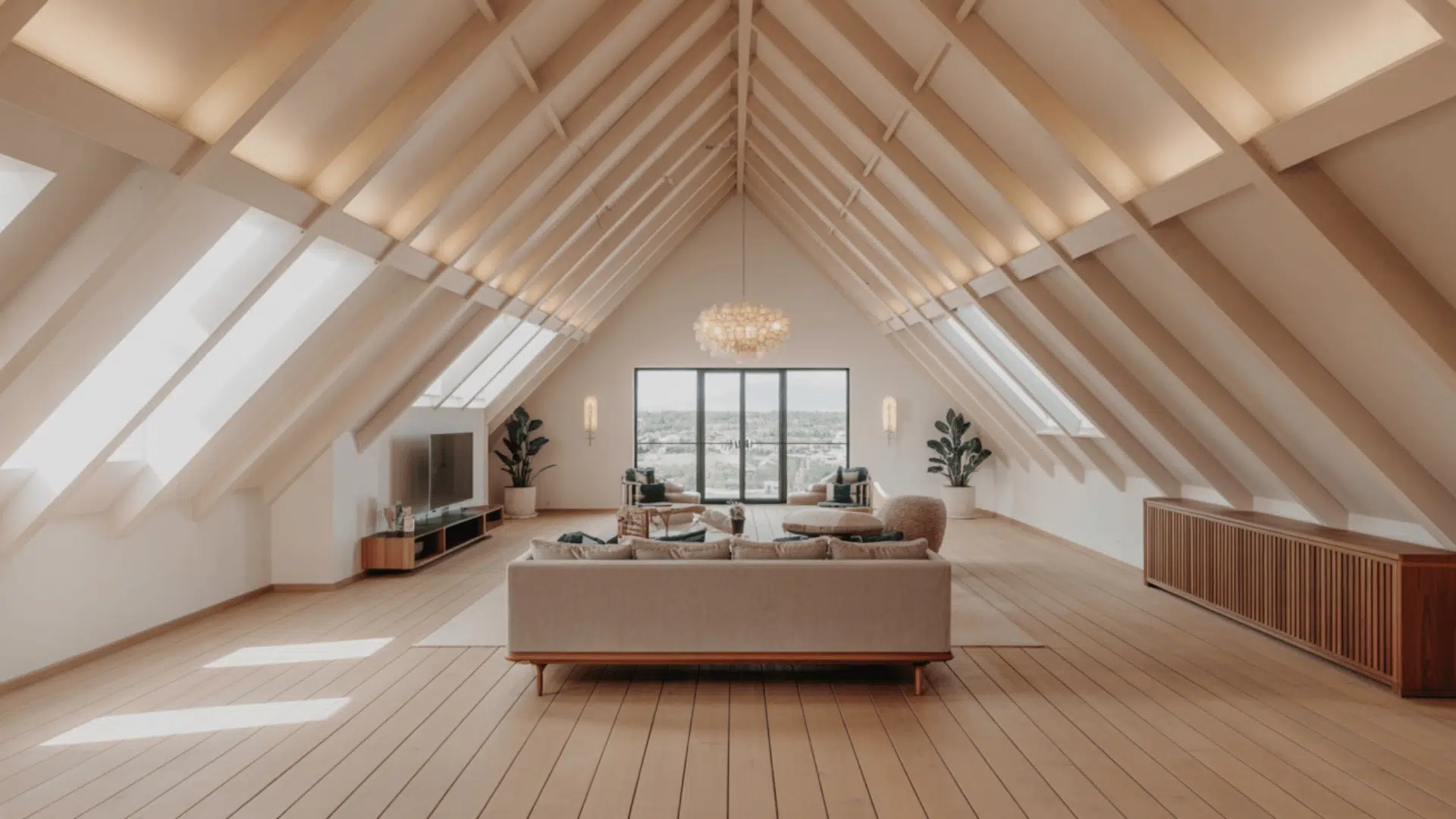
Cathedral ceilings are defined by symmetry, so evenly spaced beams or trusses boost their natural structure. They create rhythm and balance across the sloped surfaces.
Choosing a contrasting color draws the eye upward and accentuates the ceiling’s geometry. This detail suits both traditional and modern homes.
2. Painted Vault Panels
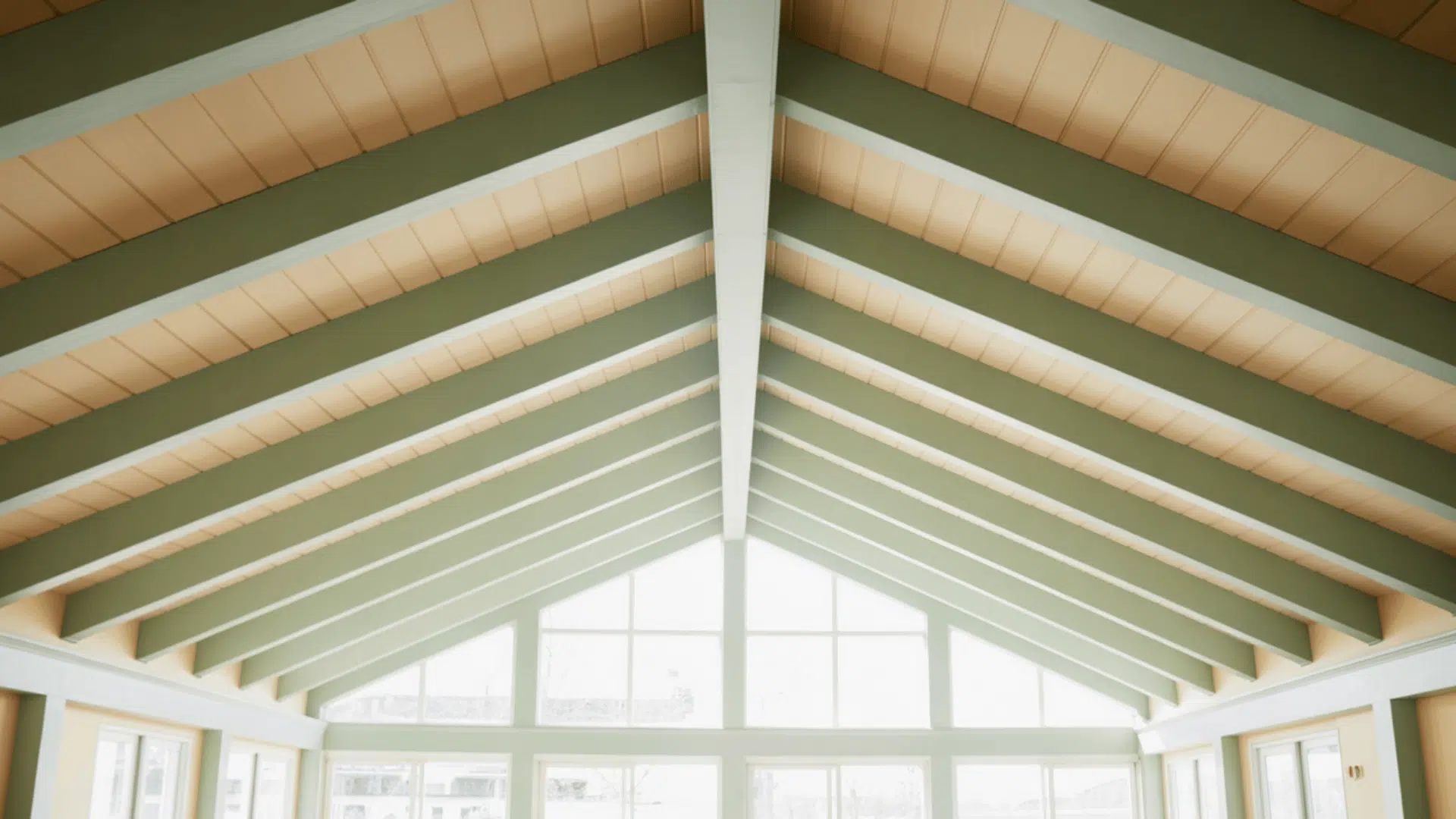
Painting the ceiling panels in soft neutrals or light pastel tones helps amplify natural light. It also prevents the ceiling from feeling too heavy or cavernous.
A subtle shift in color between the wall and the ceiling can create a gentle visual separation. This is a simple update with a noticeable impact.
3. Large Picture Windows
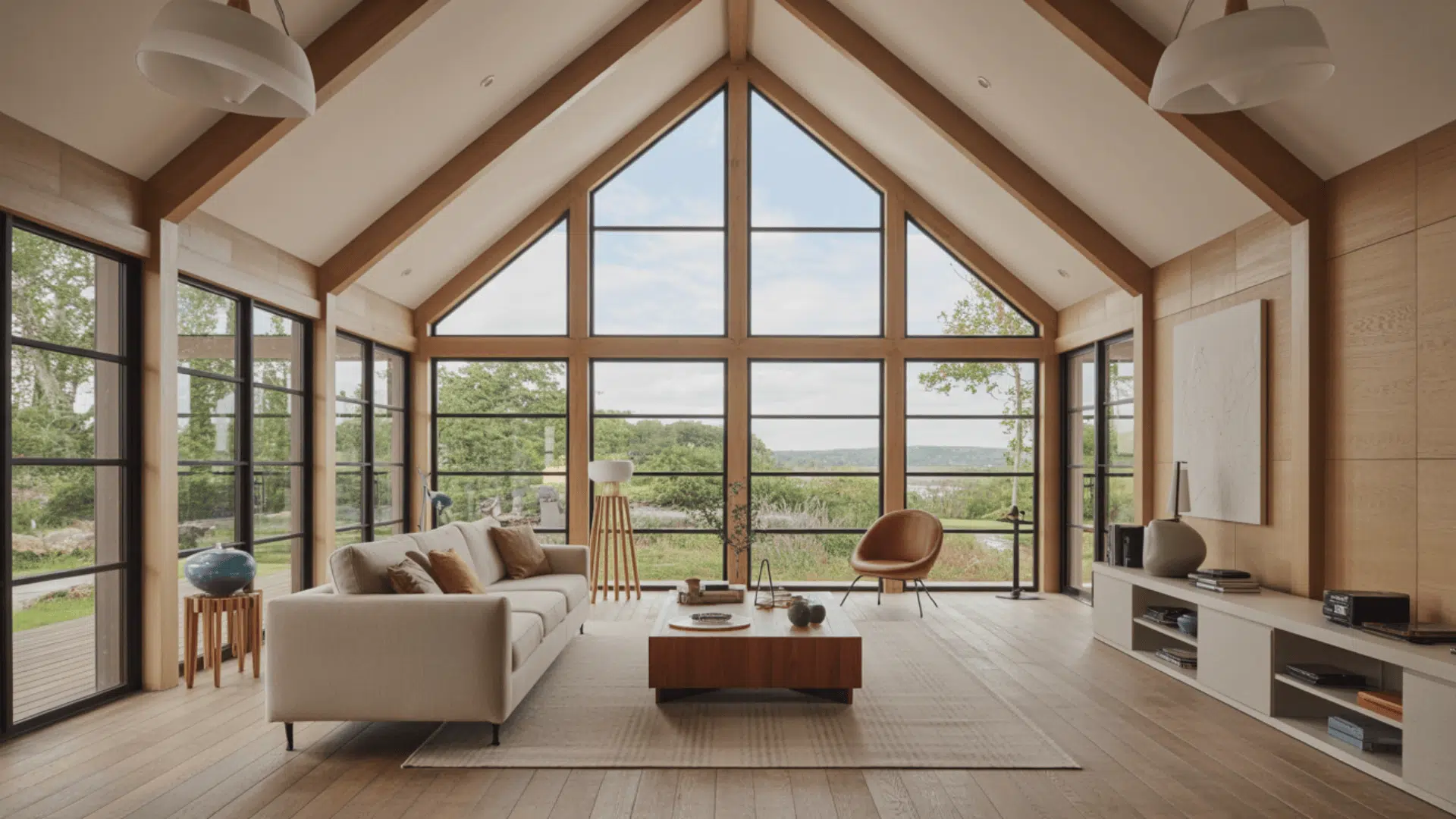
Placing tall windows along the gable end of a cathedral ceiling reinforces its shape. The windows echo the upward pitch and frame outdoor views dramatically.
This combination floods the room with natural light. It also makes the symmetry of the ceiling feel more intentional and architectural.
4. Central Skylight or Ridge Lighting
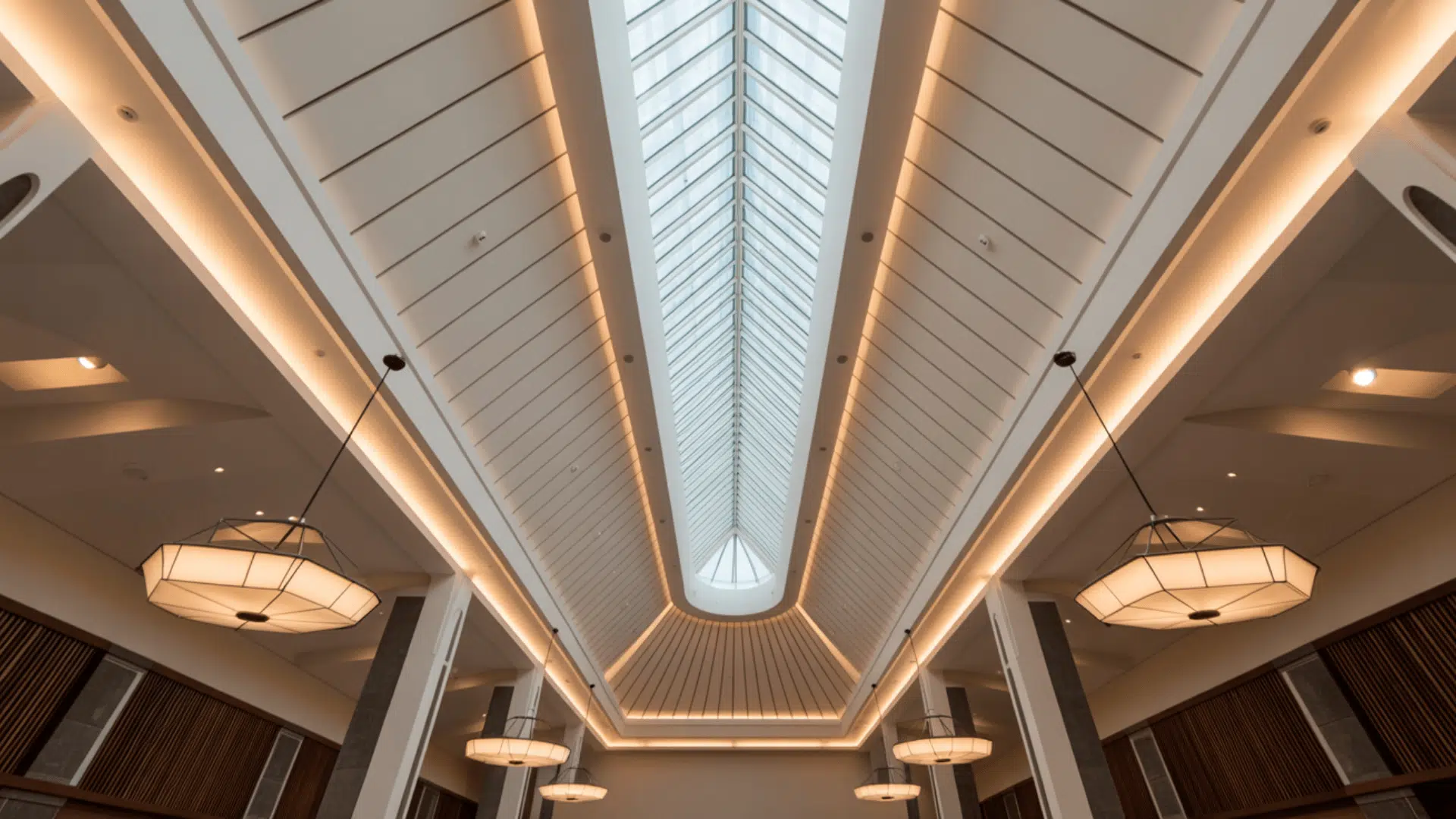
A long skylight or a line of pendant lights following the ridge adds definition to the ceiling’s midpoint. This creates a clean visual guide that draws the eye upward and emphasizes the ceiling’s geometry.
It highlights the highest point of the structure and makes the symmetry more pronounced. This technique works well in both modern and classic interiors. It also improves illumination across the room.
5. Minimalist Ceiling Design
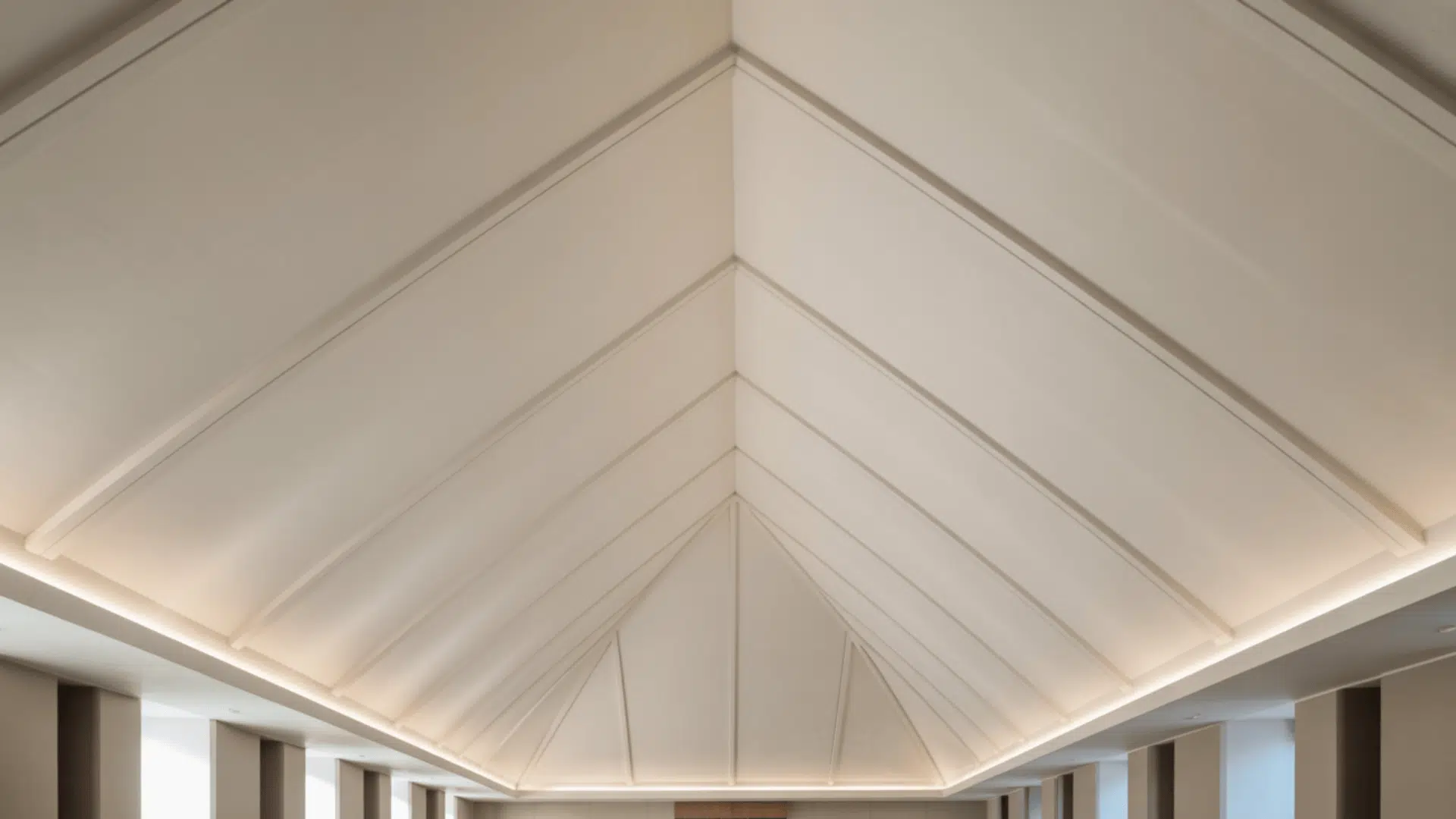
Keeping the ceiling surfaces clean and uncluttered lets the architecture speak for itself. Smooth planes, hidden lighting, and neutral colors preserve a light, airy atmosphere.
This approach works especially well in contemporary homes where simplicity is key. The symmetry becomes the main design feature without extra embellishment.
Wrapping It Up
So there you have it: vaulted ceilings mean any ceiling that rises and angles upward, offering flexibility in design, while cathedral ceilings strictly follow the roofline with symmetrical slopes.
As I’ve covered in this blog, choosing between them depends on your home’s structure, your budget, and the vibe you’re after: drama and light versus classic symmetry.
Don’t skip the practical stuff: insulation, HVAC, and maintenance all matter. Before you commit, chat with an architect or contractor who can assess your space and guide you through the details.