
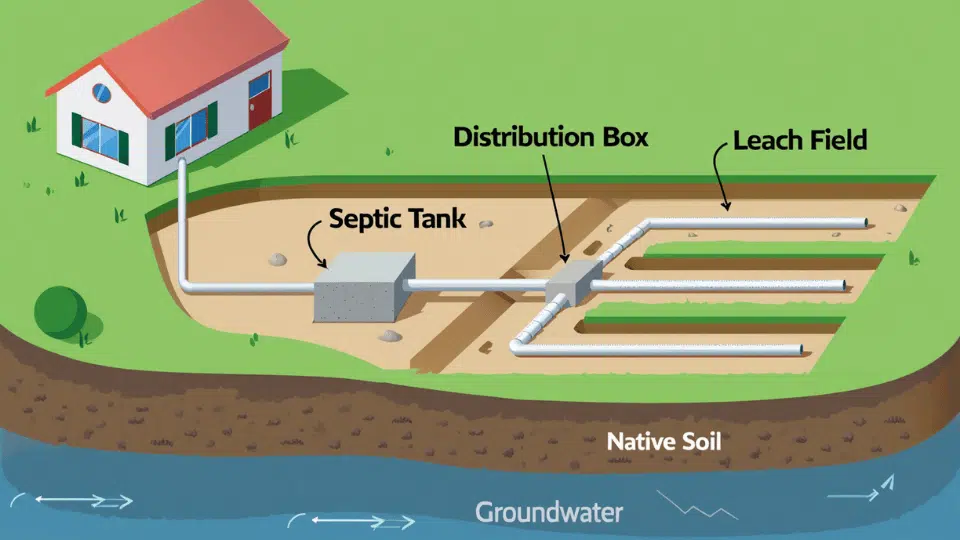
Ever wonder what happens to water after it goes down your drain? It travels to a hidden system working beneath your yard. But here’s the confusing part: people call it different names.
Are leach fields and drain fields different systems, or just two names for the same thing?
The answer might surprise you. This underground mystery affects every home with a septic system, yet most people ignore it until problems appear. Let’s find the answer.
How Septic Systems Process Household Wastewater?
A septic system begins with a tank that receives all household wastewater from toilets, sinks, and drains. Inside the septic tank, solid waste settles to the bottom while oils and grease float to the top, creating a middle layer of partially clarified liquid.
This liquid then flows out of the tank and into the drain, where the final and most critical stage of treatment occurs.
The septic tank drain field consists of perforated pipes buried in gravel-filled trenches that distribute wastewater across a designated area of soil.
The leach field vs drain field discussion exists simply because both terms describe the same wastewater dispersal and treatment system.
Leach Field vs Drain Field
The confusion between leach field and drain field terminology stems from regional preferences and industry practices rather than actual system differences.
| ASPECT | LEACH FIELD | DRAIN FIELD |
|---|---|---|
| Definition | The underground area where septic effluent disperses and filters through the soil | The underground area where septic effluent disperses and filters through the soil |
| Technical Function | Perforated pipes distribute wastewater into gravel trenches for soil absorption | Perforated pipes distribute wastewater into gravel trenches for soil absorption |
| Professional Usage | Common in older documentation and traditional septic industry terminology | Preferred in modern regulatory documents and newer system designs |
| Regional Preferences | More common in rural areas and the Northeast/Midwest regions | More common in Southern and Western states, suburban developments |
| Homeowner Impact | Refers to the same system requiring identical maintenance and care | Refers to the same system requiring identical maintenance and care |
Septic Terminology
- Effluent: The partially treated liquid wastewater that flows from the septic tank into the drain for final soil filtration and absorption.
- Distribution Box: A small concrete or plastic chamber that evenly divides effluent flow among multiple septic tank drain field trenches, preventing system overload.
- Lateral Lines: The perforated pipes within the leach field vs the drain field system that distribute wastewater along the length of each trench.
- Biomat: The natural bacterial layer that forms where effluent meets soil, providing biological treatment while potentially restricting drainage if it becomes too thick.
- Percolation Rate: The speed at which water moves through soil in the field area, determined by a perc test before system installation to ensure proper absorption capacity.
- Scum Layer: The floating layer of oils, grease, and lighter solids that accumulates on top of wastewater inside the septic tank, removed during regular pumping.
- Sludge: The heavy solid waste that settles at the bottom of the septic tank and must be pumped out every three to five years to prevent overflow into the septic tank drain field.
- Hydraulic Load: The volume of wastewater entering the septic system daily, which affects how well the drain can process and absorb effluent without becoming saturated.
How a Leach or Drain Field Works?
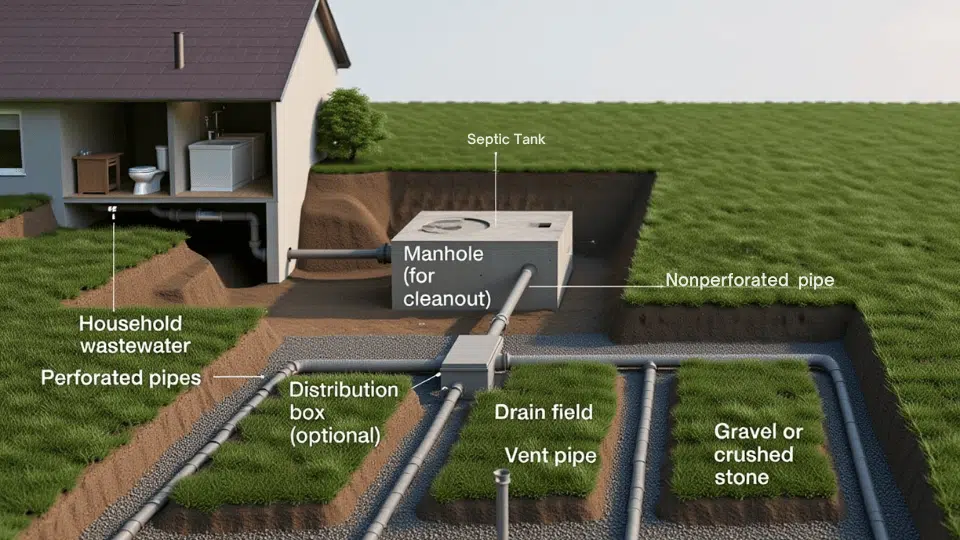
The drain operates as a modern natural filtration system that relies on carefully engineered components working together with soil microorganisms.
Step 1: Solids Separation
Partially treated wastewater flows out of the septic tank through an outlet baffle that prevents solids from entering the drain and causing premature failure of the system.
Effluent flows into the drain field where it percolates through gravel and soil layers, filtering out harmful bacteria, viruses, and nutrients before reaching groundwater.
Step 2: Load Balancing
The distribution box receives effluent and evenly distributes the flow to multiple lateral lines, preventing any single trench from becoming overloaded or saturated.
This equal distribution is critical for system longevity, as it ensures uniform soil absorption across the entire drain field. Without proper flow distribution, some areas would fail prematurely, while others would remain underutilized.
Step 3: Field Dispersal
Wastewater enters perforated lateral pipes and slowly seeps through the holes along the entire length of each trench, maximizing soil contact area.
The perforations are strategically spaced to ensure uniform distribution and allow the soil adequate time to absorb and treat effluent without overwhelming its filtration capacity.
Step 4: Biomat Formation
The aggregate material temporarily holds effluent and allows it to percolate downward gradually, rather than pooling or forming saturated zones.
The spaces between gravel pieces allow oxygen-loving bacteria to thrive, forming a biomat layer that breaks down organic waste and harmful pathogens at the soil surface.
Step 5: Natural Purification
As wastewater moves through soil particles, physical straining removes suspended solids while beneficial bacteria consume organic matter and neutralize pathogens.
Soil microorganisms biologically decompose pollutants while soil minerals chemically bind phosphorus and nutrients, creating a dual treatment process that effectively purifies wastewater before it reaches groundwater.
Step 6: Groundwater Protection
Fully treated water eventually reaches the water table after passing through several feet of unsaturated soil, ensuring contaminants have been removed through natural purification processes.
The 2-4 feet of unsaturated soil provides enough treatment time to filter and purify the effluent before it reaches groundwater, ensuring it poses no environmental or health risks.
Common Issues in Drain and Leach Fields
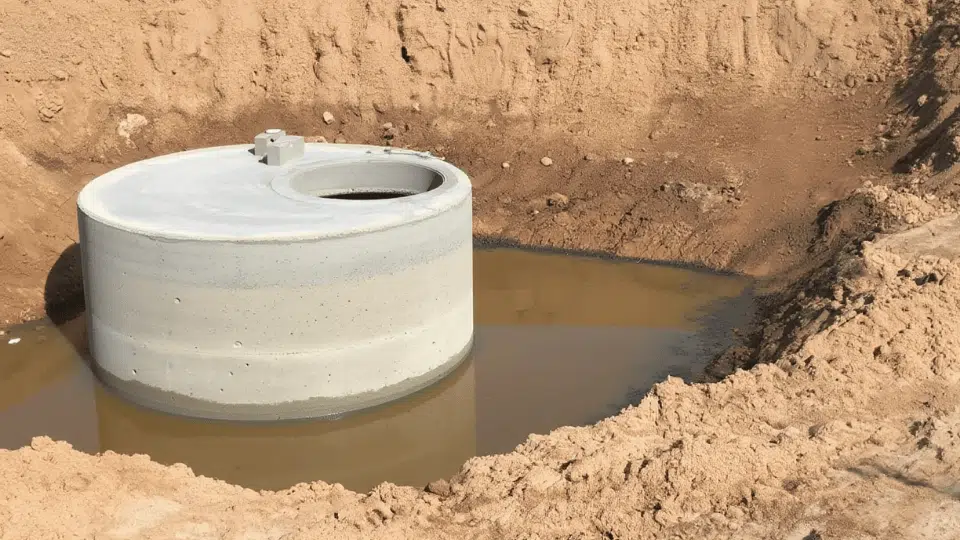
Even the best-maintained drain and leach fields can develop problems over time, from clogged pipes to saturated soil that signals system failure.
1. Typical Causes of Failure
Drain fields fail when excess water from showers or leaks overwhelms the soil, or when solids from an unpumped septic tank clog the pipes.
Heavy vehicles can compact the soil and block drainage, while clay soil or undersized systems may never work properly.
2. Warning Signs to Monitor
People should watch for slow-draining sinks and toilets, or for gurgling sounds, that indicate the drain cannot accept more wastewater.
Soggy patches, standing water, or unusually lush grass above the field signal surfacing sewage that hasn’t absorbed properly into the soil.
3. Expected Lifespan and Replacement
Minor issues like broken pipes or distribution box problems often allow targeted repairs without full replacement.
However, biomat buildup and compacted soil usually require replacing the septic tank drain field in a new location, since the original site’s soil absorption capacity has permanently failed and cannot be restored by repairs alone.
Maintaining a Healthy Septic Tank and Field
Preventive maintenance is the most cost-effective strategy for extending the lifespan of a septic tank drain field and avoiding expensive emergency repairs.
- Regular Septic Tank Pumping: Schedule professional pumping every 3 to 5 years, depending on household size and water usage, to prevent solid buildup from overflowing into the drain and clogging lateral lines with sludge.
- Proper Waste Disposal Practices: Flush only human waste and toilet paper while keeping cooking grease, feminine products, wipes, medications, and harsh chemicals out of drains to maintain healthy bacterial colonies that break down organic matter.
- Protect the Field Surface: Never park vehicles, install pools, build structures, or place heavy equipment over the leach field vs the drain field area, as compacted soil loses its ability to absorb and filter wastewater effectively.
- Strategic Landscaping Choices: Plant only grass or shallow-rooted ground cover above the field while keeping trees and shrubs at least thirty feet away to prevent aggressive roots from penetrating and damaging pipes.
- Water Management Around the Field: Install gutters and downspouts, and grade to direct roof runoff and surface water away from the septic tank drain field, preventing soil saturation that interferes with proper effluent absorption.
- Conservative Indoor Water Use: Spread laundry loads throughout the week, fix leaking faucets immediately, install low-flow fixtures, and avoid running multiple water-intensive appliances simultaneously to prevent hydraulic overload.
Contact septic specialists immediately when warning signs appear, before purchasing property with existing systems, or when planning home additions that increase daily wastewater volume beyond the current drain field capacity.
Wrapping It Up
So, what’s the real difference in the leach field vs drain field debate? Absolutely nothing. There are two names for the exact same system.
Leach field or drain field; both names refer to the same system working beneath your yard.
Protect your system with regular pumping and avoid driving over it. Schedule a septic inspection today before problems start.