Planning a new kitchen? Most people run into the same frustrating problem: they buy appliances or cabinets only to find they don’t fit properly.
Maybe the fridge blocks a doorway, or the counters feel cramped and awkward to work on.
Getting the standard kitchen dimensions right from the start can save thousands in renovation mistakes.
Here are the exact measurements you need for countertops, cabinets, appliances, and workspace layouts, so your kitchen works beautifully from day one.
The Importance of Accurate Kitchen Measurements
Accurate kitchen measurements form the foundation of ergonomic design that supports how you naturally move and work.
Proper kitchen dimensions ensure you can reach cabinets comfortably, open appliances without obstruction, and navigate safely during meal preparation.
Start by measuring wall-to-wall distances to establish your baseline for the overall standard kitchen size.
Document the locations of doors, windows, electrical outlets, and plumbing fixtures, as these fixed elements influence your layout options.
Account for appliance clearances: refrigerators need swing space, dishwashers require opening room, and ranges demand safe distances from combustible materials.
Typical Kitchen Size for Homes
Before selecting a layout, determine your available square footage. Standard kitchen size categories provide a framework for realistic planning and help you understand which configurations work best for your space.
- Small kitchens: Ranging from 70–100 square feet, these compact spaces work best with efficient single-wall or galley layouts that maximize every inch.
- Medium kitchens: Spanning 100–200 square feet, these versatile spaces accommodate L-shaped, galley, or peninsula designs with room for comfortable workflow.
- Large kitchens: Measuring 200+ square feet, these expansive areas support U-shaped layouts, islands, and multiple work zones for serious home cooks.
Standard Kitchen Sizes and Layout Dimensions
Understanding how kitchen dimensions are incorporated into real-world layouts helps you choose the design that best matches your space and cooking style.
1. Single-Wall Kitchen Layout
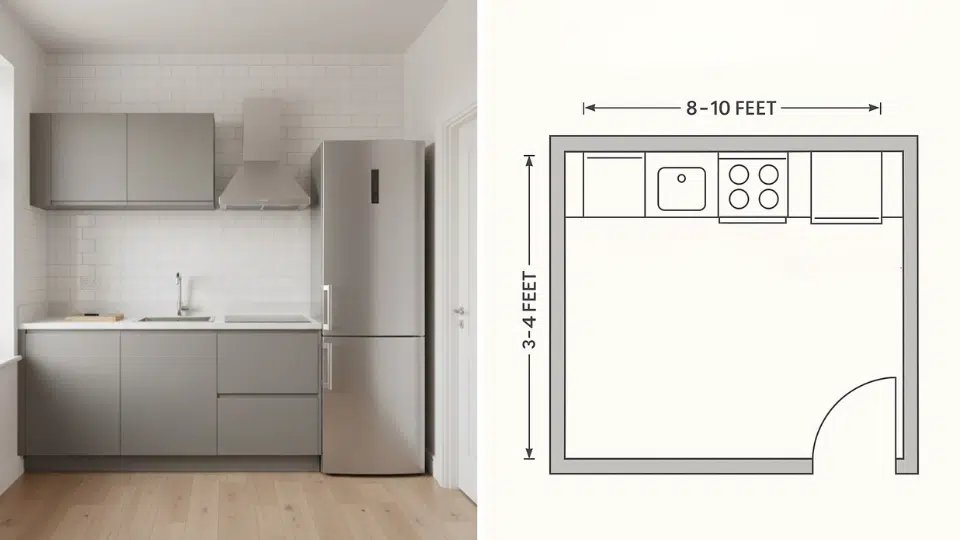
The single-wall kitchen places all appliances, cabinets, and counters along one continuous wall, creating a streamlined workspace ideal for smaller homes or open-concept living areas.
- Ideal for: Compact apartments, studio spaces, or homes where the kitchen opens directly into the living area, without walls, for additional cabinetry.
- Key Dimensions: The minimum recommended length is 8–10 feet to accommodate a sink, stove, and refrigerator, with adequate counter space between each element.
- Advantages: Maximizes floor space for other activities, keeps costs lower with minimal cabinetry, and creates an open feel perfect for entertaining.
2. Galley (Parallel) Kitchen Layout
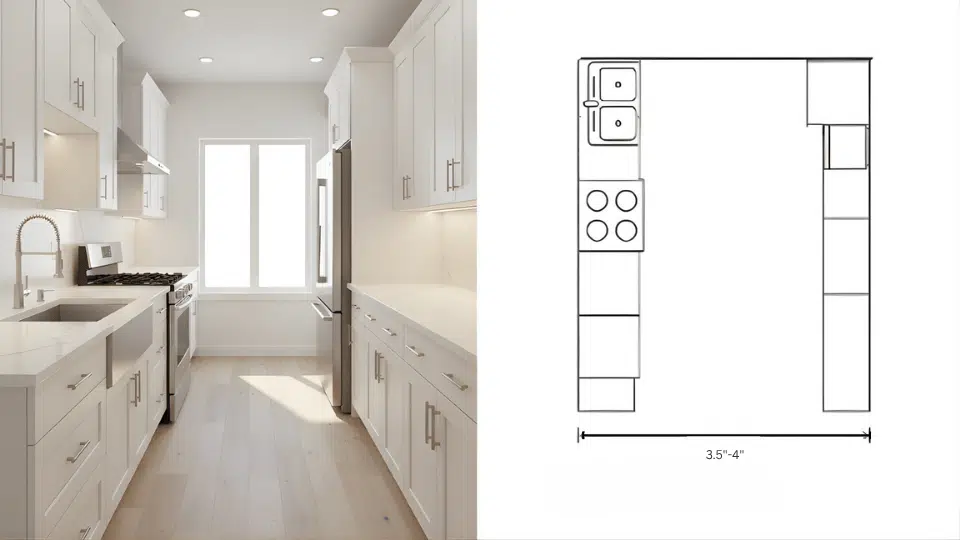
Galley kitchens feature two parallel walls of cabinets and appliances facing each other, creating an efficient corridor-style workspace that minimizes steps between work zones.
- Ideal for: Narrow spaces, townhouses, or homes where the kitchen occupies a hallway-style room with limited width but sufficient length.
- Key Dimensions: Recommended aisle width between facing cabinets measures 3.5–4 feet, allowing comfortable movement and appliance door clearance without feeling cramped.
- Advantages: Creates a highly efficient work triangle, accommodates two cooks working simultaneously, and provides ample counter space on both sides.
3. L-Shaped Kitchen Layout
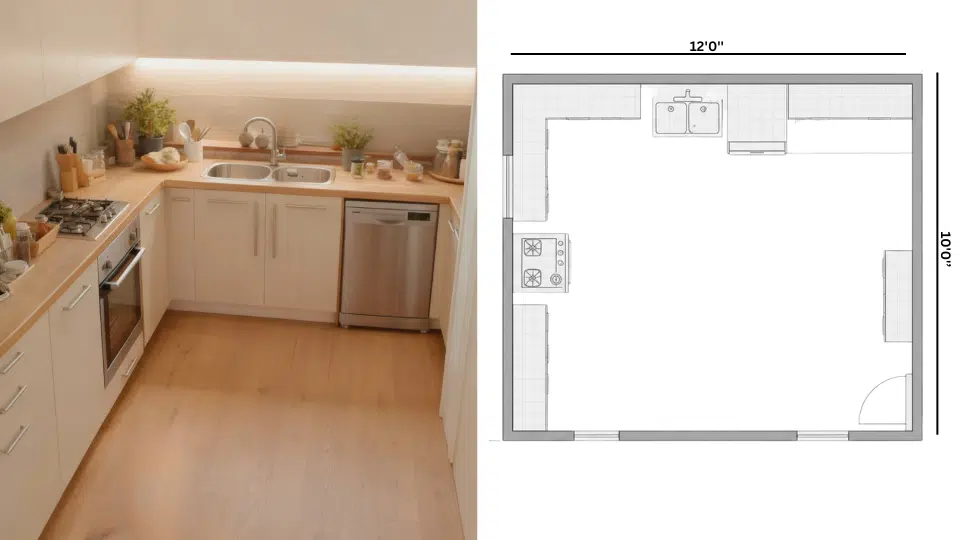
The L-shaped design positions cabinets and appliances along two perpendicular walls, forming a natural corner workspace that opens the remaining area for dining or traffic flow.
- Ideal for: Medium to large homes seeking flexible kitchen layouts that balance workspace with openness, or households wanting space for casual dining.
- Key Dimensions: Ideal counter leg length ranges 8–12 feet on each wall, providing sufficient workspace while maintaining comfortable proportions throughout the room.
- Advantages: Offers excellent work triangle efficiency, leaves floor space available for islands or dining tables, and adapts easily to various room shapes.
4. U-Shaped Kitchen Layout
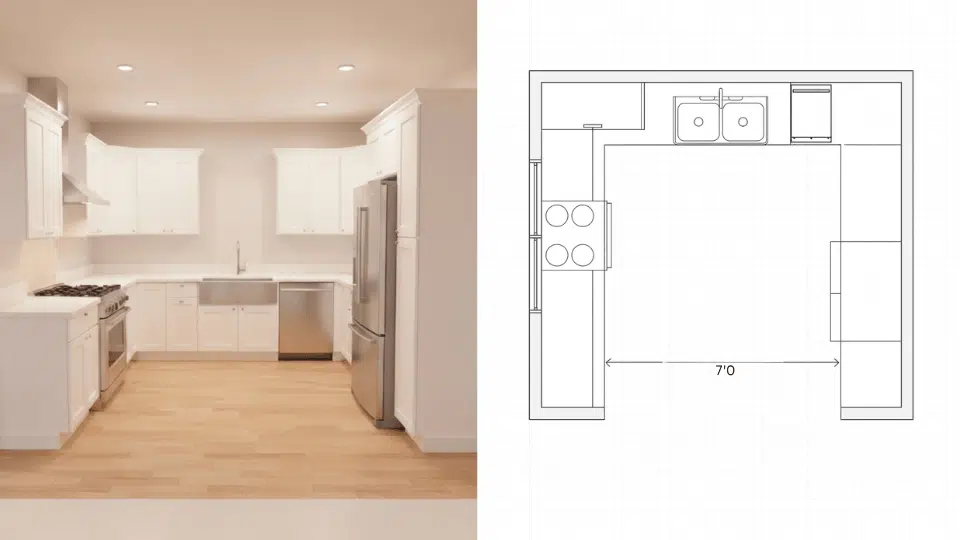
U-shaped kitchens surround you with counters and storage on three walls, delivering maximum workspace and creating a contained cooking zone separate from household traffic.
- Ideal for: Serious home cooks, families who use the kitchen heavily, or anyone who prioritizes abundant counter space and storage over an open floor plan.
- Key Dimensions: Recommended width between opposite cabinet sides measures 6–8 feet, ensuring comfortable movement while preventing the space from feeling overly stretched.
- Advantages: Provides extensive counter surface for meal prep, isolates cooking activities from through-traffic, and accommodates multiple appliances with dedicated zones.
5. Island Kitchen Layout
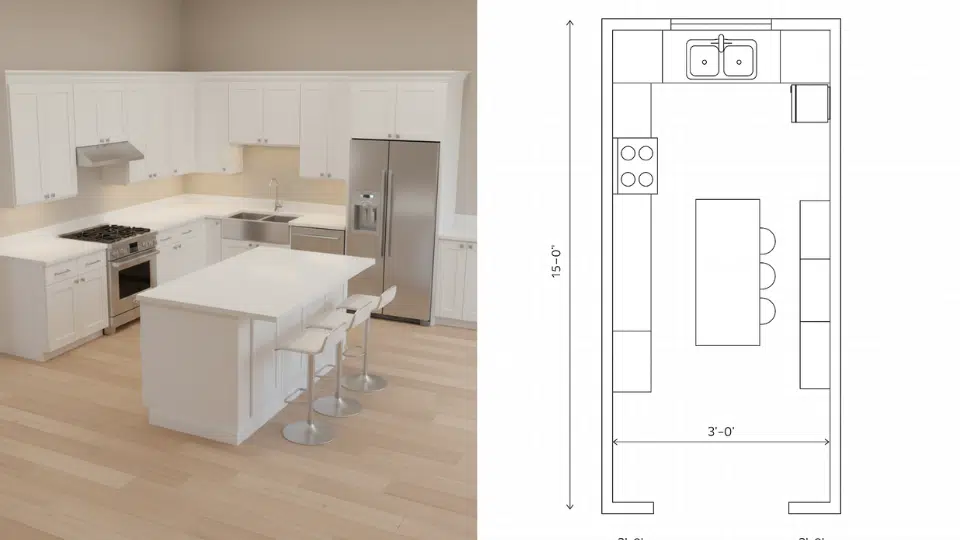
Island kitchens add a freestanding counter unit in the center of the room, creating additional workspace, storage, and a natural gathering spot for family interaction.
- Ideal for: Larger homes with generous square footage, open-concept designs, or households that value the kitchen as a social hub for entertaining.
- Key Dimensions: Ideal overall kitchen dimensions are 12–15 feet wide, with at least 3 feet of clearance around all sides of the island for safe, comfortable circulation.
- Advantages: Dramatically increases usable counter area, provides seating for casual meals, and establishes a central focal point that anchors open floor plans.
6. Peninsula Kitchen Layout
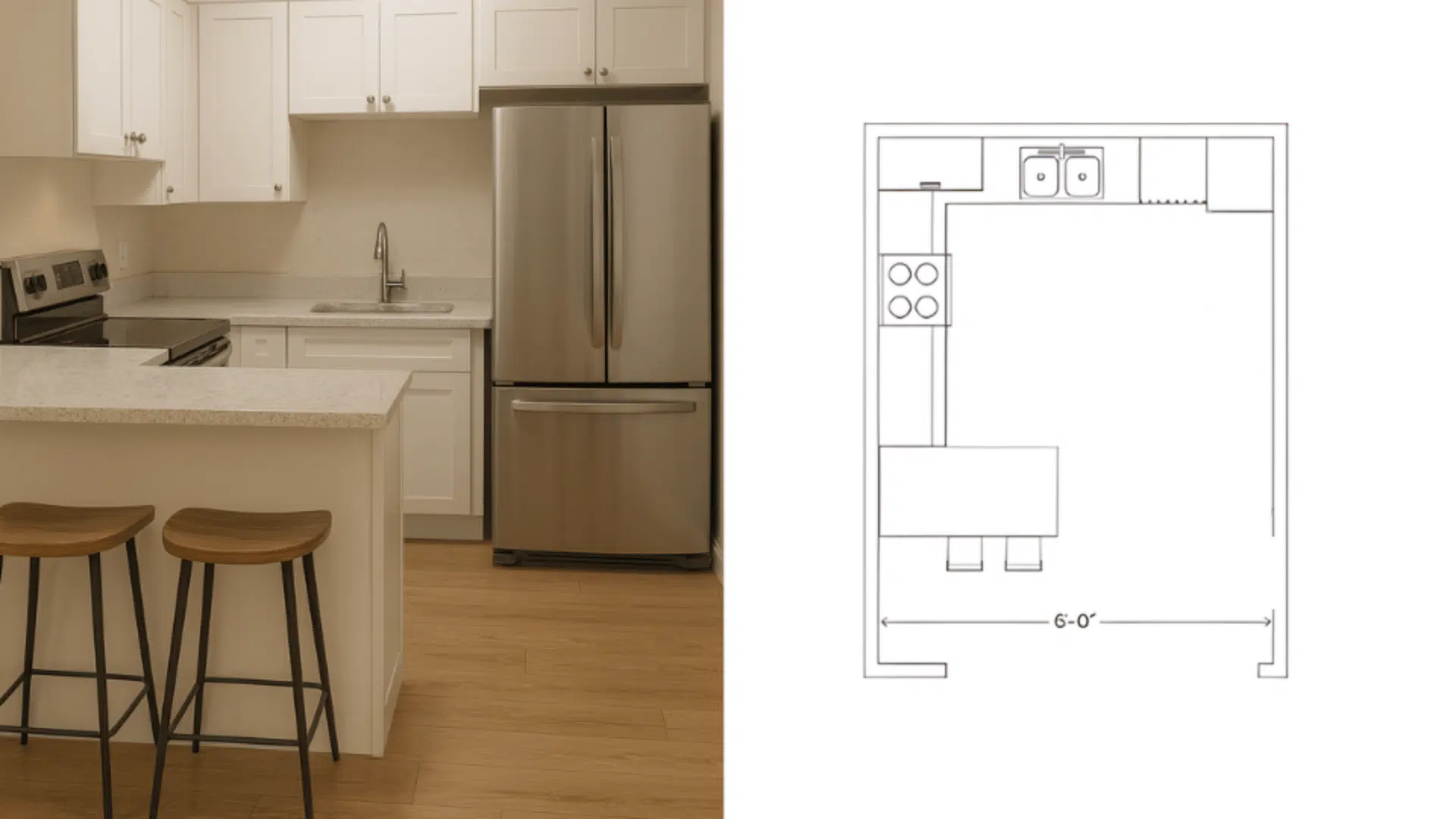
Peninsula layouts extend counters from existing cabinetry to create a partial room divider, offering island-like benefits without requiring the floor space for full perimeter clearance.
- Ideal for: Medium-sized homes, open layouts that need subtle separation between the kitchen and living areas, or spaces too narrow for traditional islands.
- Key Dimensions: The attached counter extension typically measures 3–4 feet deep and extends 4–6 feet from the wall, matching standard island proportions.
- Advantages: Adds substantial workspace and storage without consuming extra floor area, creates natural traffic boundaries, and costs less than freestanding islands.
Key Kitchen Zones and Standard Measurements
Beyond overall layout, specific kitchen measurements for individual zones and appliances ensure your space functions safely and efficiently.
1. Cooking Zone (Cooktop, Oven, and Range Area)
- Standard cooktop and range heights sit at 36 inches from the floor, matching countertop levels for seamless integration.
- The overhead clearance between the cooking surface and the range hood should be at least 24–30 inches, depending on whether you’re using a gas or an electric range.
- Professional kitchen dimensions call for 15–18 inches of heat-resistant counter space on at least one side of the cooktop for safe pot placement.
- Microwaves installed above ranges typically mount 13–16 inches above the cooking surface, while standard over-the-range models sit around 66 inches from the floor.
- Wall ovens are installed at varying heights based on user preference, though 31 inches to the bottom of the oven creates comfortable access without excessive bending.
2. Cleaning Zone (Sink and Dishwasher Area)
- The kitchen sink typically measures 22–30 inches wide and installs with its rim at standard 36-inch counter height, positioned to maximize workflow between cooking and prep areas.
- Dishwashers should sit within 36 inches of the sink for convenient plumbing connections and logical workflow when rinsing and loading dishes.
- Adequate kitchen measurements around the sink include at least 18–24 inches of counter space on one side for dish drying and food prep.
- Ensure cabinet doors and dishwasher fronts have sufficient swing clearance, typically 21 inches minimum, so they don’t collide with islands, peninsulas, or opposing cabinets when fully opened.
3. Preparation Zone (Countertops and Work Surfaces)
- Standard countertop height is 36 inches from the floor, with a depth of 24 inches, dimensions that accommodate most adults comfortably during food preparation.
- Professional guidelines recommend at least 36 inches of continuous counter space for primary prep work, though 42–48 inches proves more practical for serious cooking.
- Position prep areas near the sink and cooktop to minimize steps during meal preparation, ideally creating counter landing zones beside every major appliance.
- Under-cabinet task lighting dramatically improves visibility and reduces eye strain, while keeping frequently used items within the 15–48 inch height range, the most ergonomic reach zone increases accessibility and cooking efficiency.
4. Storage Zone (Cabinets, Refrigerator, and Pantry)
- Base cabinets stand 34.5 inches tall (36 inches with countertop) and typically run 24 inches deep, while wall cabinets mount 18 inches above counters with standard depths of 12–13 inches.
- Upper cabinet heights range from 30 to 42 inches, depending on ceiling height and user needs, with the bottom shelf at approximately 54 inches from the floor for comfortable access.
- Pantries work best with 12–16-inch shelf depths and 12–18-inch vertical spacing between shelves to accommodate a range of package sizes.
- Refrigerators require a minimum width of 36 inches for standard models, with at least 1 inch of clearance on all sides for ventilation and door swing.
- Smart standard kitchen size planning places the refrigerator at one end of the work triangle with adequate counter space nearby, ideally 15 inches for unloading groceries and staging ingredients efficiently.
Smart Design Ideas for Spacious Kitchens
Even when working within typical kitchen dimensions, smart design choices can dramatically improve functionality and make your space feel more expansive.
| Design Element | Purpose & Tips |
|---|---|
| Modular Cabinetry | Adapts to any layout, galley, L-shaped, or U-shaped, while maximizing storage and flexibility. |
| Clear Circulation Paths | Maintain 36 inches or more between work zones to allow easy movement for multiple users. |
| Light Color Palette | Use light tones on walls and cabinets to reflect natural light and make the kitchen appear larger. |
| Layered Lighting | Combine ambient, task, and accent lighting to improve both functionality and atmosphere. |
| Open or Glass Cabinets | Break up solid cabinetry to reduce visual weight, add depth, and create a more open feel. |
Wrapping It Up
Mastering kitchen dimensions turns your space from merely functional to exceptional. Standards guide you toward efficient layouts while remaining flexible for personal needs.
Before remodeling or building, plan carefully, possibly consulting an experienced kitchen designer who understands standard kitchen size conventions or experimenting with digital planning tools that let you visualize different configurations.
This preparation ensures your investment delivers lasting satisfaction, creating a kitchen that serves you beautifully for decades.