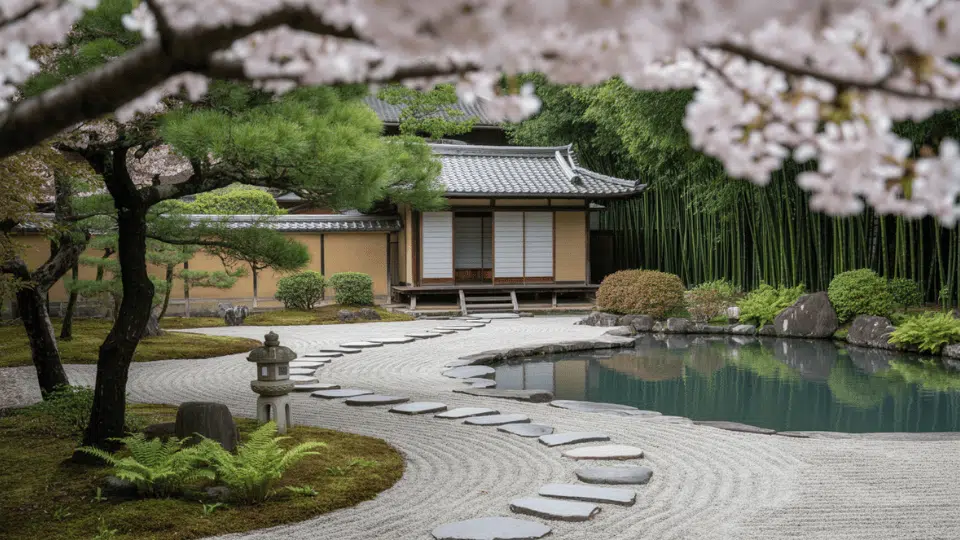
Japanese garden design has long attracted people for its peaceful beauty and evergreen vibe. These spaces turn ordinary yards into retreats that calm the mind and soothe the soul.
The magic lies in simple elements like rocks, water, and carefully chosen plants arranged with intention and meaning.
People today can bring this ancient art form to life in spaces large and small, from sprawling backyards to compact urban patios.
Here are some inspiring Japanese garden ideas that reveal the core principles behind these stunning landscapes. Each idea offers a fresh perspective on turning any garden into a peaceful sanctuary.
What Makes Japanese Garden Design Unique?
Japanese garden design is distinctive because it treats the landscape as an evolving work of art that grows more beautiful with time.
Instead of relying on bold decorations, it uses subtle details to create a quiet sense of harmony. Each space is shaped to feel calm, intentional, and deeply connected to nature.
The philosophy behind these gardens highlights natural forms, gentle movement, and the passage of seasons. Rocks, plants, and water features are chosen not only for their beauty but for the stories they tell.
Contrasting shapes and textures work together to make the space feel balanced without being predictable.
Principles of Japanese Garden Design
Japanese garden design is rooted in creating a peaceful environment that reflects nature in its purest form. These principles guide the layout, structure, and emotional tone of the space.
- Simplicity and Minimalism: Japanese gardens use clean lines, open spaces, and very few elements to create a calm, uncluttered environment. This simplicity helps highlight natural beauty and encourages a peaceful state of mind.
- Natural Flow and Asymmetry: Instead of straight lines or symmetrical patterns, Japanese gardens follow the gentle irregularity of nature. Curved paths, casually placed stones, and organic plant shapes create a soft sense of movement throughout the space.
- Symbolism and Meaning: Every feature in the garden represents something more profound, such as stones symbolizing mountains or gravel reflecting the flow of water. These symbolic choices add emotional richness and transform the garden into a meaningful landscape.
- Balance through Contrast: Harmony is created by pairing contrasting elements, such as rough and smooth textures or tall and low forms. These subtle contrasts keep the garden visually balanced without relying on perfect symmetry.
- Borrowed Scenery (Shakkei): This principle incorporates nearby views, such as trees, buildings, or the sky, to expand the sense of space. Borrowed scenery helps small gardens feel larger and more connected to their surroundings.
Choosing a Perfect Japanese Garden Style
Japanese garden design encompasses several distinct styles, each with its own purpose and appeal. Understanding these traditional approaches helps people select the direction that best fits their space and lifestyle goals.
1. Zen Garden Style
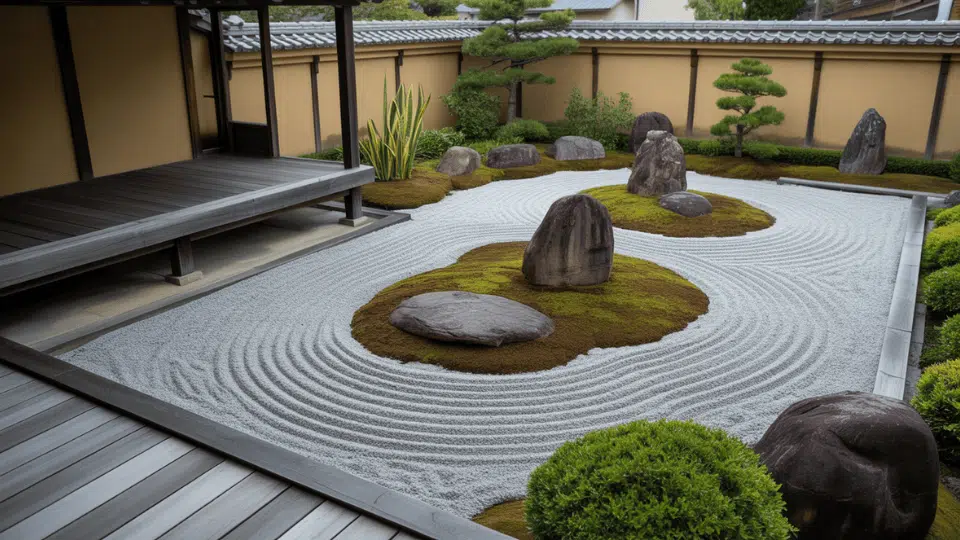
Zen gardens strip away excess to create meditative spaces centered on raked gravel or sand patterns surrounding carefully placed rocks.
Perfect for small courtyards or side yards, this style of Japanese garden design brings contemplative calm to compact areas.
The simplicity makes maintenance straightforward while delivering maximum visual impact through thoughtful rock placement and clean lines.
2. Tea Garden Style
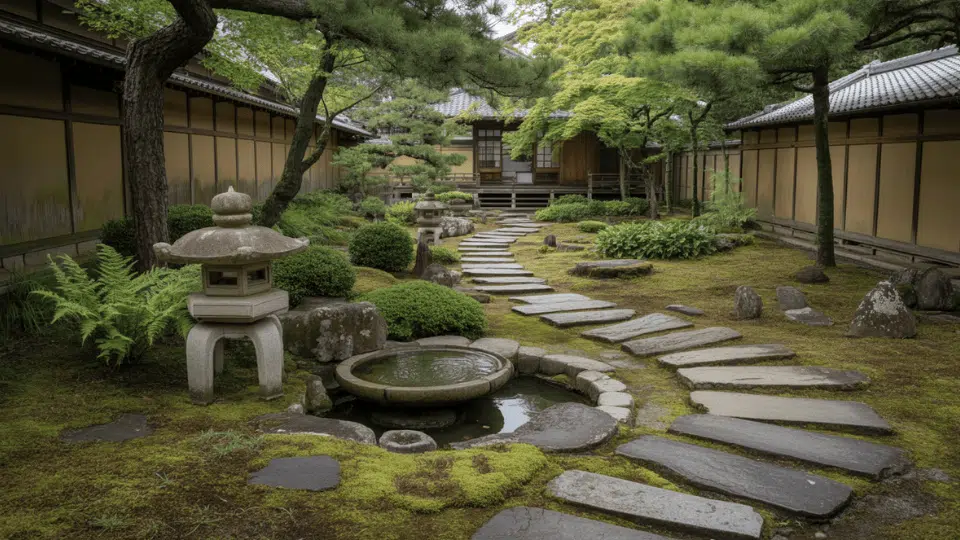
Tea gardens create intimate pathways leading to a central gathering space, traditionally a tea house or seating area.
Stone lanterns, water basins, and stepping stones guide visitors through the landscape while moss and shade-loving plants soften the path.
Natural materials and understated plantings maintain a humble, welcoming atmosphere that encourages slowing down and mindful observation.
3. Pond and Island Style
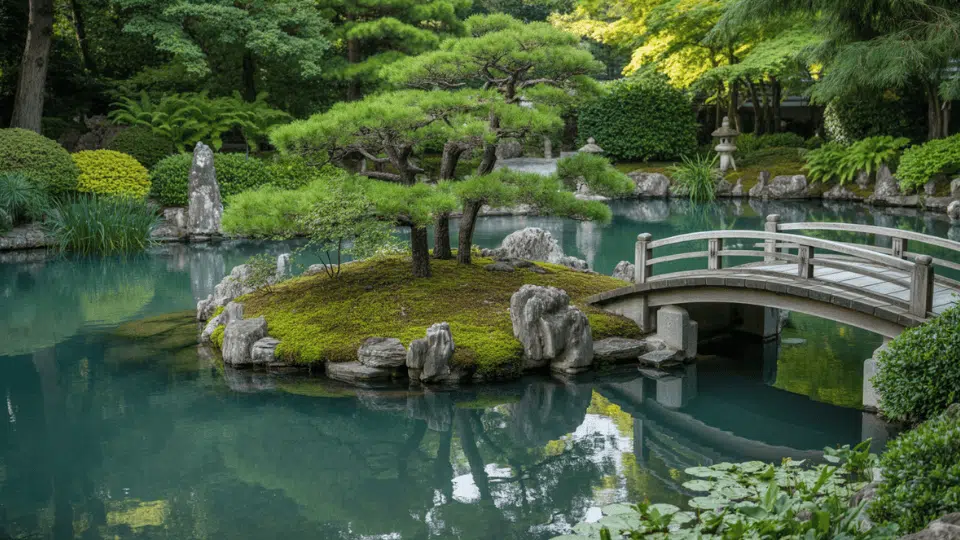
Pond gardens feature water as the central element, with islands, bridges, and shoreline plantings creating dynamic reflections and viewing angles.
Koi fish add movement and color while aquatic plants soften pond edges. This style works beautifully in larger yards where water features become focal points.
The combination of flowing water, strategic rock placement, and lush vegetation conveys the principles of Japanese garden design.
4. Stroll Garden Style
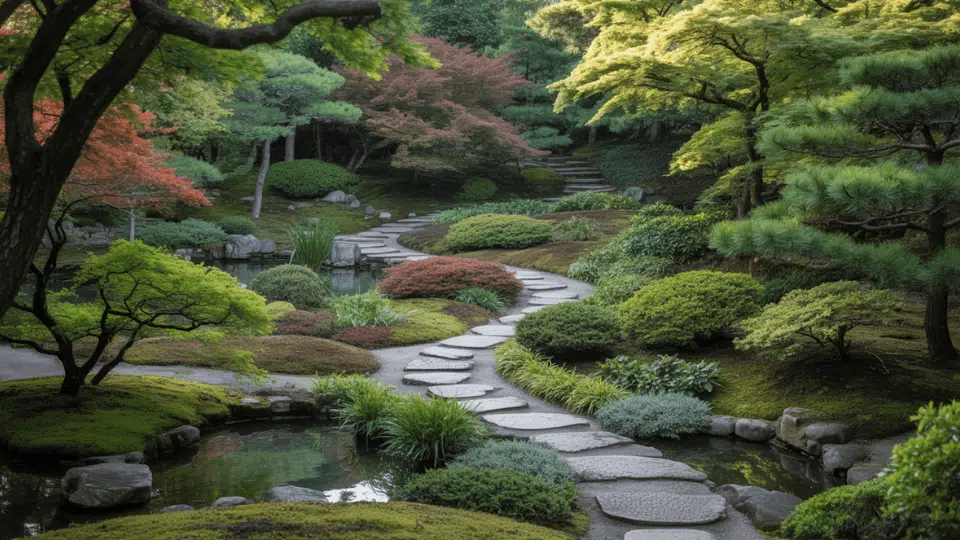
Stroll through the gardens, revealing new scenes at every step along winding paths that circle the property. Multiple viewing points, hidden features, seasonal plantings, and repeat visits.
These landscapes work well in medium to large-scale spaces, where layered plantings and carefully crafted sightlines create mystery.
Winding trails, varied highlights, and strategic plant screening make stroll gardens among the most immersive Japanese gardens for properties with room to roam.
Inspiring Japanese Garden Design Elements
These Japanese garden ideas bring ancient design principles into modern outdoor spaces. Each concept focuses on specific elements that work together to create peaceful, balanced landscapes.
1. Stone and Moss Garden
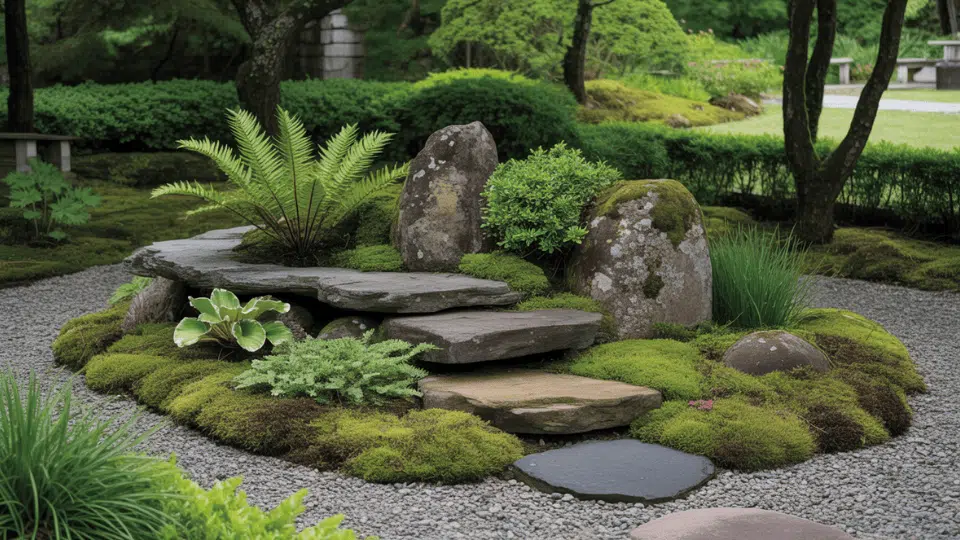
Create an evergreen foundation by pairing weathered stones with velvety moss carpets. This classic combination captures the essence of aged beauty central to Japanese garden design.
- Elements: Large feature rocks, gravel base, moss groundcover, minimal hardscaping
- Plant Suggestions: Irish moss, Scotch moss, ferns, miniature hostas
- Best For: Shaded areas, woodland settings, low-maintenance landscapes
2. Serene Koi Pond
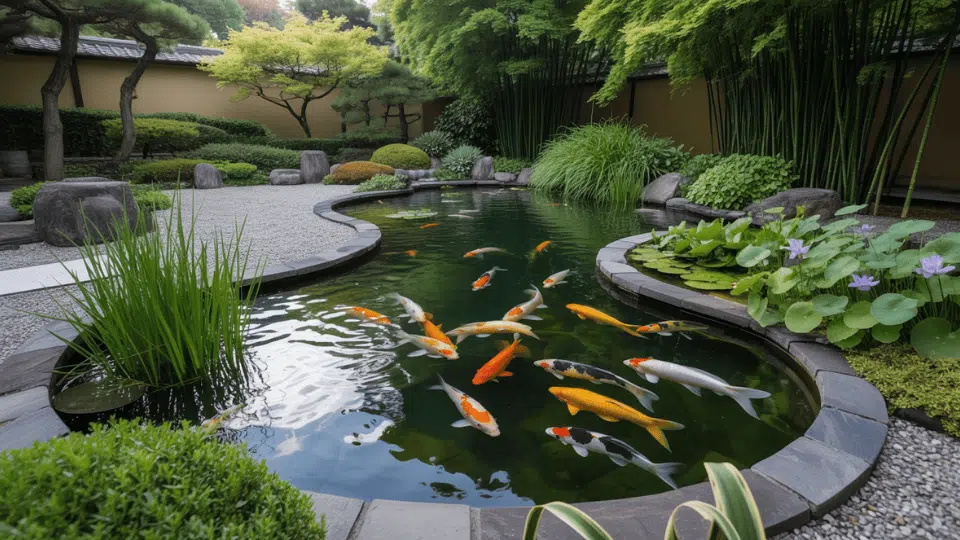
Turn the backyard into a living canvas with a pond featuring colorful koi fish gliding through clear water.
Movement and reflection combine to create a dynamic centerpiece that changes throughout the day, bringing life and energy to Japanese garden ideas while providing a meditative focal point that rewards extended observation.
- Elements: Liner pond, filtration system, rocks for edging, submerged plants
- Plant Suggestions: Water lilies, lotus, iris, papyrus, water lettuce
- Best For: Larger yards, central focal points, wildlife-friendly gardens
3. Bamboo Water Fountain for Natural Sound
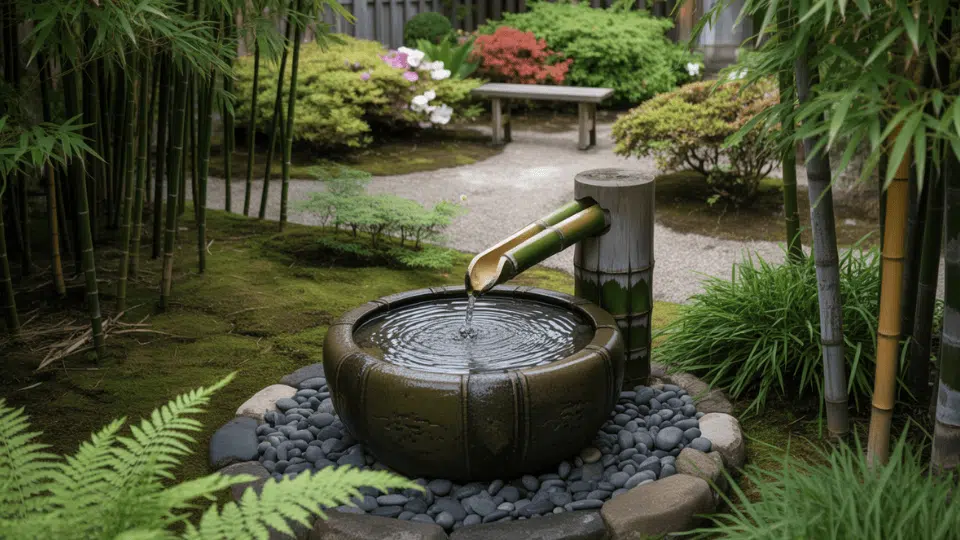
Install a bamboo spout water feature that fills and tips rhythmically, creating soothing sounds that mask urban noise and add movement to the space.
- Elements: Bamboo fountain, water basin, pump system, surrounding pebbles
- Plant Suggestions: Bamboo clumps, ferns, Japanese forest grass, azaleas
- Best For: Meditation areas, compact spaces, sound therapy gardens
4. Curved Gravel Pathway for Slow Movement
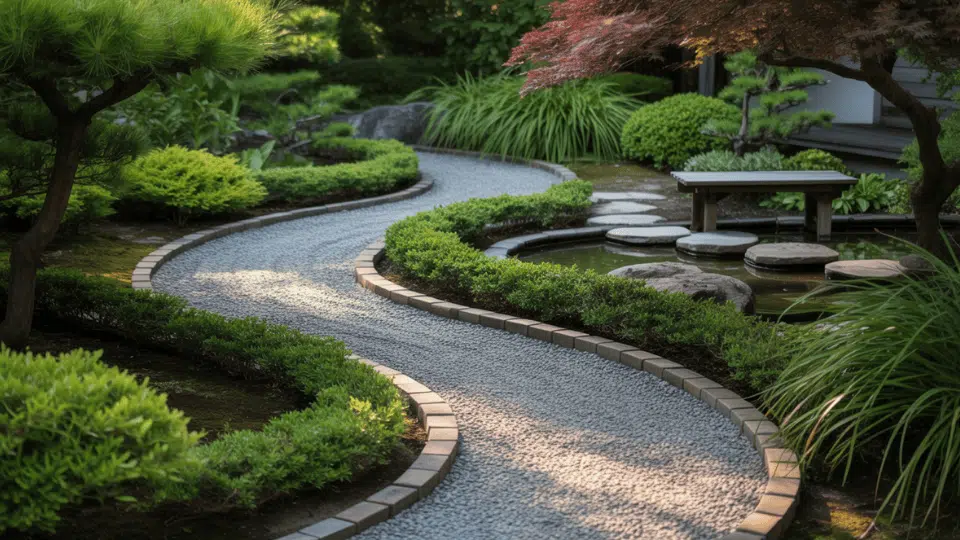
Design winding gravel paths that encourage visitors to slow down and observe their surroundings.
Gentle curves create anticipation while providing practical circulation through the garden, embodying the Japanese garden design principle of mindful movement.
- Elements: Crushed granite or pea gravel, edging stones, compacted base
- Plant Suggestions: Mondo grass edging, low junipers, ornamental grasses
- Best For: Connecting garden zones, encouraging exploration, and informal layouts
5. Minimalist Zen Rock Garden
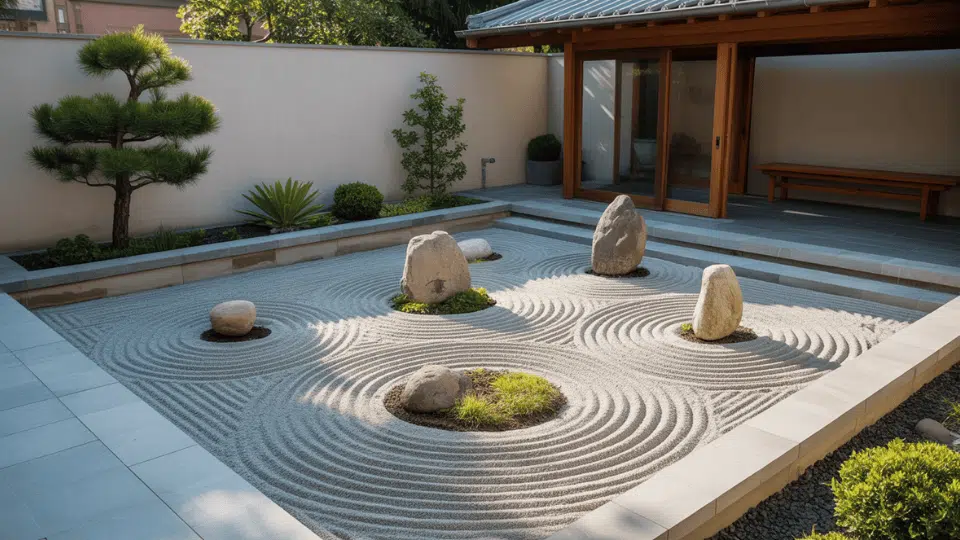
Rake patterns into fine gravel surrounding precisely placed stones to create a meditation space that delivers maximum impact through simplicity.
- Elements: Raked gravel or sand, 3-5 feature stones, low containment walls
- Plant Suggestions: Minimal or none, optional pruned pine, single specimen plant
- Best For: Small courtyards, contemporary settings, contemplative spaces
6. Rustic Tea House Corner
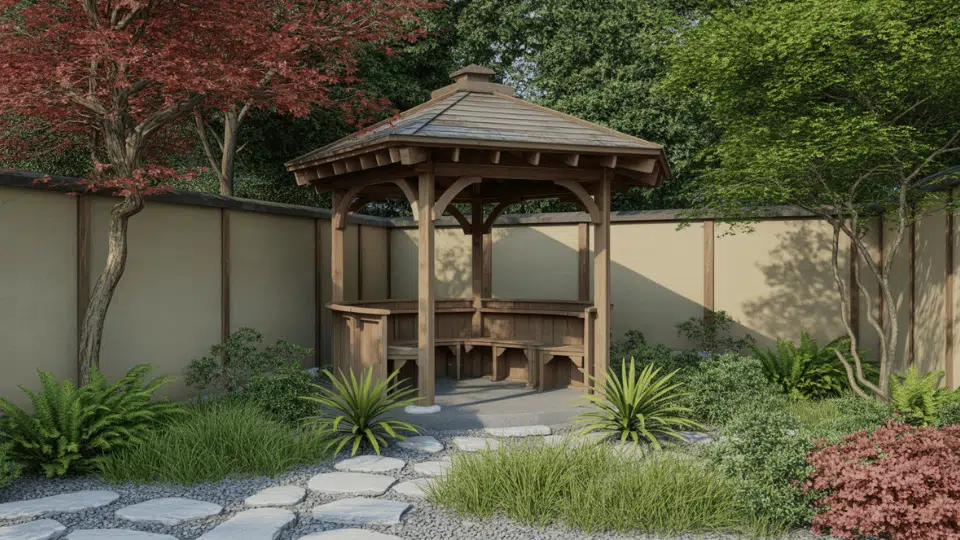
Build or place a small shelter that serves as a destination point for quiet reflection.
This structure provides shade while serving as an architectural focal point that draws people through the landscape, establishing a sense of arrival central to the traditional Japanese garden, where every experience has a purpose and a meaning.
- Elements: Wooden pavilion or gazebo, stone approach, surrounding plantings
- Plant Suggestions: Japanese maples, camellias, heavenly bamboo, ferns
- Best For: Entertaining spaces, reading nooks, destination points in larger yards
7. Red Japanese Footbridge
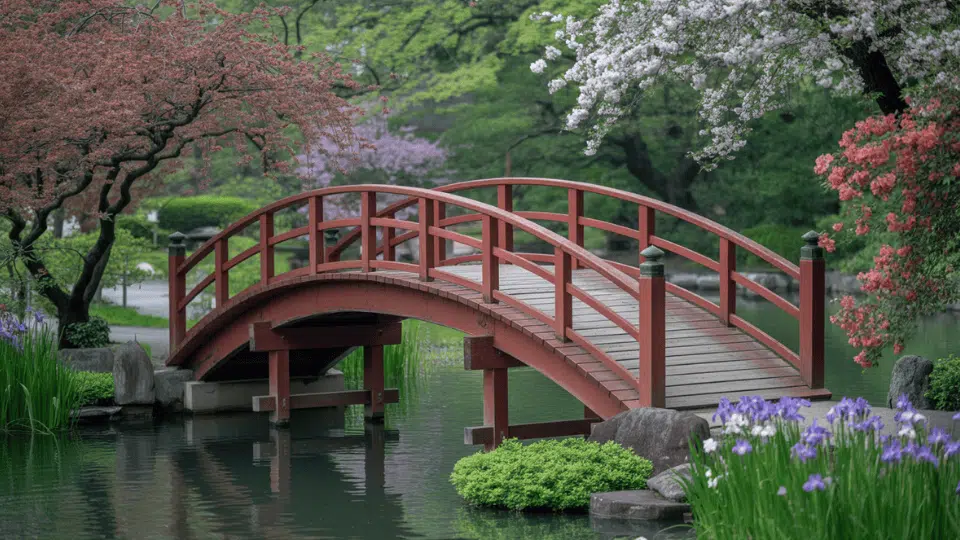
Span a pond, stream, or dry riverbed with an arched bridge painted in traditional vermillion, adding bold vertical interest and symbolic meaning.
- Elements: Arched wooden bridge, red paint or stain, handrails, support posts
- Plant Suggestions: Weeping cherries, iris along water edges, flowering quince
- Best For: Water features, creating visual transitions, adding height and drama
8. Japanese Maple as a Four-Season Focal Point
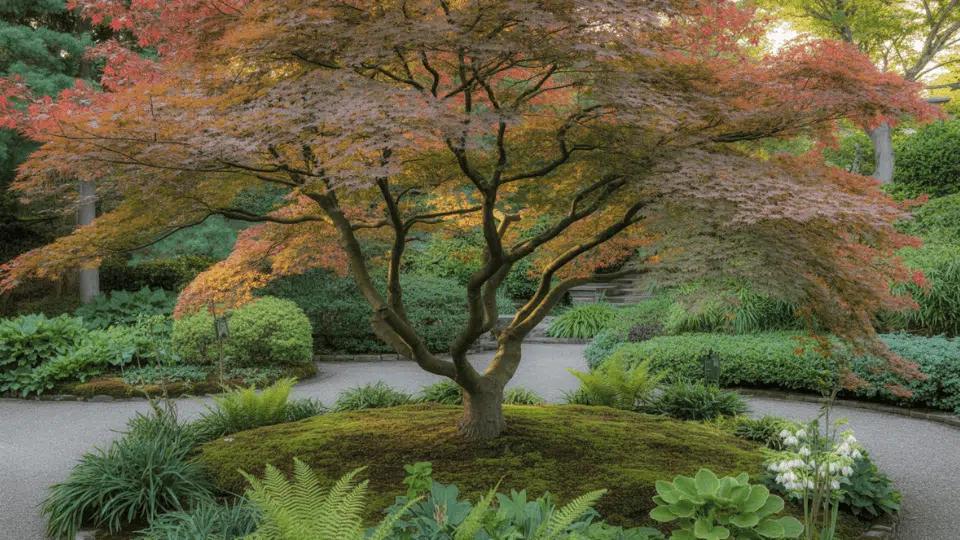
Anchor the design with a specimen Japanese maple that delivers year-round interest through spring leaves, summer shade, fall color, and winter branching structure.
This living sculpture becomes the garden’s centerpiece in Japanese garden design.
- Elements: Single specimen tree, understory planting, mulch ring, spotlighting
- Plant Suggestions: Japanese maple varieties, underplanted with hostas, ferns, hellebores
- Best For: Mixed borders, entry gardens, small to medium properties
9. Bamboo Privacy Screens
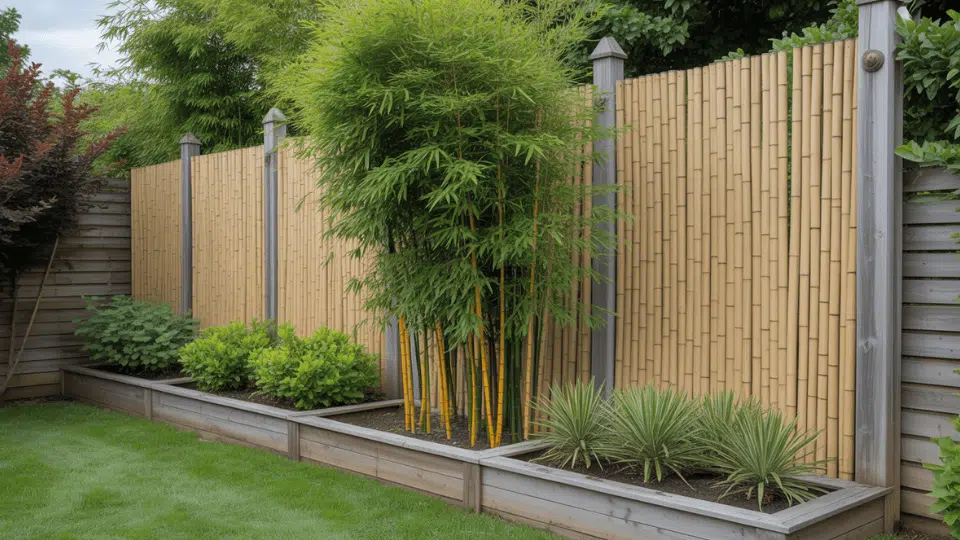
Plant clumping bamboo varieties or install bamboo fencing to create natural divisions that add height, movement, and sound.
- Elements: Bamboo plants or panels, containment barriers for runners, support posts
- Plant Suggestions: Clumping bamboo varieties, heavenly bamboo, and ornamental grasses
- Best For: Property boundaries, hiding utilities, creating garden rooms
10. Dry River Bed for Symbolic Water
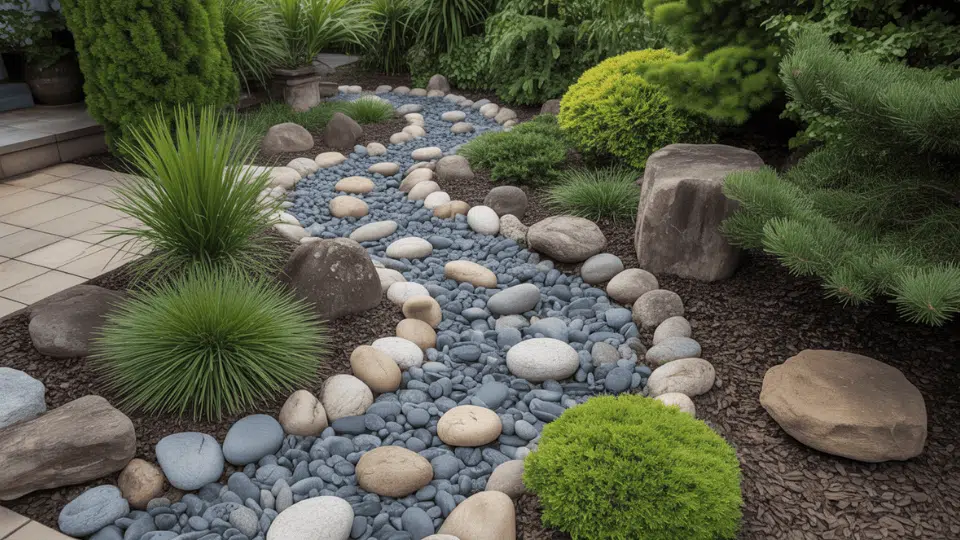
Arrange smooth river rocks in flowing patterns that suggest water movement without actual moisture.
This practical alternative captures water’s essence while solving drainage challenges, making it perfect for Japanese garden ideas in arid climates or where water features aren’t feasible but the symbolism remains essential.
- Elements: River rocks in varied sizes, border stones, and subtle elevation changes
- Plant Suggestions: Ornamental grasses, sedges, black mondo grass, dwarf conifers
- Best For: Drainage solutions, water-restricted climates, low-maintenance designs
11. Stepping Stone Path to a Secret Nook
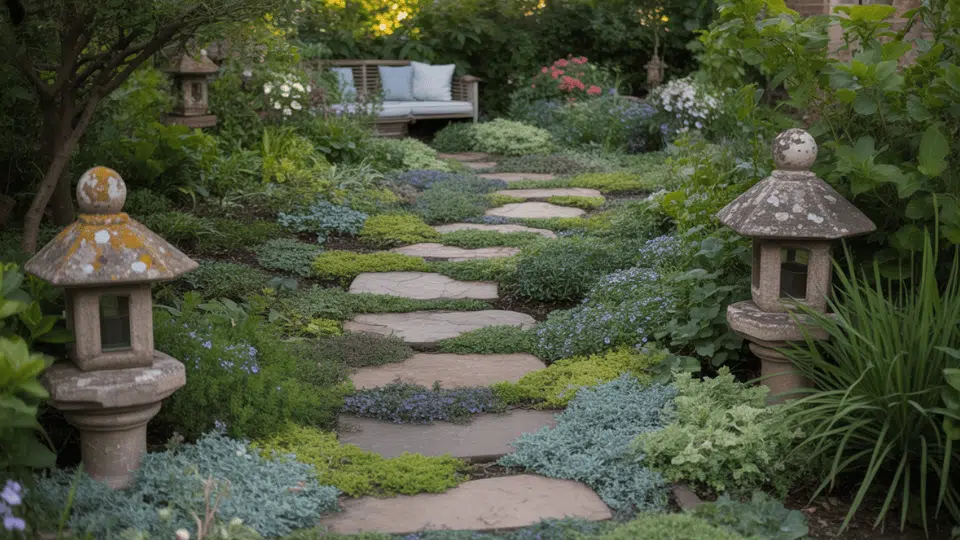
Place irregularly shaped flat stones across the lawn or ground cover to create an intentional path, where each step becomes a mindful choice.
- Elements: Flat natural stones, gravel or moss between stones, destination feature
- Plant Suggestions: Creeping thyme, Blue star creeper, moss, miniature mondo grass
- Best For: Lawn alternatives, casual circulation, protecting delicate groundcovers
12. Pathway Accented with Stone Lanterns
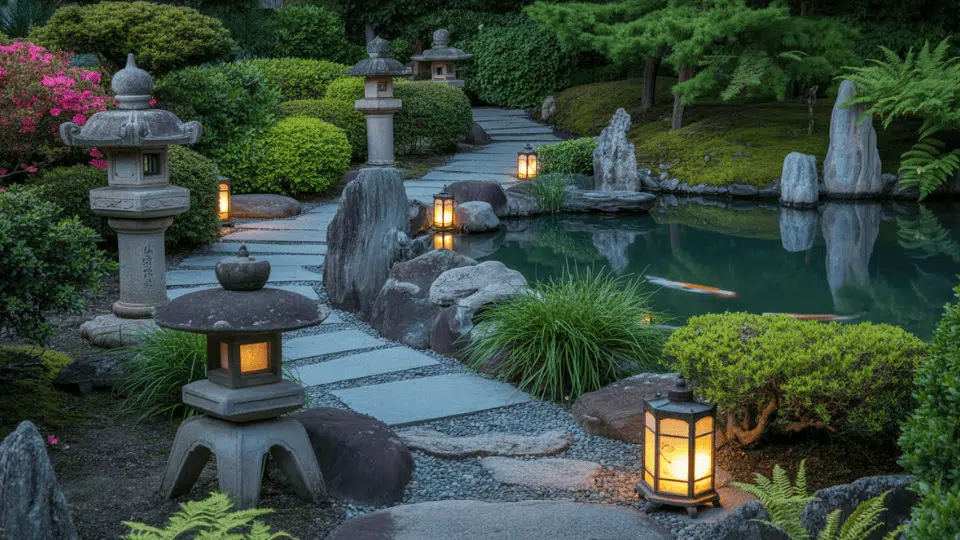
Light the way with traditional stone lanterns positioned along paths or near water features. These sculptural elements function as art pieces by day and provide gentle lighting at night, adding layers of meaning to the Japanese garden.
- Elements: Stone lanterns (various styles), pathway lighting, placement stones
- Plant Suggestions: Boxwood, azaleas, ornamental grasses, ground-hugging junipers
- Best For: Evening gardens, pathway definition, and adding vertical sculpture
13. Mossy Groundcover for Soft Texture
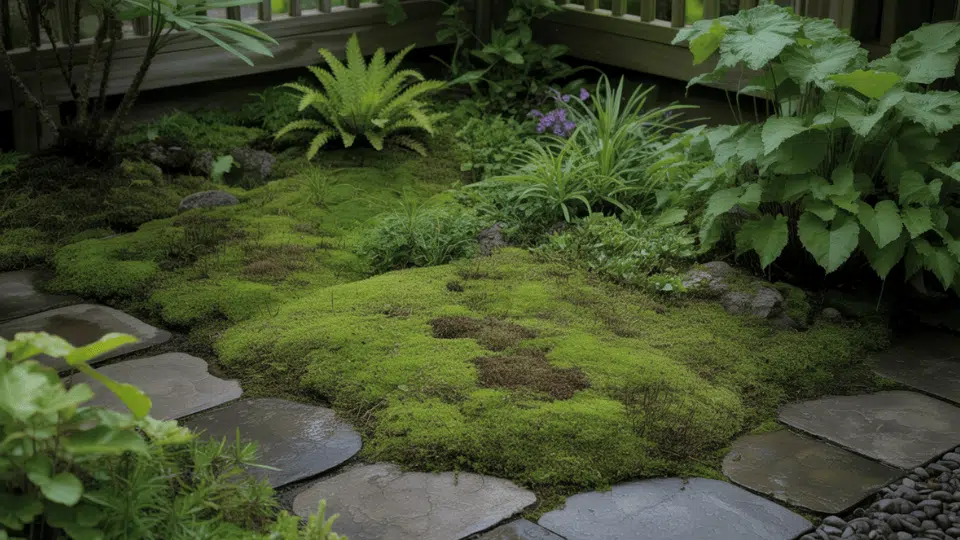
Replace a high-maintenance lawn with moss varieties that create a lush, velvety carpet in shaded areas.
This shade-loving solution embodies the aged beauty central to the Japanese garden, requiring minimal mowing or fertilizing while delivering a soft texture that invites barefoot exploration.
- Elements: Moss species suited to the climate, acidic soil, and misting system
- Plant Suggestions: Various moss species, ferns, small hostas, coral bells
- Best For: Shade gardens, high-humidity areas, reducing lawn maintenance
14. Small Island Garden within a Pond
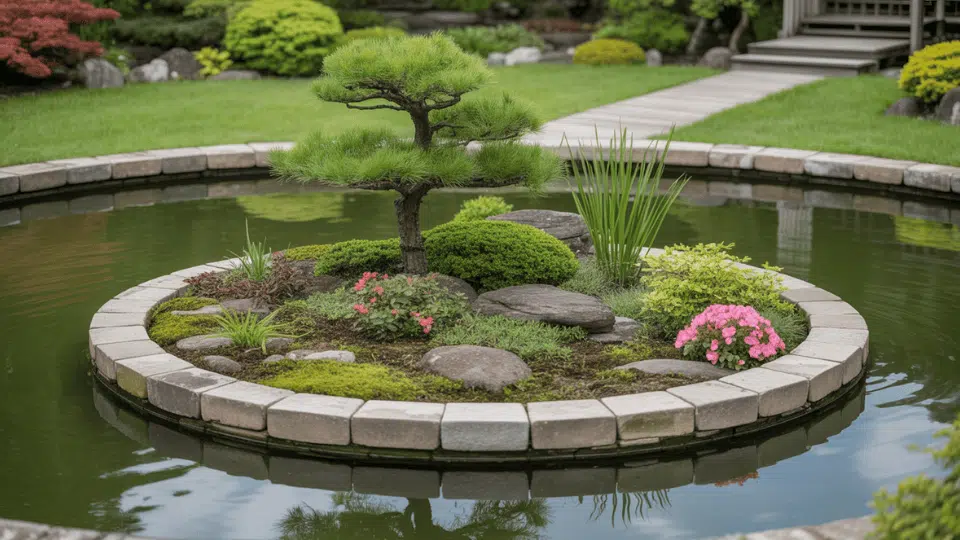
Create a miniature landscape surrounded by water, accessible by bridge or purely visual.
This technique adds dimension while representing traditional island symbolism found throughout Japanese garden ideas, in which elements represent larger natural formations and philosophical concepts of isolation, experience, and connection.
- Elements: Raised planting area, water circulation, viewing bridge or platform
- Plant Suggestions: Dwarf pines, azaleas, ornamental grasses, small Japanese maples
- Best For: Medium to large ponds, creating focal points, symbolic landscapes
15. Layered Stone Waterfall Feature
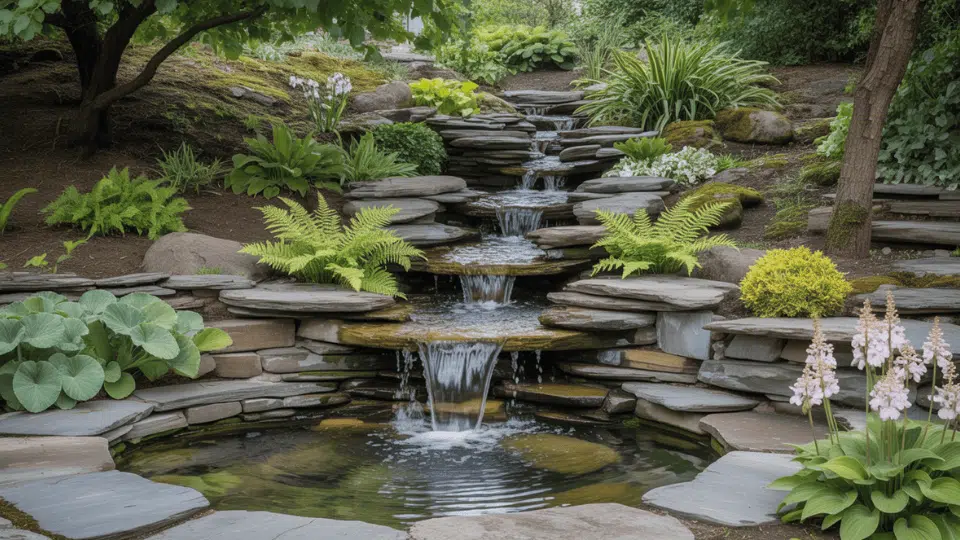
Stack flat rocks to create cascading water that produces varied sounds as it tumbles, bringing movement and auditory interest.
- Elements: Stacked stone, pump and reservoir, surrounding boulders, basin
- Plant Suggestions: Ferns, hostas, ligularia, astilbe, Japanese iris
- Best For: Sloped properties, masking noise, creating humidity for plants
16. Wooden Gate for Framed Views
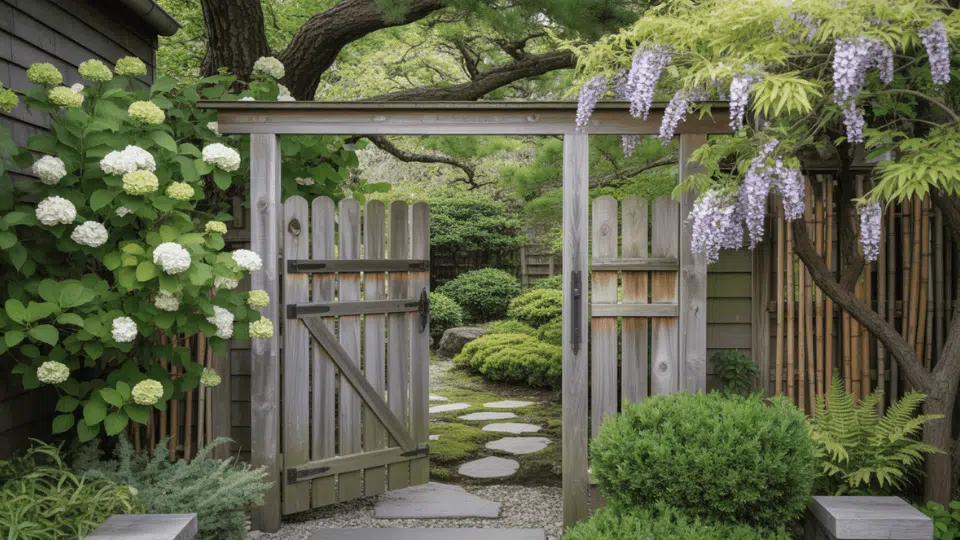
Install a simple wooden gate that frames garden views and creates intentional transitions between spaces. This threshold element builds anticipation and defines boundaries in a classic Japanese garden.
- Elements: Cedar or redwood gate, posts, simple hardware, flanking plantings
- Plant Suggestions: Climbing hydrangea, Japanese wisteria, evergreen screening
- Best For: Dividing garden rooms, creating entries, enhancing privacy
17. Meditation Bench by Water or Rocks
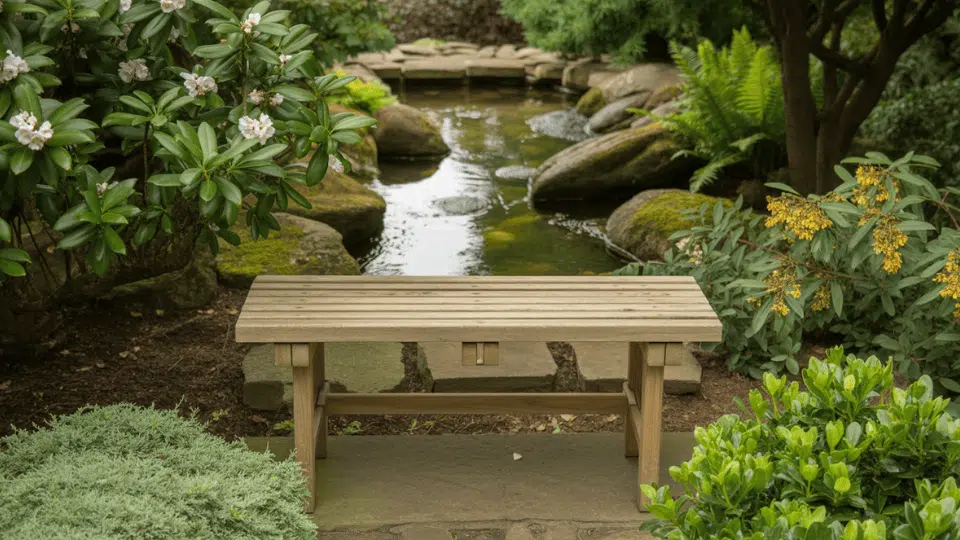
Position a simple wooden bench so it overlooks key features, such as water or stone arrangements, encouraging pause and reflection.
- Elements: Wooden or stone bench, level foundation, surrounding plantings
- Plant Suggestions: Fragrant plants like daphne, witch hazel, sweet box
- Best For: Contemplation spots, reading areas, capturing the best views
18. Gravel Base to Tie the Design Together
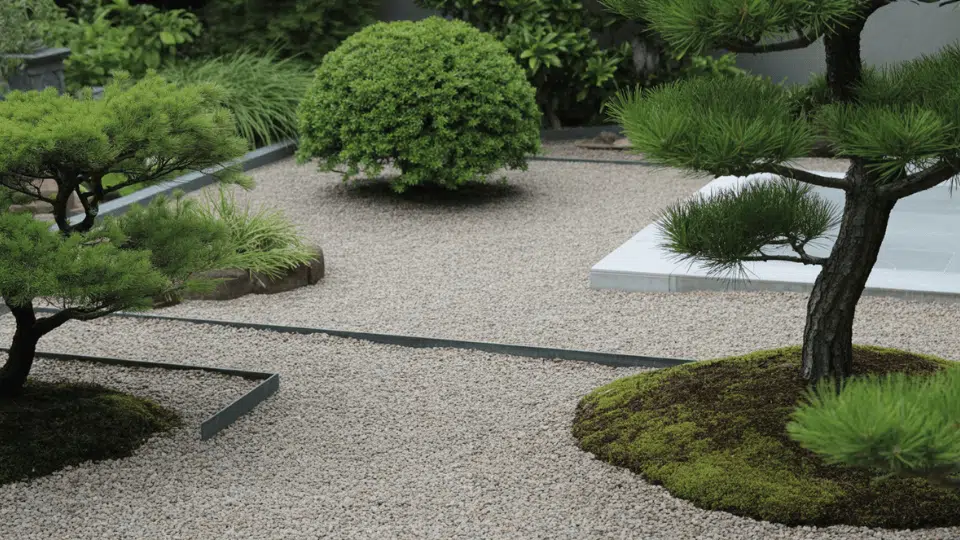
Unify separate elements with fine gravel that serves as both ground plane and design connector.
This neutral backdrop highlights plants and features while simplifying maintenance, creating cohesion across the Japanese garden that might otherwise feel disconnected or scattered throughout the property.
- Elements: Decomposed granite or fine gravel, landscape fabric, edging
- Plant Suggestions: Structural evergreens, specimen plants, minimal groundcovers
- Best For: Contemporary designs, dry climates, cohesive layouts
19. Subtle Stone Bridge
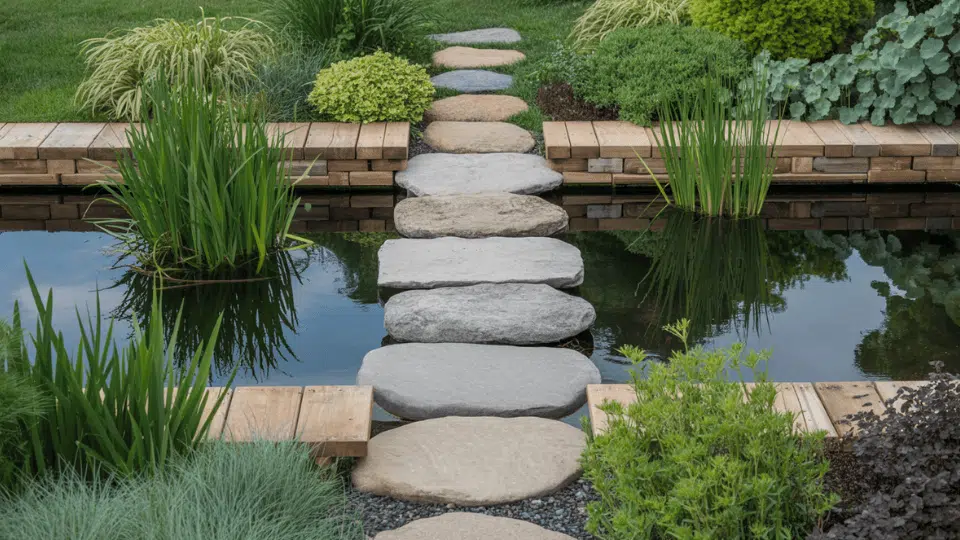
Lay flat stones across narrow water features or dry beds to create functional crossing points that maintain sightlines.
- Elements: Large flat stepping stones, support structures, minimal railings
- Plant Suggestions: Water-edge iris, rushes, low sedges, creeping Jenny
- Best For: Narrow water features, naturalistic designs, accessible crossings
20. Evergreen Pine for Year-Round Structure
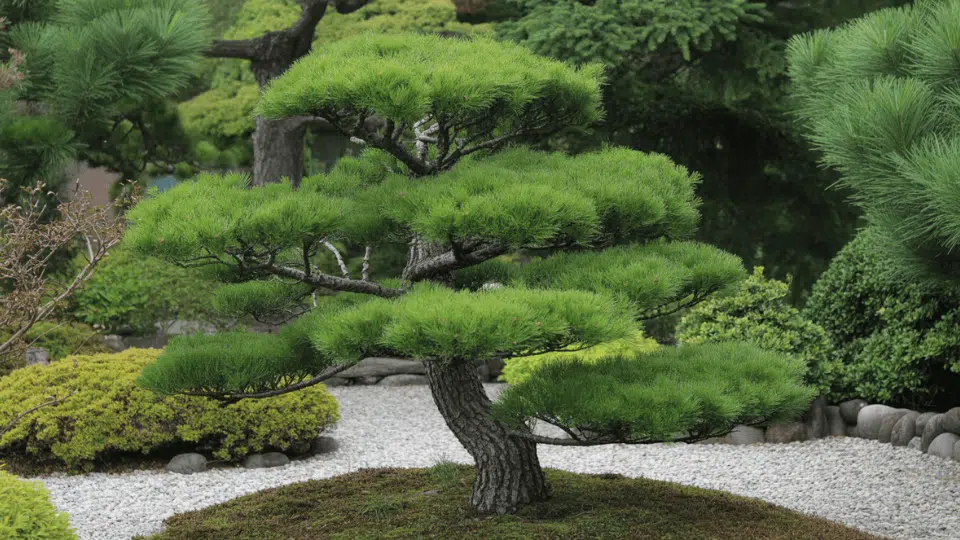
Plant sculptural pines that provide constant structure and can be pruned into artistic shapes.
These anchors maintain the integrity of Japanese garden design year-round, providing the backbone around which seasonal plants and features revolve.
- Elements: Specimen pine, pruning maintenance, understory plantings, spotlighting
- Plant Suggestions: Japanese black pine, white pine, mugo pine, dwarf varieties
- Best For: Four-season interest, sculptural focal points, evergreen structure
21. Courtyard Japanese Garden for Small Spaces
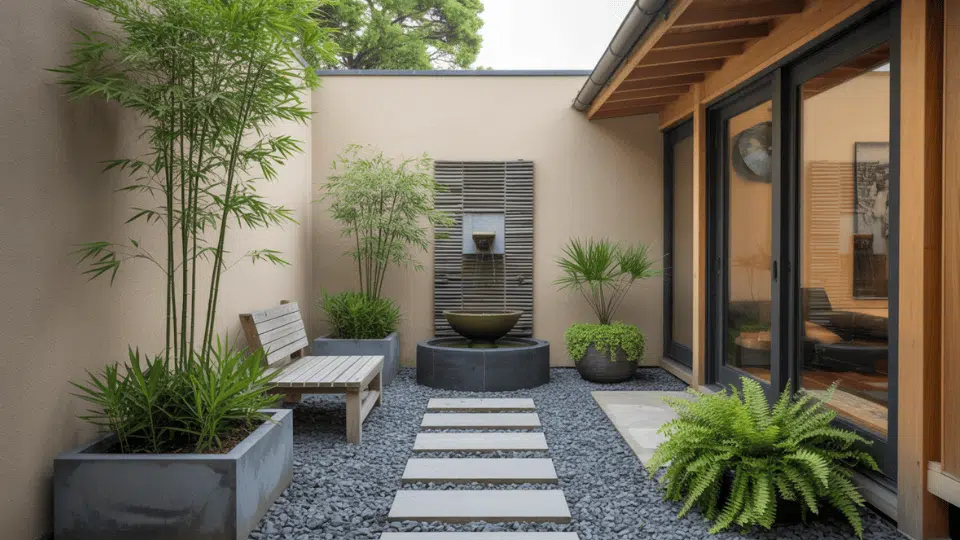
Convert enclosed courtyards into intimate retreats using container plants, minimal features, and vertical elements to maximize limited square footage.
- Elements: Container plantings, wall-mounted water feature, gravel flooring, minimal furniture
- Plant Suggestions: Dwarf Japanese maples, bamboo in containers, ferns, hostas
- Best For: Urban settings, townhomes, entryways, interior courtyards
22. Layered Shrub Planting for Depth
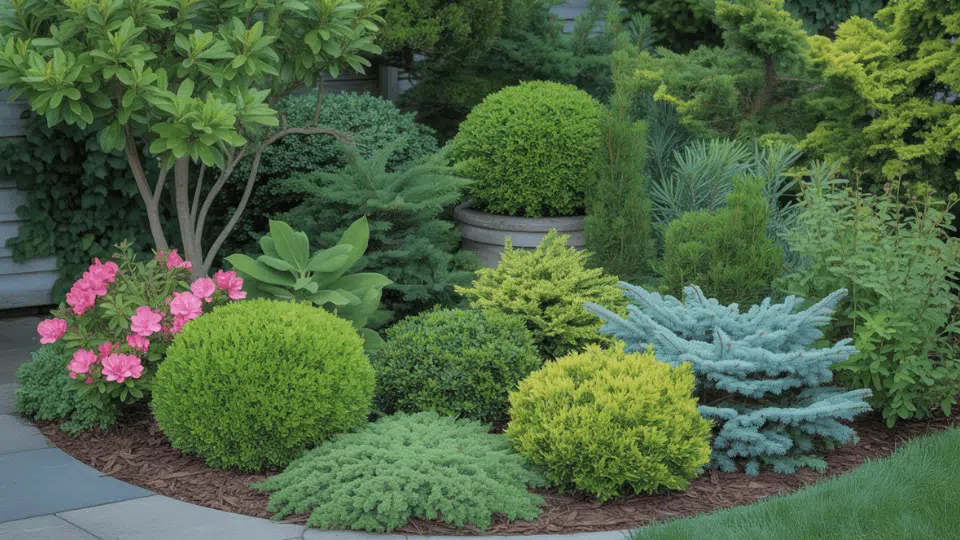
Arrange shrubs in overlapping layers with varied heights and textures to create visual depth that makes spaces feel larger.
- Elements: Varied shrub heights, background screening, groundcover transitions
- Plant Suggestions: Azaleas, boxwood, nandina, pieris, dwarf conifers
- Best For: Border plantings, screening, creating privacy layers
23. Minimal Reflecting Pool
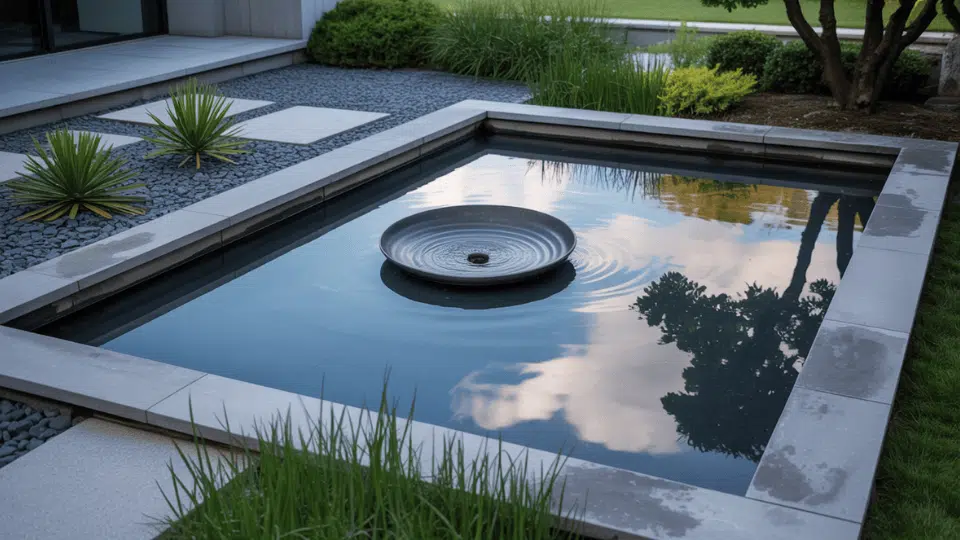
Create a shallow, still water surface that mirrors the sky and the surrounding plants.
This contemplative element adds space and light while requiring minimal maintenance, embodying the restrained vibe of a Japanese garden where less truly becomes more through careful placement and proportions.
- Elements: Shallow basin, dark liner, stone edging, minimal circulation
- Plant Suggestions: Minimal aquatic plants, surrounding grasses, specimen trees nearby
- Best For: Contemporary settings, small spaces, reflective focal points
24. Feature Boulder as Natural Sculpture
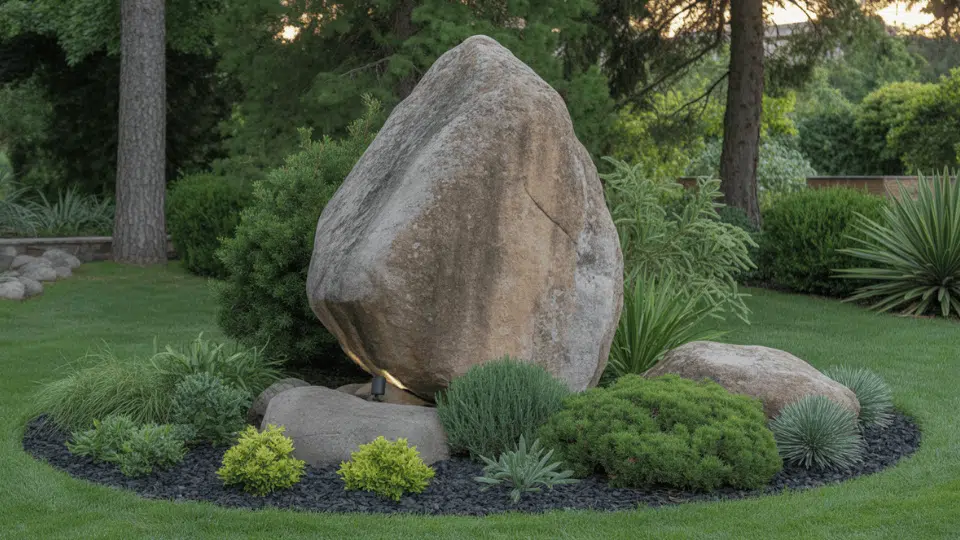
This statement rock becomes a sculptural focal point in a Japanese garden, representing mountains or islands while providing visual weight that grounds the entire composition and draws the eye through careful placement and scale.
- Elements: Large specimen boulder, placement base, surrounding plantings, lighting
- Plant Suggestions: Low groundcovers, ornamental grasses, prostrate conifers
- Best For: Establishing focal points, naturalistic designs, and all property sizes
25. Moon Viewing Platform (Tsukimi Dai)
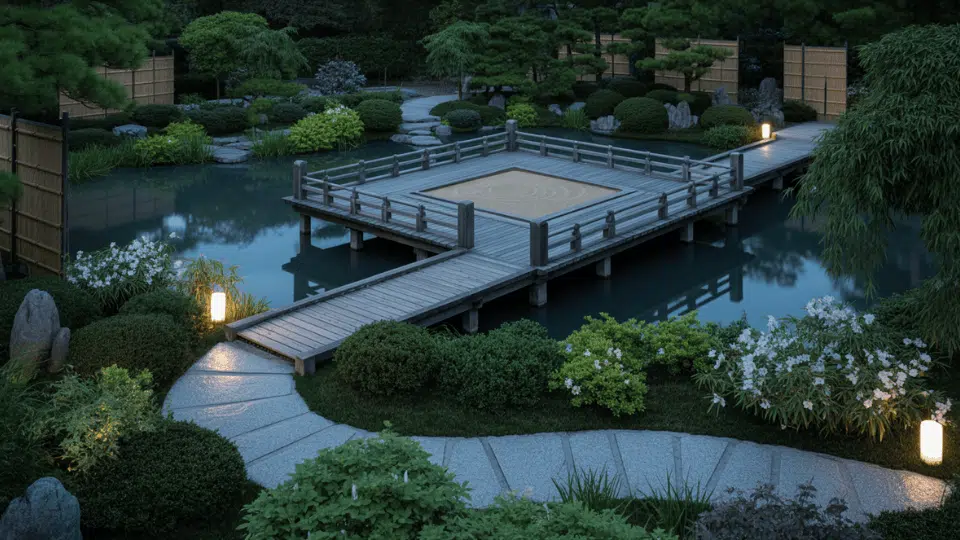
Build an uplifted deck or platform, positioned to view the moon’s reflection on water or enjoy evening garden views.
This traditional element connects the landscape to the sky, creating a purposeful space for astronomical observation and nighttime contemplation that extends the garden’s function beyond daylight hours in a Japanese garden.
- Elements: Raised wooden platform, seating area, approach path, surrounding privacy
- Plant Suggestions: Night-blooming flowers, white-flowering plants, fragrant selections
- Best For: Properties with water features, evening entertainment, and astronomical viewing
Maintenance Tips for a Tranquil Look
Japanese garden requires ongoing care to maintain its peaceful appearance and natural balance.
Regular attention to key tasks preserves the intentional simplicity that makes these ideas so appealing while preventing overgrowth from obscuring carefully planned compositions.
- Prune plants to emphasize natural form rather than forcing geometric shapes, removing only crossing branches and maintaining the plant’s inherent structure while encouraging horizontal growth patterns that create visual calm.
- Keep moss and groundcovers healthy by maintaining consistent moisture, promptly removing fallen leaves, and gently brushing away debris to prevent smothering while allowing natural spreading.
- Refresh gravel and stone features by raking patterns in Zen areas, replenishing pathways as material compacts, and repositioning displaced edging stones to maintain clean lines.
- Perform seasonal cleanup by removing spent blooms, cutting back perennials in late fall, and clearing debris from water features before winter, while preparing structures for weather changes.
- Control growth strategically by thinning dense plantings to preserve sightlines, managing bamboo spread with root barriers, and editing volunteer seedlings that disrupt the composition’s balance.
Conclusion
Creating a successful outdoor retreat means understanding core principles while adding personal touches that reflect individual taste and lifestyle.
Japanese garden design thrives when homeowners honor the traditions of balance and simplicity while adapting elements to their unique properties and preferences.
The path forward involves experimenting with these Japanese garden ideas, observing how spaces evolve through seasons, and making thoughtful adjustments over time.