
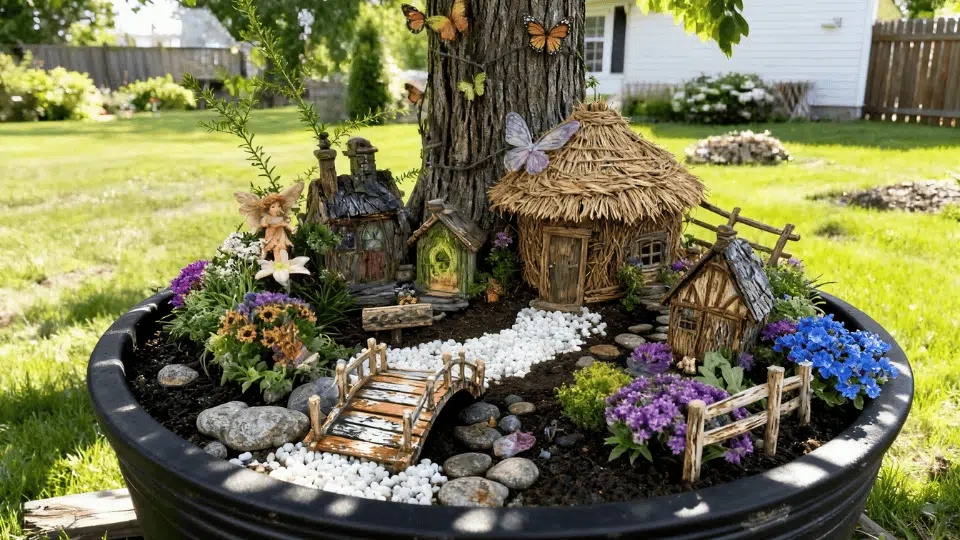
Creating a magical miniature world in the backyard brings joy to any outdoor space.
These tiny wonderlands combine natural elements like moss, pebbles, and miniature plants with charming accessories to craft scenes straight from storybooks.
Backyard fairy garden ideas range from simple potted displays to elaborate outdoor installations featuring tiny houses, winding pathways, and hidden surprises.
Fairy garden ideas appeal to people of all ages, offering a creative outlet that connects them with nature while adding personality to outdoor living areas.
What is a Fairy Garden and Why are They So Popular?
A fairy garden is a miniature garden scene featuring tiny plants, moss, stones, and whimsical decorations such as small houses, furniture, and figurines.
These chirpy displays work beautifully both indoors in containers or outdoors in garden beds, offering flexibility for any living situation.
Fairy gardens have surged in popularity thanks to the growing DIY gardening movement that encourages personalized outdoor spaces.
These magical miniatures adapt to any size space, from sprawling backyards to compact balconies and tabletops, making them accessible regardless of square footage or gardening experience.
Materials You Need to Make a Fairy Garden
Building a fairy garden starts with gathering the right materials to bring miniature magic to life. The essential supplies form the foundation, while decorative elements add personality and charm to the scene.
| Category | Items | Purpose |
|---|---|---|
| Basic Supplies | Pot or container, potting soil, pebbles or gravel, moss, small plants, fairy figurines | Creates the foundation and structure of the fairy garden scene |
| Decorative Add-ons | Fairy houses, micro furniture, walkways and stepping stones, bridges, fences, signs, and LED fairy lights | Adds whimsical details, personality, and visual interest to the miniature landscape |
| Plant Selection | Succulents and cacti, moss varieties, herbs (thyme, rosemary), ground cover plants | Provides living elements that require low maintenance while creating realistic, scaled scenery |
How to Make a Fairy Garden?
Creating a backyard fairy garden becomes simple when broken down into manageable steps.
This process guides builders from initial planning through final decorative touches, ensuring that each element works harmoniously with the others.
Step 1: Choose the Container and Prepare the Base

Select a container or ground spot that fits your garden’s style, such as terracotta pots, wooden crates, decorative planters, or a backyard patch for larger layouts.
Ensure your container is at least six inches deep and suits the scale of your planned design.
Prepare the base by drilling drainage holes if needed, adding a layer of gravel for water flow, and filling with potting soil mixed with perlite. Gently shape the soil into small hills, dips, or flat areas to form the garden’s foundation.
Step 2: Arrange the Plants First
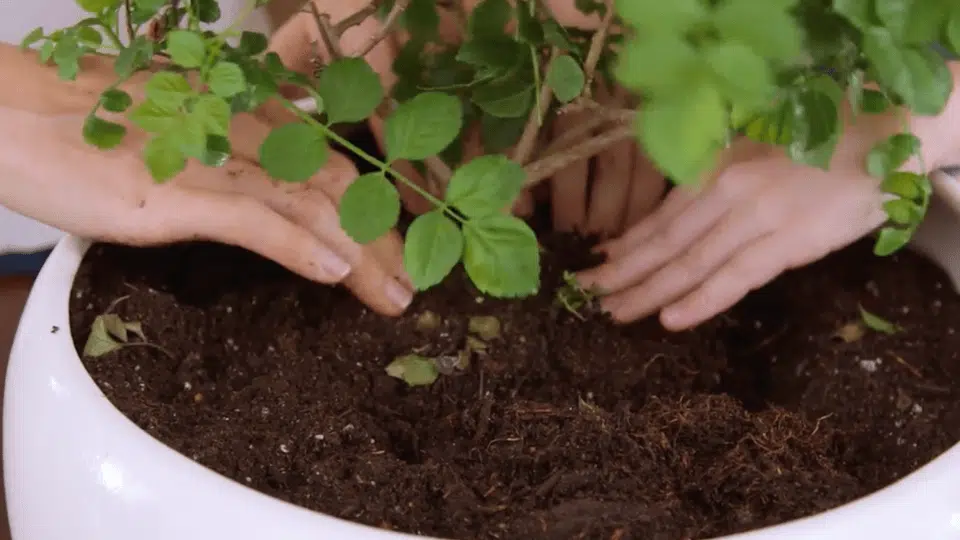
Strategic plant placement creates depth and prevents overcrowding. Position taller plants toward the back or center as focal points, graduating to shorter varieties in front.
Use moss for soft, realistic ground cover between features. Cluster plants in odd numbers for natural appeal, leaving open spaces for accessories and pathways.
Step 3: Add Fairy Houses and Pathways

Structures anchor the scene and establish the garden’s story. Position fairy houses on stable, level ground or upper spots for prominence.
Create meandering pebble trails connecting different areas using small stones or crushed gravel. Build stairways from flat bark pieces or stacked stones for dimension.
Maintain proper scale, ensuring pathways accommodate figurines while leaving the garden feeling spacious rather than cluttered with oversized features.
Step 4: Decorate With Fairy Figures and Mini Accessories
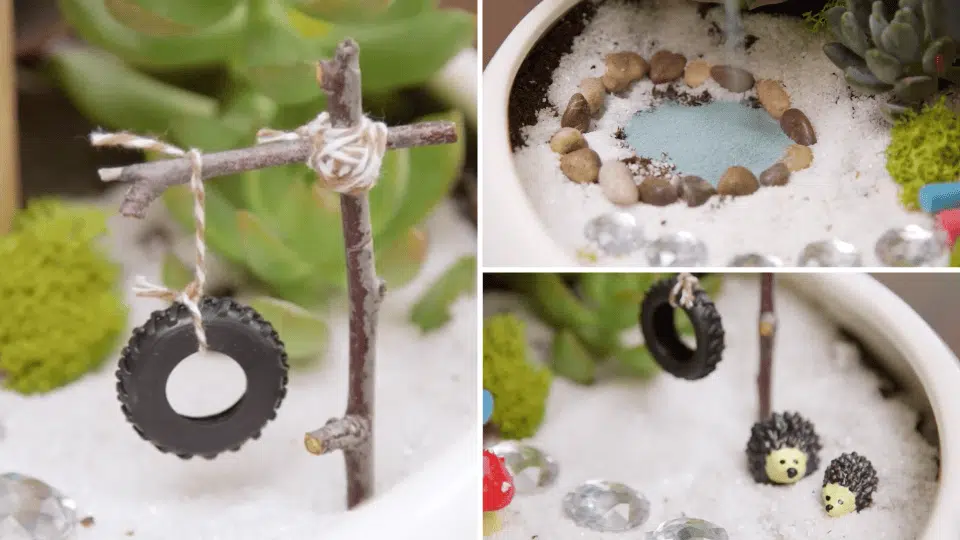
Accessories bring personality and narrative to the miniature landscape. Place fairy figurines, woodland animals, and mushrooms throughout to create vignettes and gathering spots.
Position fences, benches, and furniture to define spaces and frame viewing areas. Add themed elements, such as tiny lanterns, miniature ladders, or washing lines, for detail.
Arrange items thoughtfully, ensuring each piece highlights rather than overwhelms the natural beauty of the plant.
Step 5: Add Finishing Touches
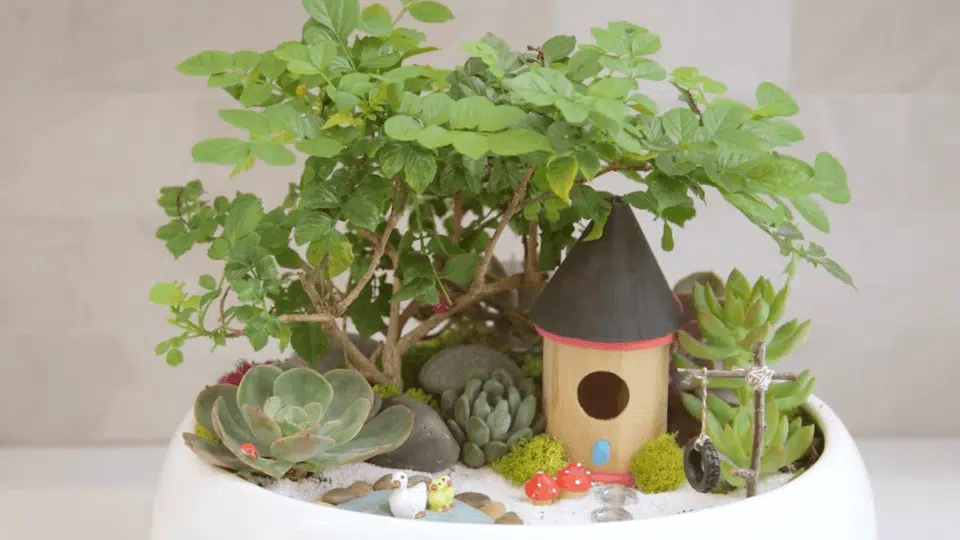
Final details turn good gardens into magical ones. Weave battery-operated LED fairy lights through plants or around houses for a chirpy evening glow.
Sprinkle decorative gemstones or subtle glitter along pathways for a touch of sparkle. Create a tiny pond using a shallow dish or mirror piece nestled into soil.
Want to see the process in action? Check out the YouTube video below.
Backyard Fairy Garden Ideas
Backyard spaces offer never-ending possibilities for creating chirpy fairy gardens that blend smoothly with natural surroundings.
These ideas showcase how to make a fairy garden using existing landscape features, from tree trunks to forgotten corners.
1. Tree Base Fairy Door Garden
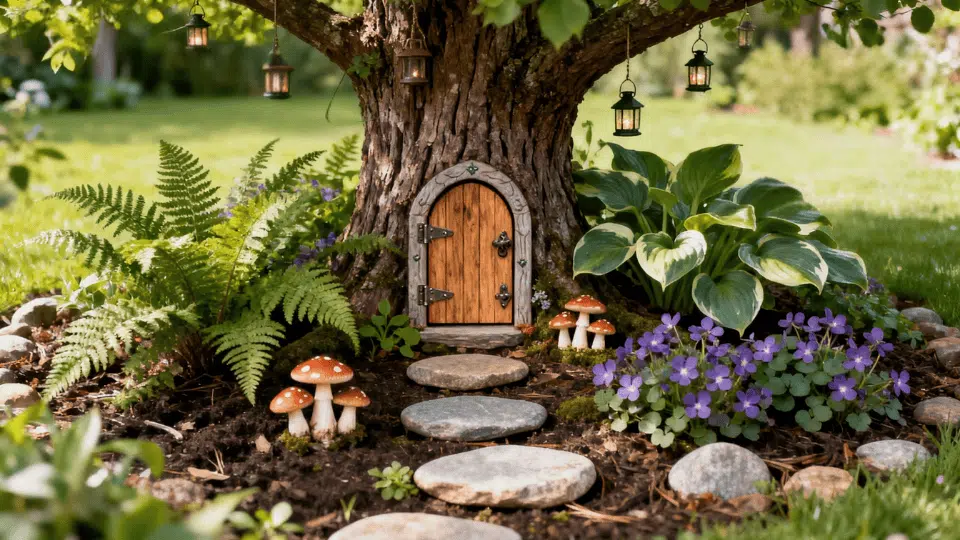
Transform tree trunks into Magical fairy dwelling entrances by installing decorative doors at the base.
This design utilizes existing landscape features, requiring minimal ground preparation while creating maximum visual impact through integration with natural surroundings.
- Plant Inspiration: Shade-loving ferns, hostas, and woodland violets that thrive in tree canopy cover
- Decorations: Miniature doors with hinges, mushroom clusters, lanterns, and stepping stones made from flat rocks
- Care: Water less frequently due to tree root competition, monitor moisture levels, trim overhanging plants
2. Large Ground Level Fairy Village
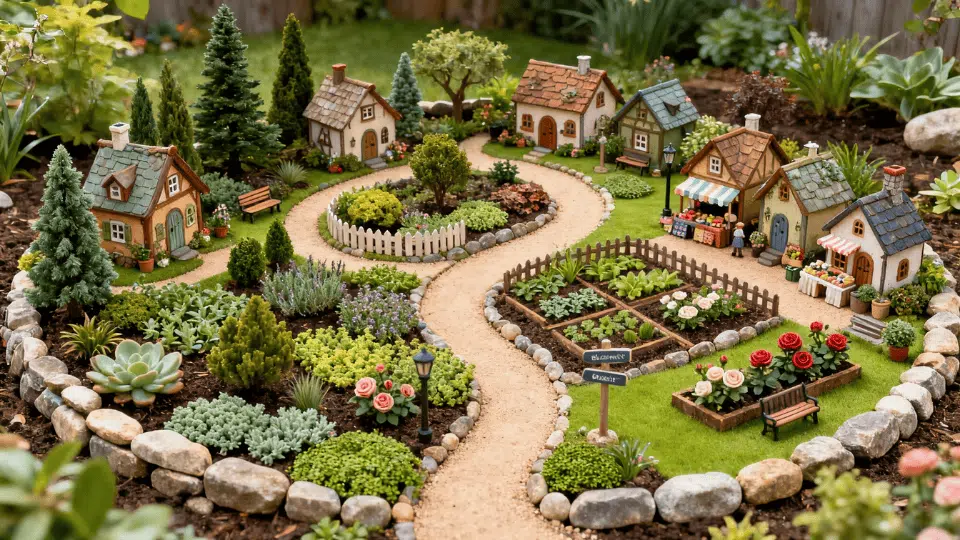
Expansive fairy villages feature multiple houses connected by winding pathways throughout garden beds. Mix various plant heights from ground covers to small shrubs, creating neighborhoods with distinct sections.
- Plant Inspiration: Dwarf conifers, creeping thyme, sedum varieties, miniature roses, baby’s tears for lawns
- Decorations: Multiple fairy cottages in different styles, fencing, benches, market stalls, and street signs,
- Care: Establish watering zones based on plant needs, prune regularly to maintain scale, and refresh pathways
3. Corner Backyard Fairy Scene
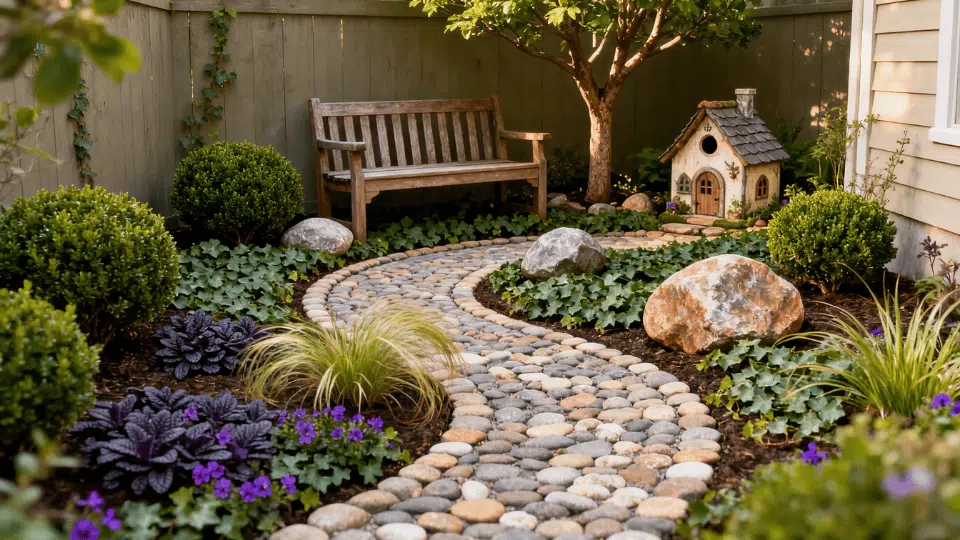
Unused yard corners become intimate fairy retreats with single-themed houses and winding paths. This space-efficient design suits small yards perfectly, maximizing limited square footage.
- Plant Inspiration: Compact varieties like dwarf boxwood, miniature ivy, and small ornamental grasses
- Decorations: One statement fairy house, curved pebble pathway, decorative boulders, single bench or swing
- Care: Easy maintenance due to contained size, weekly watering checks, and monthly grooming
4. Magical Woodland Theme
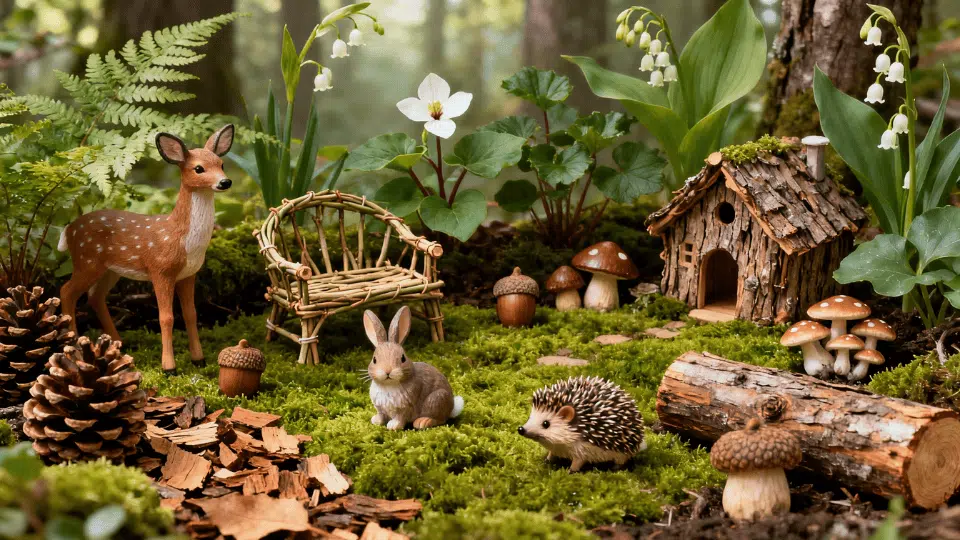
Natural woodland elements like pinecones, bark chips, and native forest plants create authentic fairy habitats. Forest animal figurines, including deer, rabbits, and hedgehogs, populate the scene.
- Plant Inspiration: Native ferns, wild ginger, trillium, Solomon’s seal, moss varieties collected responsibly
- Decorations: Woodland creatures, twig furniture, acorn caps, bark houses, mushroom clusters, fallen “logs.”
- Care: Maintain consistent moisture for moss health, add leaf mulch annually, and minimal pruning
5. Water-Inspired Fairy Garden With a Pond or Birdbath
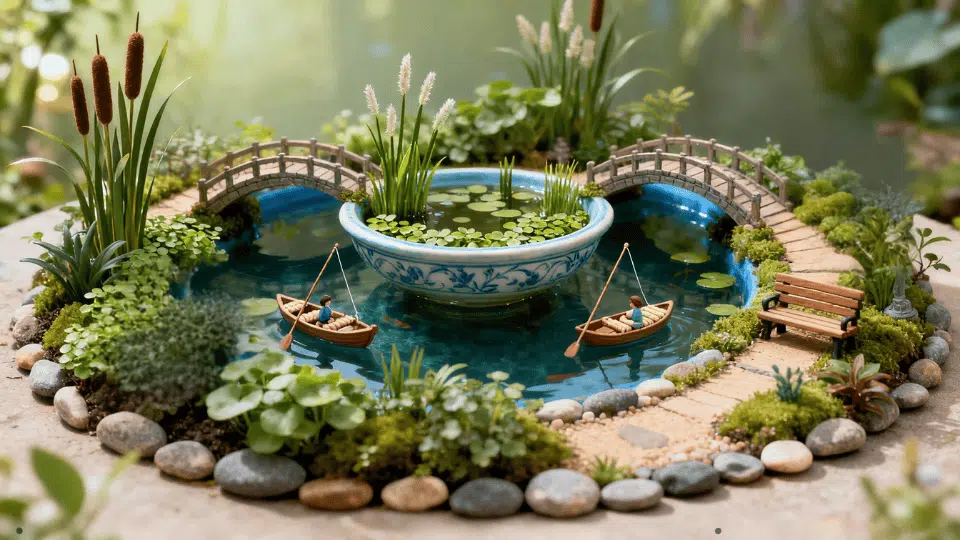
Small pond liners or decorative bowls create miniature water features surrounded by moisture-loving plants. Arched fairy bridges span these tiny ponds, connecting pathways on opposite shores.
- Plant Inspiration: Miniature cattails, baby tears, creeping jenny, fiber optic grass, sweet flag, dwarf papyrus
- Decorations: Fairy bridge, miniature boats or rafts, fishing poles, pond-side benches, riverstone borders
- Care: Refresh water weekly to prevent mosquitoes, trim aquatic plants monthly, drain and clean pond quarterly
Other Creative Fairy Garden Ideas
Fairy garden ideas extend beyond traditional backyard installations, adapting to apartments, patios, and indoor spaces.
These creative approaches demonstrate how the create a fairy garden regardless of available square footage or outdoor access.
6. Broken Pot Fairy Garden
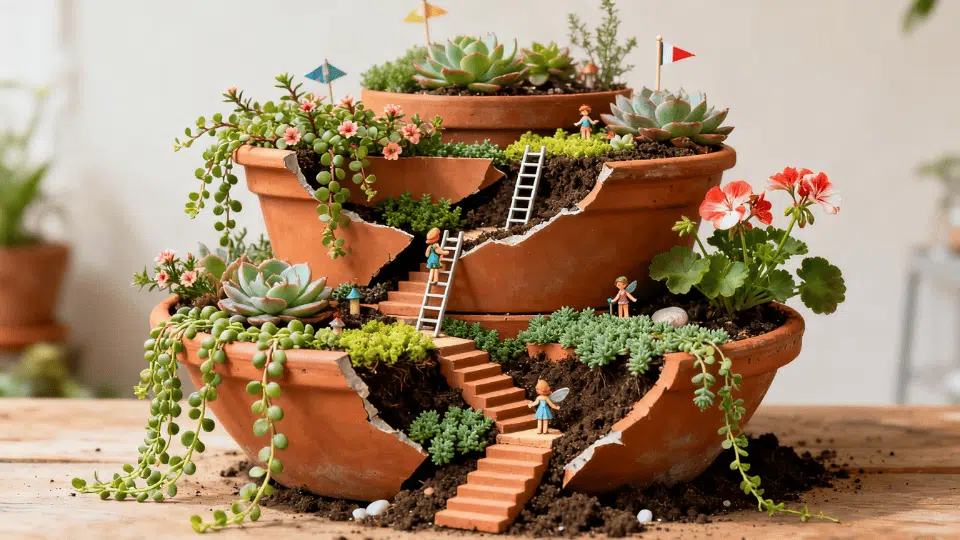
Broken terracotta pots transform into multi-level fairy landscapes through creative stacking. Shattered pieces create natural tiers, with soil planted at different heights.
- Plant Inspiration: Cascading succulents, trailing portulaca, and miniature geraniums that drape over edges
- Decorations: Tiny ladders or stairs between levels, fairy figurines climbing sections, small flags
- Care: Water top level allowing drainage to lower tiers, rotate pot for even sun exposure
7. Indoor Tabletop Fairy Garden

Shallow bowls or decorative trays house compact indoor fairy scenes, perfect for apartments. Low-light-tolerant plants thrive under ambient indoor conditions.
- Plant Inspiration: Pothos cuttings, small peace lilies, nerve plants, baby spider plants, polka dot plants
- Decorations: Battery-operated string lights, miniature indoor furniture, tiny books, rugs, picture frames
- Care: Water sparingly to prevent standing water, dust accessories monthly, and prune plants
8. Vertical Fairy Garden Made With Shelves
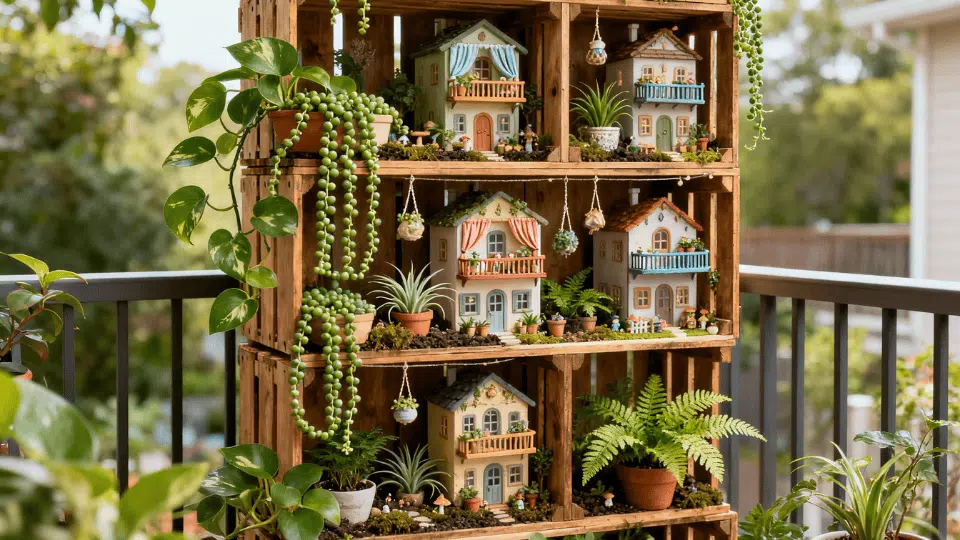
Repurposed wooden shelves or stacked crates display multiple miniature scenes at eye level. Each shelf tier features distinct vignettes that create apartment buildings for fairy communities.
- Plant Inspiration: Trailing pothos, string of pearls, air plants, and small ferns mounted in containers per shelf
- Decorations: Different themed scenes per level, hanging elements between shelves, and balcony railings
- Care: Water each level individually based on plant type, ensure drainage holes prevent water damage
9. Seasonal Fairy Garden Themes

Rotating seasonal decorations keeps fairy gardens fresh throughout the year. Spring brings blooming flowers and butterfly visitors. Summer features beach-themed coastal settings with sand and shells.
- Plant Inspiration: Seasonal blooms like pansies, mums, ornamental kale, and evergreens for winter interest
- Decorations: Season-specific miniatures, themed color palettes, holiday accessories, and weather-appropriate
- Care: Swap delicate decorations indoors during harsh weather, and choose cold-hardy plants for winter
Tips to Maintain Your Fairy Garden
Maintaining a fairy garden keeps it vibrant and chirpy throughout every season. Regular upkeep prevents overgrowth, protects miniature accessories from weather damage, and keeps the magical atmosphere alive.
- Water plants lightly and consistently based on species’ needs, checking soil moisture before each watering to avoid overwatering, which can cause root rot and kill delicate miniatures.
- Select plants based on the available sunlight at the garden location, matching shade-lovers to low-light spots and sun-tolerant varieties to bright areas for optimal growth.
- Trim plants regularly when they outgrow their space or obscure decorative elements, maintaining proper scale and preventing aggressive growers from overtaking the scene.
- Replace faded or weathered decorations annually, removing broken pieces and updating accessories that have lost color or structural integrity from outdoor exposure.
- Rotate seasonal decor and rearrange accessories periodically to create fresh narratives, add new fairy houses occasionally, and refresh pathways with clean stones for renewed visual interest.
Conclusion
Building a fairy garden offers a rewarding, creative outlet that turns outdoor spaces into chirpy retreats. Learning how to make a fairy garden starts with simple foundations, then expands as confidence grows and imagination flourishes.
Backyard fairy garden ideas prove that magical landscapes don’t require professional skills or expensive investments, just enthusiasm and basic materials.
These miniature worlds provide ongoing enjoyment through seasonal updates and continuous storytelling possibilities.