
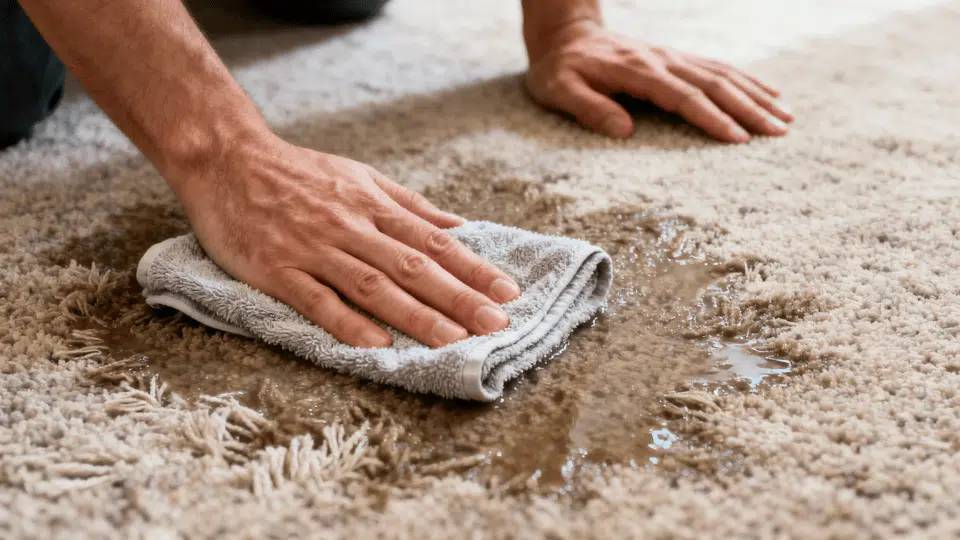
A soaked carpet is a ticking clock; mold, padding, and subfloors silently deteriorate beneath the surface with every passing hour.
Most owners make it worse, but professionals know a secret method that saves carpets every time.
We’re about to reveal the exact steps that separate successful carpet rescue from complete replacement. The next 24 hours will decide everything.
Why Wet Carpet Is a Race Against Time?
Mold spores begin multiplying within 24 hours of water exposure, making immediate action critical when drying wet carpet.
Moisture penetrates deeply into carpet fibers and spreads rapidly beneath the surface, creating the perfect environment for mold colonies.
These organisms release allergens and mycotoxins that trigger respiratory problems, allergic reactions, and persistent musty odors throughout the home.
Carpet padding acts like a sponge, retaining water far longer than surface fibers. This trapped moisture seeps into wooden subfloors, causing warping, rotting, and structural weakening.
People who delay drying wet carpet face exponentially higher restoration costs as damage spreads from surface to foundation.
Common Causes of Wet Carpet
Understanding the water source is crucial for choosing the right drying method, which depends on the water volume, contamination level, and the size of the affected area. People face various wet carpet issues year-round.
- Burst pipes: Freezing temperatures or aging plumbing can cause sudden failures that flood rooms within minutes, saturating carpets with clean or dirty water, depending on the pipe’s location.
- Roof leaks: Storm damage, missing shingles, or worn flashing allows rainwater to penetrate ceilings and drip onto carpets, often going unnoticed until significant moisture accumulates.
- Appliance failures: Washing machines, water heaters, and dishwashers develop leaks or overflow, releasing gallons of water across floors and soaking nearby carpeted areas.
- Bathroom overflows: Clogged toilets, running tubs, or malfunctioning fixtures send water streaming into hallways and bedrooms with carpeted surfaces.
- Flooding from storms: Heavy rainfall, hurricanes, or rapid snowmelt can cause outdoor water to enter homes through doors, windows, and cracks in the foundation.
- Small daily accidents: Pet incidents, spilled drinks, tracked-in snow, and cleaning mishaps create localized wet spots that still require proper attention when drying wet carpet.
Assess the Water Damage Type Before You Begin
Before learning how to dry wet carpet effectively, you must assess the type of water damage; clean water requires different treatment than contaminated water, and the difference could affect your health.
1. Clean Water
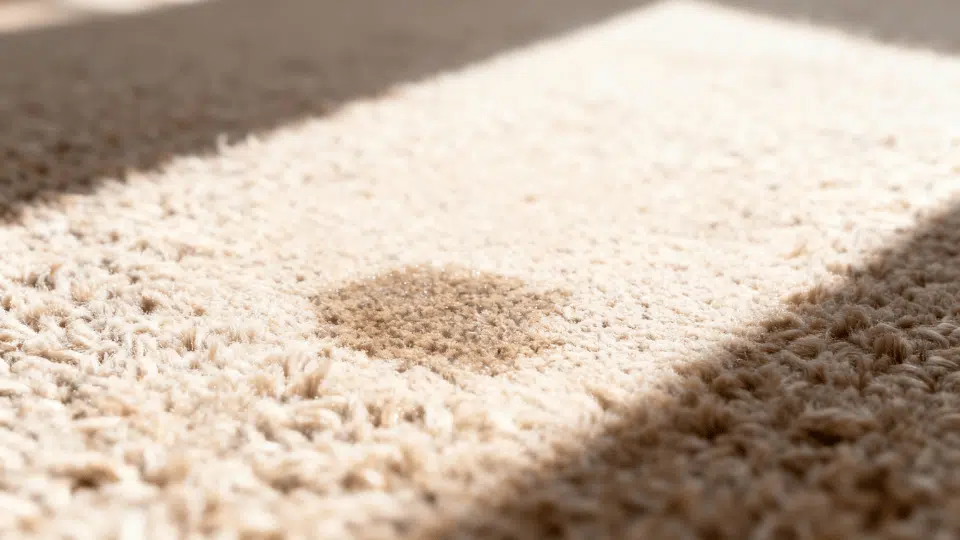
Clean water from burst pipes, rainwater, or sink overflows presents the lowest health risk. People can safely tackle drying wet carpet from these sources using these methods.
Acting within 24 to 48 hours prevents clean water from degrading into more contaminated categories as it absorbs dirt and microbes from carpet fibers and padding.
2. Gray Water
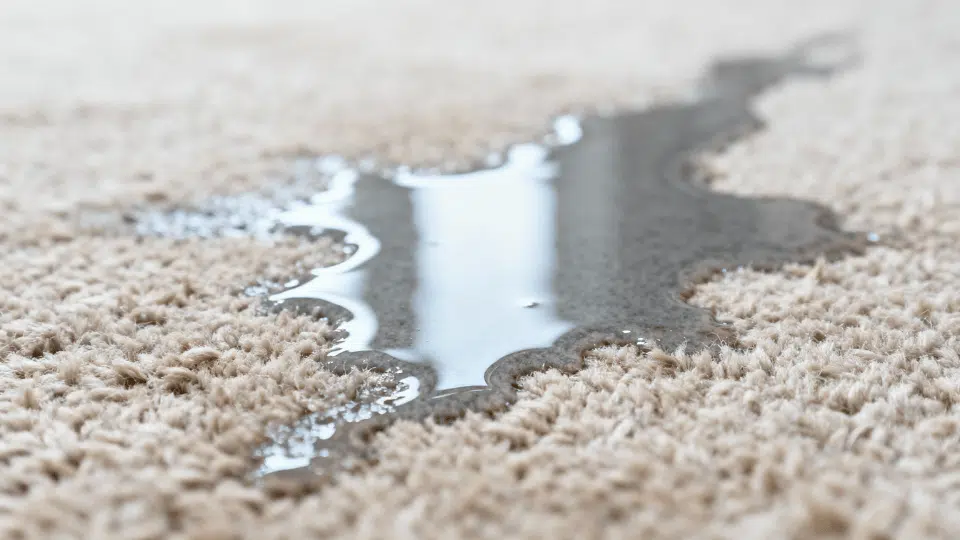
Gray water from washing machines or toilet tanks contains mild contaminants, such as detergents, soap residue, and urine.
Understanding how to dry a wet carpet with graywater requires protective equipment, including gloves and a mask.
Carpet padding often needs to be replaced because it absorbs contaminants that can cause odors and bacterial growth, even after surface drying.
3. Black Water
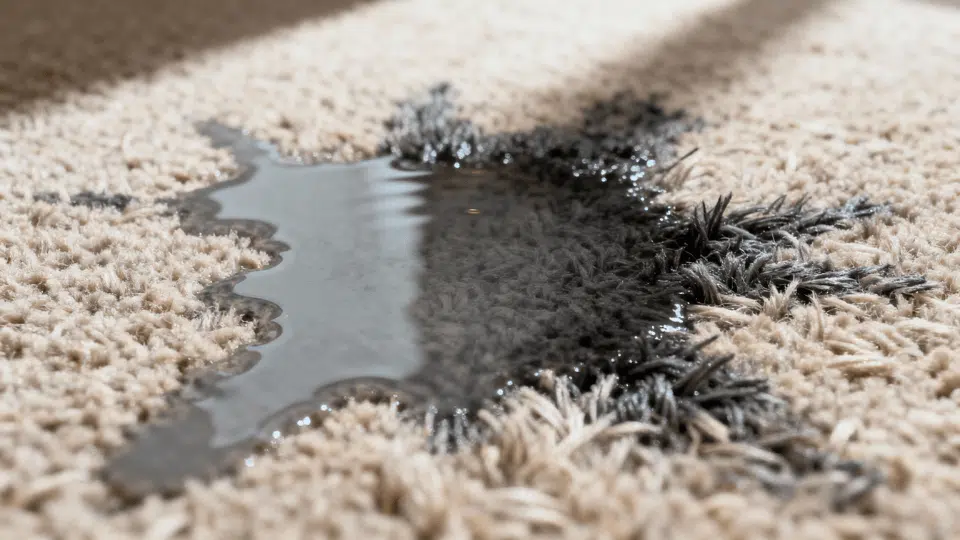
Black water from sewage backups, river floods, or storm surges can contain dangerous bacteria, viruses, and other microbes.
Both carpet and padding must be completely removed and replaced; never attempt drying wet carpet exposed to black water.
Professional restoration teams handle hazardous material removal using specialized equipment and safety protocols to protect occupants from serious health threats.
Essential Safety Precautions Before Drying
Safety is key when drying wet carpet at home. Water poses hazards beyond surface moisture, so taking precautions helps prevent electrical shock, contamination, and financial issues losses.
- Turn off electricity in wet areas: Prevent fatal electrical shock by turning off circuit breakers in rooms with water damage, especially when outlets, fixtures, or appliances are near water or soaked carpet.
- Protect yourself: Wear rubber gloves, waterproof boots, and a respiratory mask when handling wet carpet materials. Avoid skin contact with gray or black water, which may contain contaminants, bacteria, or chemicals that can cause infections or allergic reactions.
- Document damage for insurance: Capture photos and videos of water levels, affected rooms, damaged furniture, and carpets before cleanup. Visual documentation aids insurance claims and justifies replacement or restoration costs.
- Stop the water source immediately: Shut off the main water valve if burst pipes cause flooding, or repair leaks before attempting any carpet drying. Continuing to dry a wet carpet while water still enters the space wastes effort and allows damage to spread further.
How to Dry Slightly Damp Carpet?
Minor spills and surface moisture require immediate but straightforward treatment. Small accidents like knocked-over drinks, pet incidents, or tracked-in water respond well to simple home remedies.
Understanding how to dry wet carpet from these limited sources prevents escalation into deeper saturation problems.
Step 1: Blot and Improve Airflow
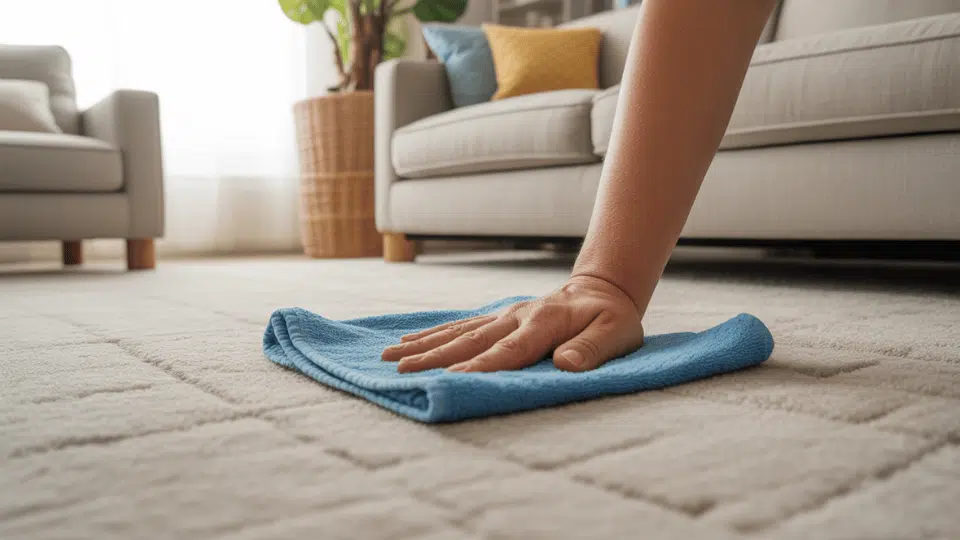
Press clean towels or microfiber cloths firmly onto damp carpet to lift water from surface fibers, avoiding rubbing motions that push moisture deeper into the padding.
Place weighted towels on stubborn wet spots for 15 to 30 minutes. Simultaneously, open nearby windows and doors for cross-ventilation, and position box fans directly toward the damp area when drying wet carpet.
Multiple strategically placed fans create continuous airflow, accelerating evaporation.
Step 2: Use Baking Soda
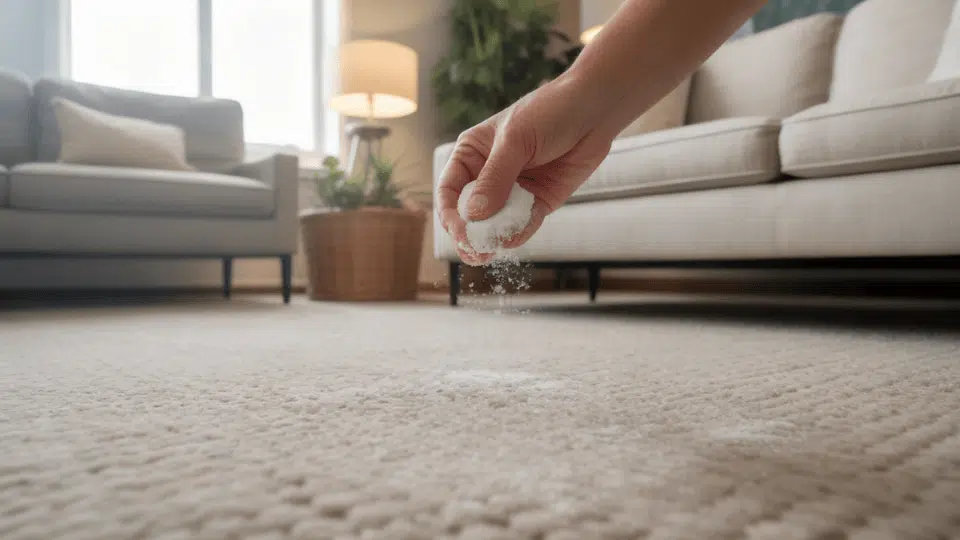
Sprinkle baking soda generously over the entire damp area after the initial blotting removes surface water. This household powder absorbs residual moisture while neutralizing odors trapped in carpet fibers.
Leave the baking soda treatment in place for 30 minutes up to several hours, depending on the severity of dampness, then vacuum thoroughly to remove all powder residue.
Step 3: Use a Hairdryer
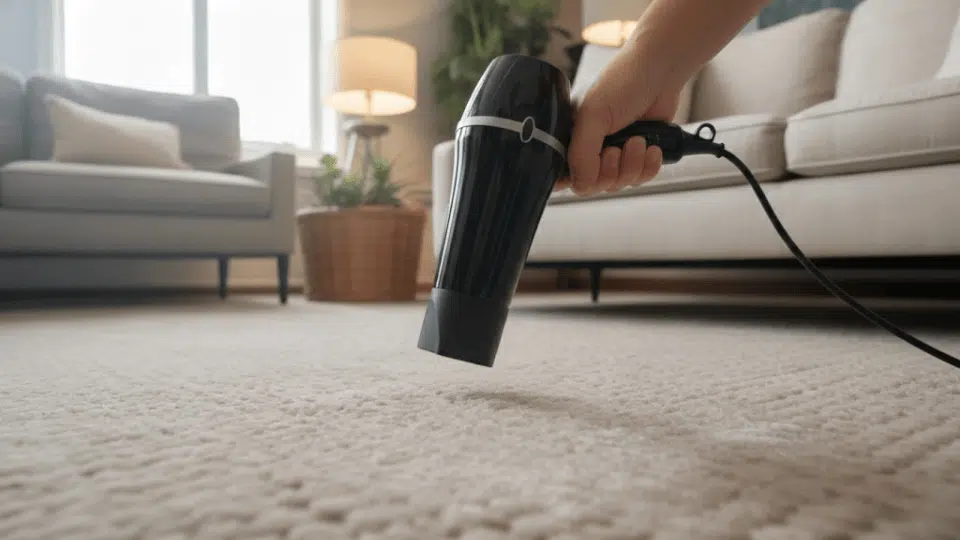
Position a hairdryer 5 to 10 inches above small, damp patches, moving it continuously in circular patterns to distribute heat evenly.
This method is helpful when learning to dry a wet carpet in localized spots smaller than one square foot. Stationary heat application risks melting synthetic carpet fibers or scorching backing materials, so constant movement remains essential.
How to Dry Heavily Soaked Carpet?
Learning how to dry wet carpet that’s heavily soaked is a different challenge entirely; standing water means you’ll need powerful extraction tools and a systematic approach to save your flooring.
Step 1: Remove Standing Water
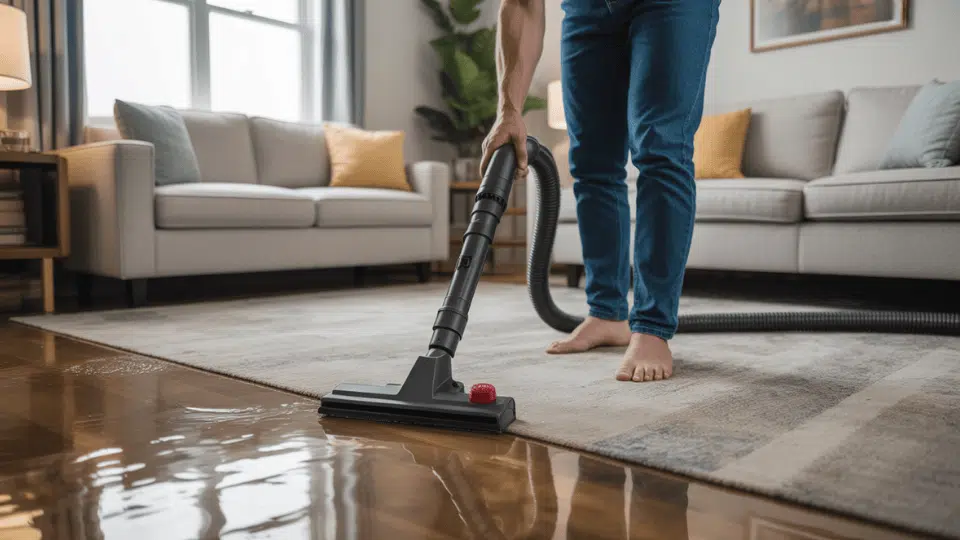
Begin drying the wet carpet by removing all visible standing water with a wet/dry shop vacuum with strong suction. Move the vacuum nozzle slowly across saturated sections, allowing time for proper water extraction from deep within fibers.
Empty the vacuum collection tank frequently to maintain maximum suction power throughout the process. For severe flooding exceeding 2 inches, rent or purchase a submersible pump to remove bulk water more quickly.
Step 2: Inspect and Address Carpet Padding
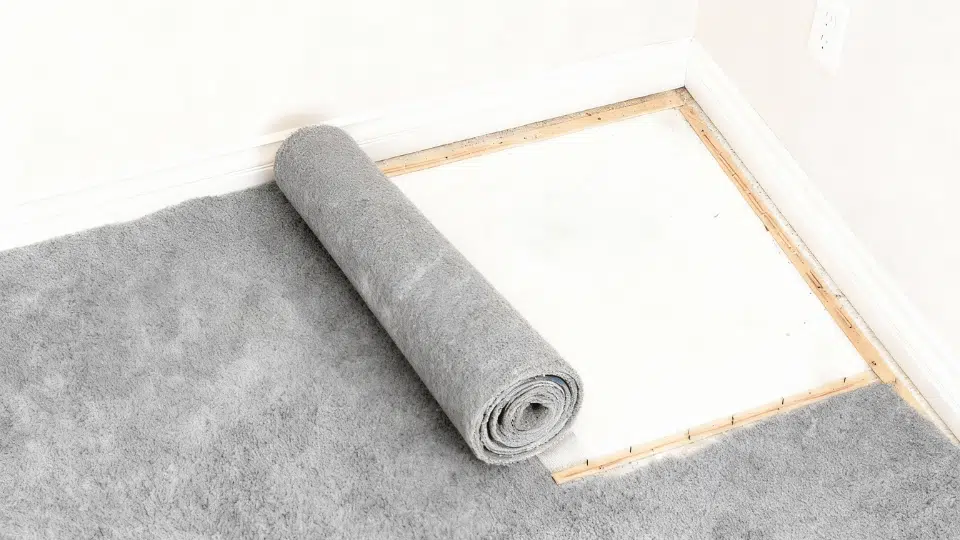
Carpet padding beneath surface fibers absorbs water like a dense sponge, retaining moisture long after visible wetness disappears.
Carefully lift the carpet edges near walls with a flat tool to examine the condition of the padding underneath.
Prop lifted carpet sections over furniture or wooden blocks, creating crucial airflow channels underneath that accelerate drying wet carpet from both sides simultaneously.
Step 3: Set Up Fans and Dehumidifiers
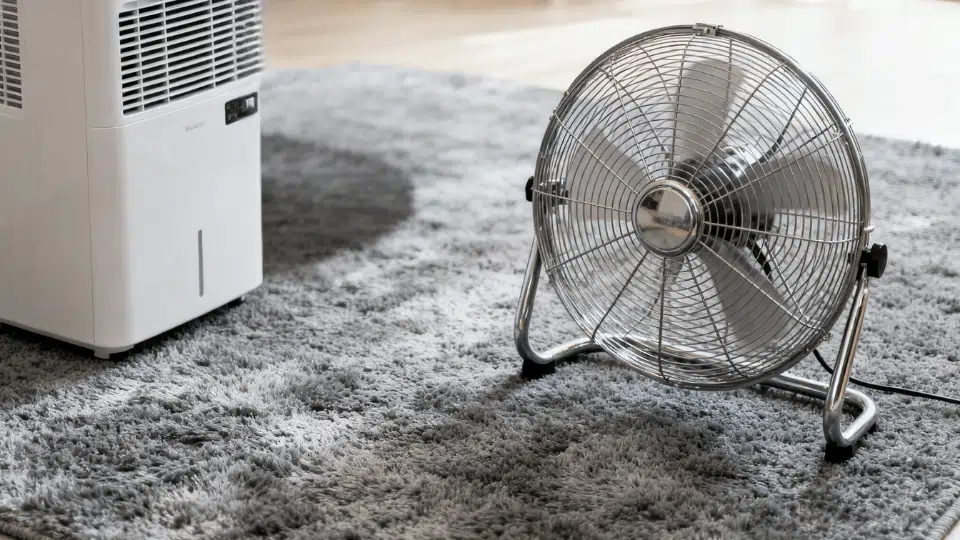
Position multiple high-velocity fans throughout the room, pointing toward the wet carpet from different angles to ensure complete air circulation.
Run at least one commercial-grade dehumidifier continuously to extract airborne moisture that fans release from carpet fibers.
Close windows and exterior doors when operating dehumidifiers to prevent humid outdoor air from entering the drying environment.
Step 4: Monitor the Drying Process
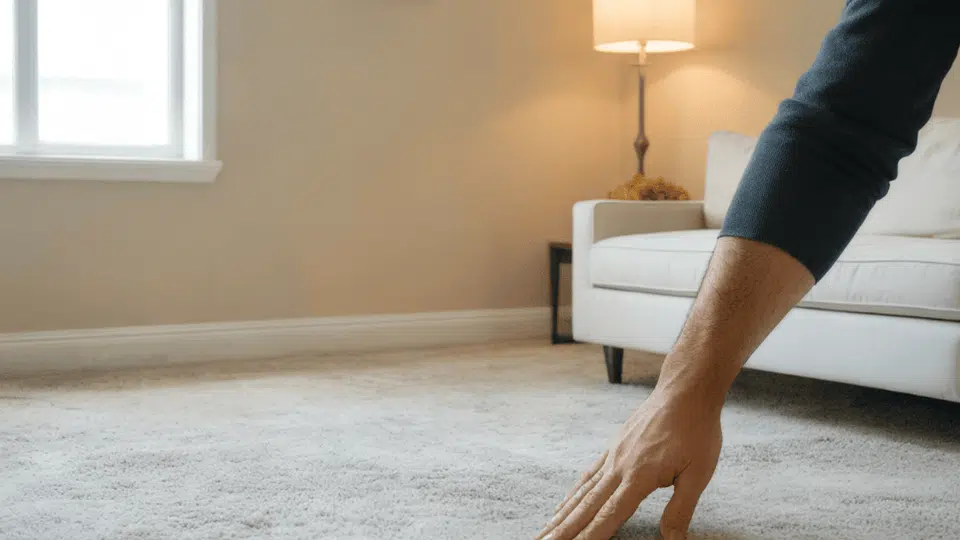
Check carpet conditions every 2 to 4 hours during the drying process to assess progress and adjust equipment positioning.
Touch carpet surfaces with bare hands. Cool temperatures indicate remaining dampness, while warm, dry textures signal successful moisture removal.
Professional moisture meters provide precise readings when available, measuring the exact moisture content in carpet fibers, padding, and the subfloors beneath to confirm complete dryness before concluding restoration efforts.
What NOT to Do When Drying Wet Carpet
Avoiding common mistakes proves just as important as following correct techniques when learning how to dry wet carpet effectively.
- Don’t walk on wet carpet: Foot traffic forces water deeper into the padding and subfloor layers, significantly slowing the drying process. Weight and movement compress saturated fibers, squeezing moisture downward rather than allowing it to evaporate upward.
- Don’t use a regular vacuum: Standard household vacuums create serious electrical shock hazards when used on wet surfaces. Water destroys vacuum motors designed for dry debris, leading to expensive equipment replacement and potential fire risks.
- Don’t close the room: Sealing off wet areas traps humidity, creating stagnant air that prevents moisture from evaporating. Proper ventilation remains essential for successfully drying a wet carpet, as it requires open circulation paths for damp air to escape.
- Don’t skip the padding inspection: Mold colonies begin growing beneath carpeting where padding holds persistent moisture. Ignoring this hidden layer allows contamination to spread unseen, eventually requiring the replacement of the entire carpet and padding despite surface-drying efforts.
Should You Repair or Replace the Carpet?
After you’ve learned how to dry wet carpet, the toughest decision remains; sometimes drying isn’t enough, and knowing when to repair or replace can save you thousands in hidden damage costs.
| SAVE THE CARPET | REPLACE THE CARPET |
|---|---|
| Clean water source from burst pipes, rainwater, or sink overflow | Black water contamination from sewage, flooding, or storm surge |
| Successfully dried within the 24 to 48-hour mold prevention window | The carpet remained soaked for more than 48 hours before drying began |
| No visible mold growth, musty odors, or discoloration present after drying wet carpet | Visible mold colonies, spores, or persistent musty odors remain after complete drying |
| Carpet padding underneath remains intact, dry, and shows no signs of deterioration | Padding shows severe water damage, decomposition, or absorbed contaminants that cannot be removed |
PRO TIP: Severe flooding, black water contamination, or persistent odors after drying wet carpet require certified restoration specialists with industrial equipment and expertise.
Wrapping It Up
Now you know how to dry wet carpet using the right methods for your situation. The most important thing is acting quickly to prevent mold and damage.
Use fans and dehumidifiers for light moisture, or rent an extractor for heavier soaking.
If you’re dealing with contaminated water or the job feels too big, don’t hesitate to call a professional. The sooner you start drying, the better your results.