
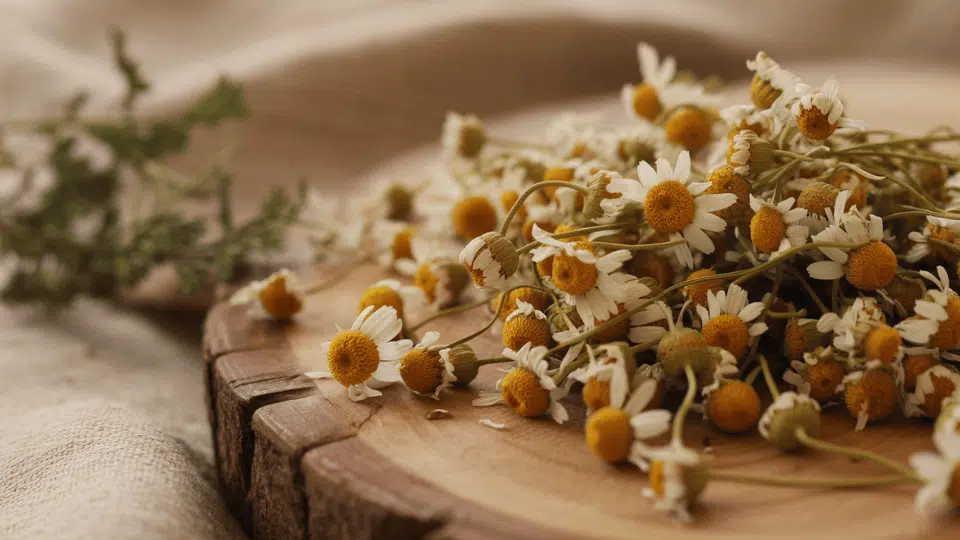
Drying chamomile at home turns fresh blossoms into aromatic tea that preserves the flower’s natural oils and apple-like fragrance.
Many tea lovers choose to dry their own chamomile because store-bought varieties often lose potency during processing and storage.
Learning how to dry chamomile for tea ensures maximum flavor while preserving the herb’s soothing properties, which have made it a beloved beverage for centuries.
The process requires minimal equipment and yields superior results compared to commercial options.
What Part of Chamomile to Harvest for Tea?
The flower heads contain the highest concentration of essential oils and beneficial compounds that give chamomile its signature taste and calming effects.
German chamomile produces smaller blooms with hollow centers, while Roman chamomile offers larger flowers with solid centers.
Both work beautifully for tea, though German chamomile provides a slightly sweeter, more apple-like flavor.
Harvest only the flower heads by pinching or snipping them from the stem, leaving about half an inch of stem attached.
Focus on collecting flowers when the petals begin to pull back from the yellow center cone, as this stage indicates peak essential oil content and maximum flavor for your homemade tea.
When and How to Harvest Chamomile?
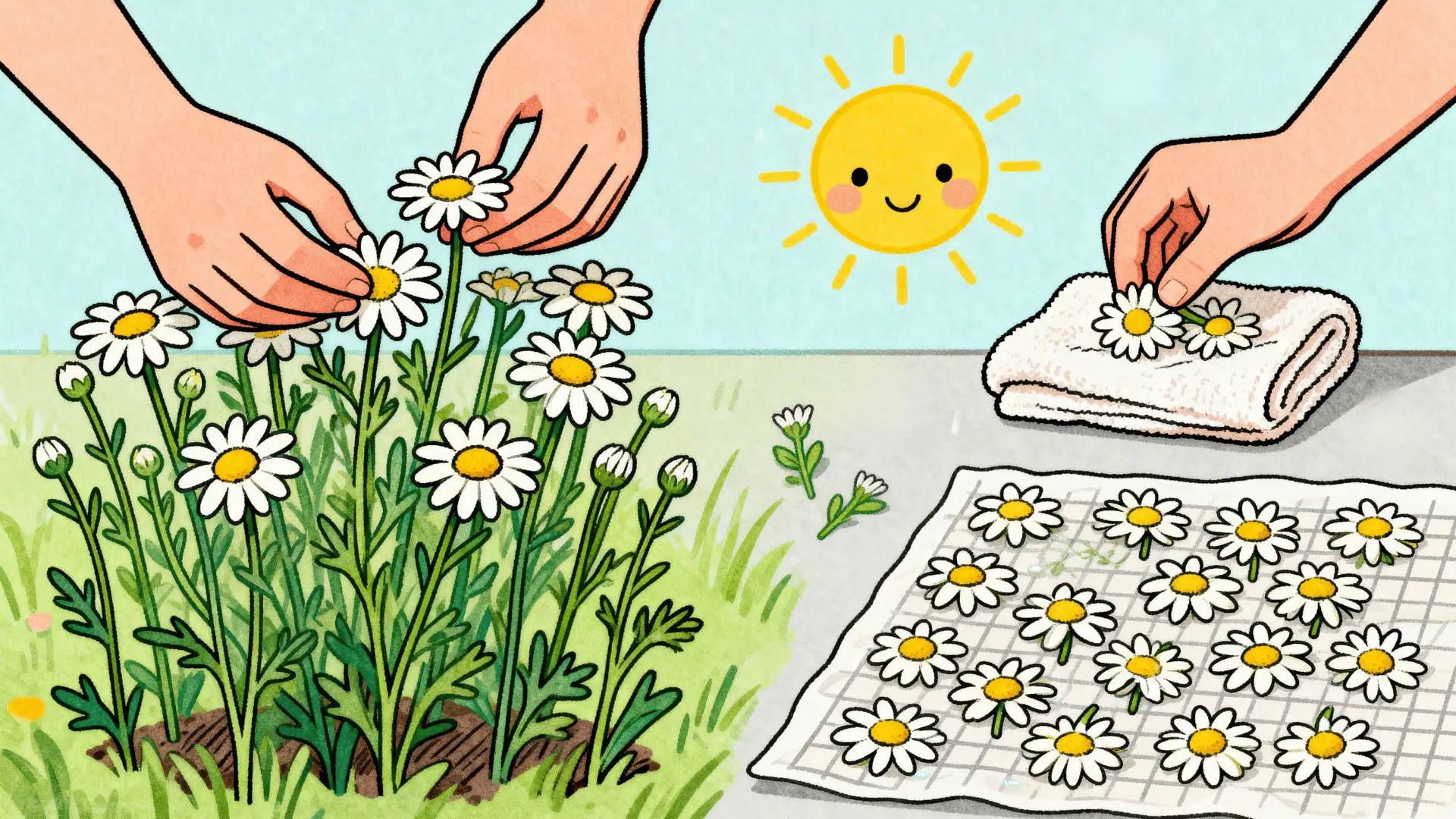
Proper harvesting sets the foundation for quality dried chamomile tea. The way flowers are picked and prepared directly affects their flavor, aroma, and shelf life.
Ideal Time to Harvest
Timing your chamomile harvest correctly maximizes flavor and essential oil content in the finished tea. Flowers picked at their peak contain the aromatic compounds that make chamomile tea so soothing and fragrant.
- Pick flowers in late morning, after dew has completely evaporated but before the afternoon heat peaks
- Choose blooms when the white petals just begin pulling back from the yellow center cone
- Harvest every 2-3 days during peak season for continuous production
- In most U.S. regions, chamomile blooms from late spring through early fall, with heaviest flowering in June and July
- Avoid harvesting after rain or when flowers are wet to prevent mold issues
Pre-Drying Preparation
Preparing flowers properly before drying prevents contamination while preserving quality. This step determines whether the finished tea will be clean, aromatic, and safe to drink.
- Skip rinsing if flowers were grown without pesticides and appear clean, as water can delay drying and reduce flavor
- If rinsing is necessary, gently swish flowers in cool water and shake off excess moisture immediately
- Spread flowers on a clean towel and pat gently to remove surface water
- Inspect each bloom and discard any with visible insects, damage, or discoloration
- Remove any attached leaves, stems, or plant debris that could affect taste
- Lay flowers in a single layer on a clean surface before beginning the drying process
The Best Methods to Dry Chamomile for Tea
Choosing the right drying method preserves chamomile’s essential oils and prevents spoilage. Each technique offers different advantages depending on available equipment, climate conditions, and time constraints.
The goal remains the same: removing moisture completely while maintaining the flowers’ natural aroma and beneficial properties.
1. Air Drying Method
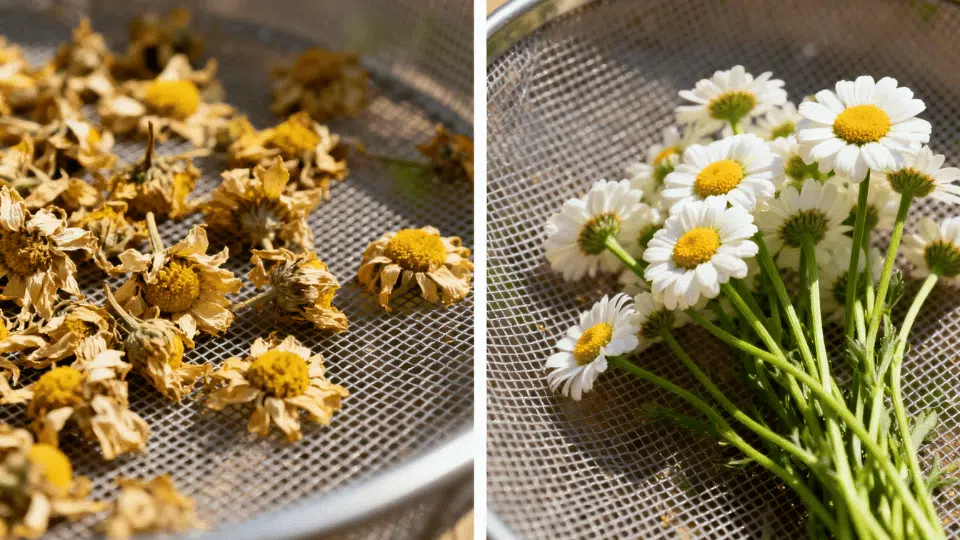
Air drying is the most traditional and cost-effective way to preserve chamomile flowers. This gentle method requires no special equipment and works beautifully in dry climates.
Spread flowers in a single layer on mesh screens, clean window screens, or fabric-lined trays. Place trays in a warm, dark location with good air circulation, such as an attic, closet, or spare room.
Avoid direct sunlight, which degrades essential oils and fades color. Flowers typically dry completely in 1-2 weeks, depending on humidity levels.
High humidity can cause mold, so ensure air moves freely around the flowers and check daily for any signs of spoilage or dampness.
2. Using a Dehydrator
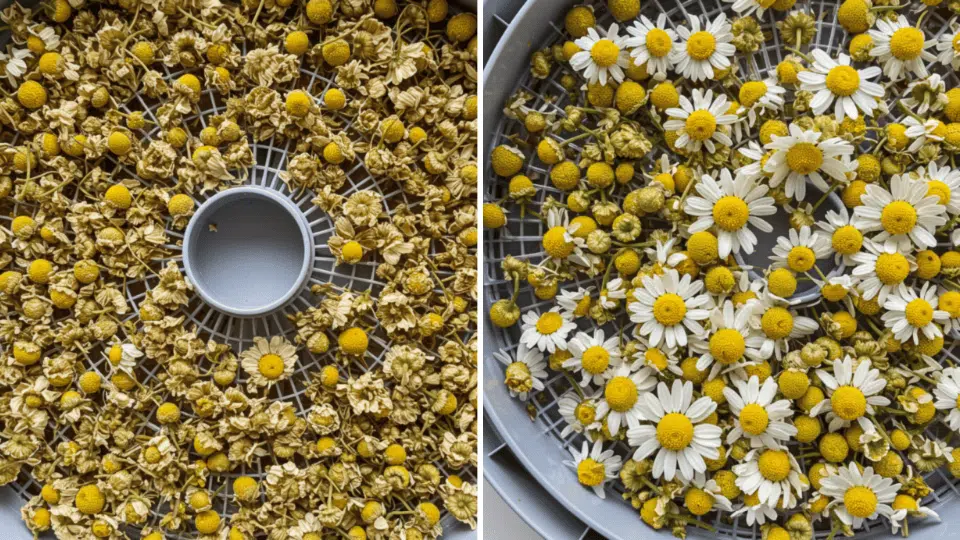
A food dehydrator provides the most controlled environment for drying chamomile and produces consistent results.
Set the dehydrator temperature between 95-105°F to preserve essential oils without cooking the flowers. Arrange blooms in a single layer on dehydrator trays, leaving small gaps between flowers for air circulation.
Avoid overcrowding, which extends drying time and creates uneven results. Most chamomile flowers dry completely within 12-24 hours using this method.
Flowers are ready when petals feel crispy and crumble easily between your fingers.
3. Drying Chamomile in the Oven
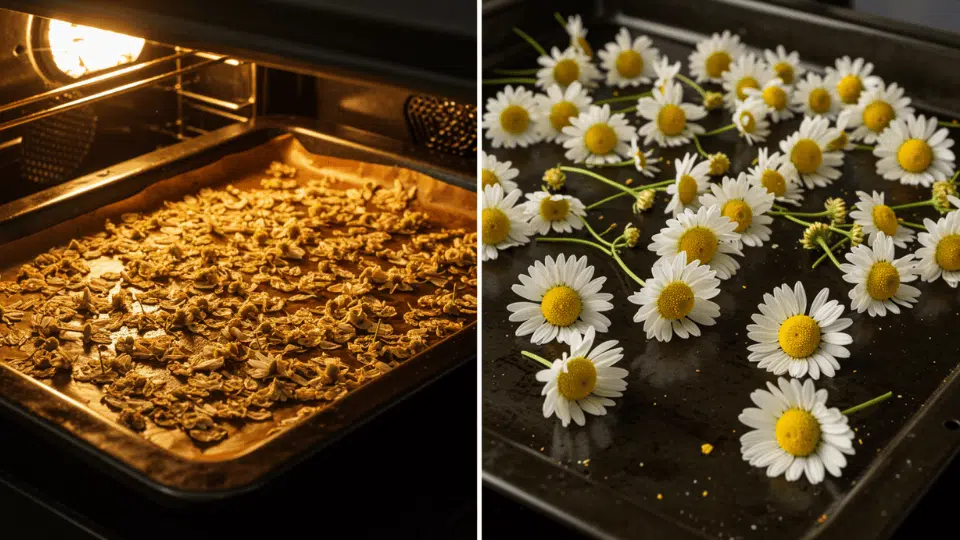
Oven drying offers a faster alternative when outdoor conditions aren’t ideal or dehydrators aren’t available. Set your oven to its lowest temperature, ideally between 100 and 150°F.
Spread flowers on parchment-lined baking sheets in a single layer. Prop the oven door open 2-3 inches using a wooden spoon to allow moisture to escape and prevent overheating.
Check flowers every 30 minutes, as they can dry quickly at higher temperatures. The process typically takes 2-4 hours, depending on the oven temperature and the flower’s moisture content.
Signs Chamomile Is Fully Dry
Determining when chamomile has dried completely is crucial for preventing mold and ensuring long-term storage success.
Learning how to dry chamomile for tea includes recognizing the exact moment flowers have reached optimal dryness, which protects your harvest and guarantees flavorful cups of tea throughout the year.
| Test | Properly Dried | Needs More Time |
|---|---|---|
| Texture and Feel | Petals crumble easily, feel papery and crispy. Yellow centers break apart when pressed with no flexibility remaining. | Petals feel leathery or soft, or bend rather than break. Centers feel spongy or slightly cool to the touch. |
| Color and Aroma | Pale cream petals with bright yellow centers. Strong apple-like, sweet floral scent remains concentrated. | Darker brown color or gray spots appear. Aroma smells weak, musty, or hay-like instead of sweet. |
| Storage Prep | Remove long stems. Let flowers cool for 30-60 minutes at room temperature. Handle gently as blooms become fragile. | Flowers still feel warm. Stems remain flexible rather than snapping cleanly. |
Storing Your Dried Chamomile Flowers
Proper storage protects the time and effort you put into learning to dry chamomile for tea. Even perfectly dried flowers lose their potency quickly when exposed to light, moisture, or air.
- Choose the Right Containers: Glass jars with airtight lids or metal tins with tight seals work best for preserving chamomile. Avoid plastic bags or containers that trap moisture and prevent air exchange, as this degrades quality.
- Store in Cool, Dark Locations: Keep dried chamomile in a pantry or cupboard away from direct sunlight and heat sources. The ideal storage temperature range for preserving essential oils is 60-70°F.
- Protect from Humidity: Store containers in rooms with low humidity below 60%. Consider adding food-grade silica gel packets to jars in humid climates for extra protection against moisture.
- Expect 6-12 Month Shelf Life: Properly stored dried chamomile maintains peak flavor and aroma for six months to one year. Label containers with the drying date and use older batches first.
- Replace When Quality Declines: Discard chamomile that develops musty odors, shows visible mold, or loses its apple-like scent. If brewed tea tastes flat or weak, it’s time to harvest a fresh supply.
How to Use Your Dried Chamomile for Tea?

After mastering how to dry chamomile for tea, the final step is brewing the perfect cup. Proper steeping techniques unlock the flowers’ full flavor profile and therapeutic benefits.
Steeping Instructions
- Use 1-2 tablespoons of dried chamomile flowers per 8-ounce cup of tea
- Heat water to 200-205°F, just below boiling, to avoid bitter flavors
- Pour hot water over flowers and cover the cup or teapot to trap essential oils
- Steep for 5-7 minutes for mild flavor, or up to 10 minutes for stronger tea
- Strain flowers through a fine mesh strainer or remove the tea infuser before drinking
Flavor Blends and Additions
- Mix equal parts chamomile and peppermint for a refreshing digestive blend
- Combine chamomile with dried lavender buds (1:4 ratio) for increased relaxation
- Add lemon balm to chamomile for a citrusy, calming nighttime tea
- Include a slice of fresh lemon or orange peel during steeping for bright, zesty notes
Conclusion
Mastering how to dry chamomile for tea brings the garden’s bounty directly into the teacup with minimal effort and maximum reward.
From selecting flowers at peak maturity to choosing between air drying, dehydrator, or oven methods, each step contributes to creating premium-quality tea.
Proper storage extends shelf life while preserving the essential oils that make chamomile so therapeutic. The satisfaction of brewing homegrown chamomile tea surpasses any store-bought option in freshness and flavor.