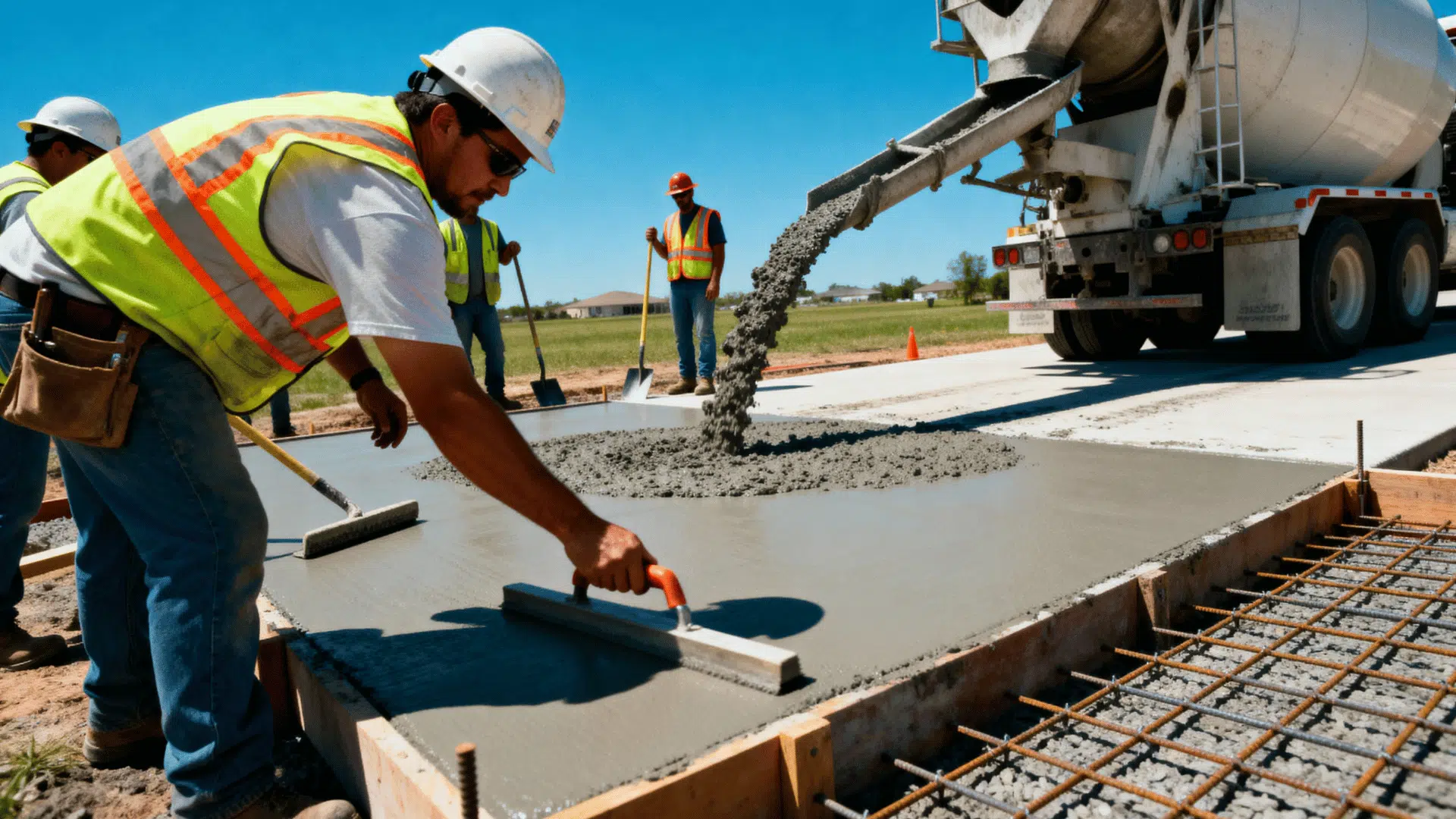
Planning a new driveway, patio, or garage floor? The biggest question people face is how much to pour a concrete slab without breaking the bank.
Concrete projects can quickly become expensive if you’re not prepared, and surprise costs tend to pop up when least expected.
Getting a clear picture of pricing factors upfront saves both money and headaches down the road. You’ll learn about every cost factor, from materials to labor, so there’s no guesswork when the first truck arrives.
Cost Breakdown by Concrete Slab Size
The cost of concrete slab installation varies widely depending on size, thickness, and location.
Most people spend between $4 – $8 per square foot for a standard slab, though prices can shift based on site conditions and local rates. Understanding typical dimensions helps you estimate costs more accurately.
1. Small Slabs (Under 200 sq ft)
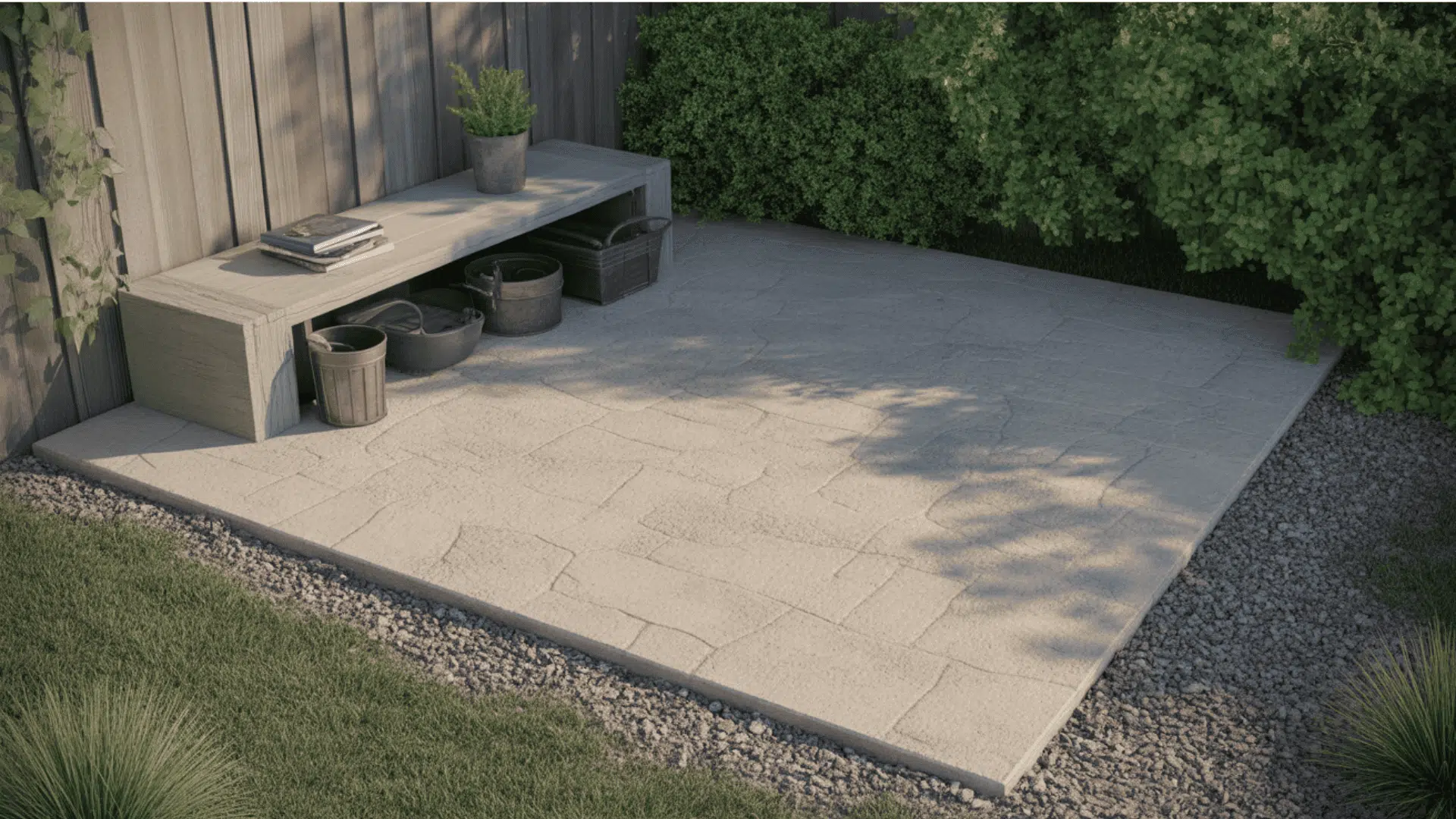
Perfect for compact outdoor spaces, small slabs are ideal for lighter foot traffic and decorative purposes. These budget-friendly projects typically finish in a day or two.
- Size Range: 10×10 to 12×15 feet
- Price Range: $400–$1,200 installed
- Common Uses: Garden sheds, AC pads, small patios, tool storage areas
2. Medium Slabs (200-400 sq ft)
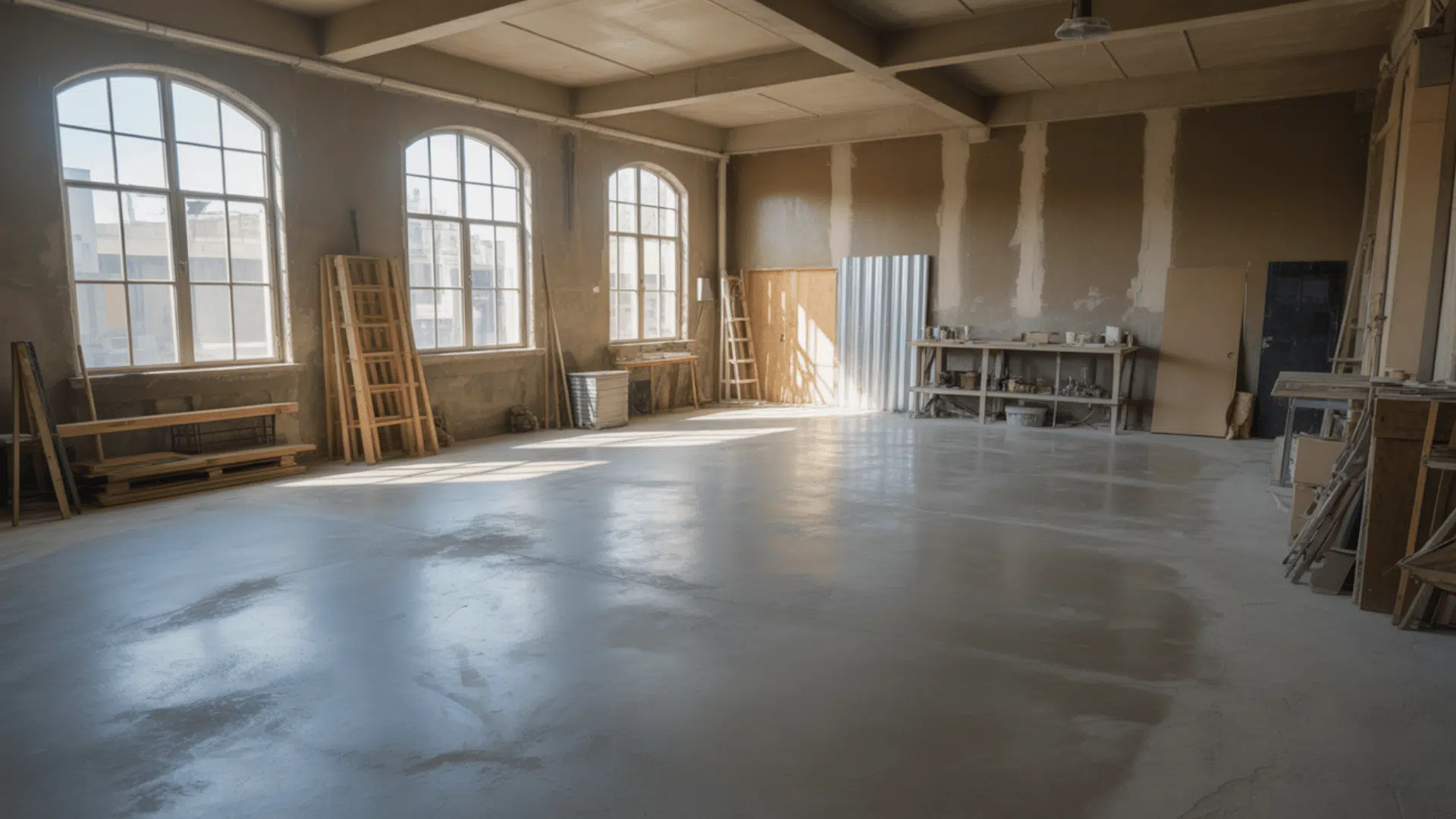
Medium-sized slabs strike the sweet spot between affordability and functionality.
They’re sturdy enough for vehicle weight yet manageable in cost of concrete slab expenses, and contractors can usually complete them within 2-3 days, depending on weather conditions.
- Size Range: 14×14 to 20×20 feet
- Price Range: $1,200–$3,200 installed
- Common Uses: Single-car garages, large patios, workshop floors, carports
3. Large Slabs (400-600 sq ft)
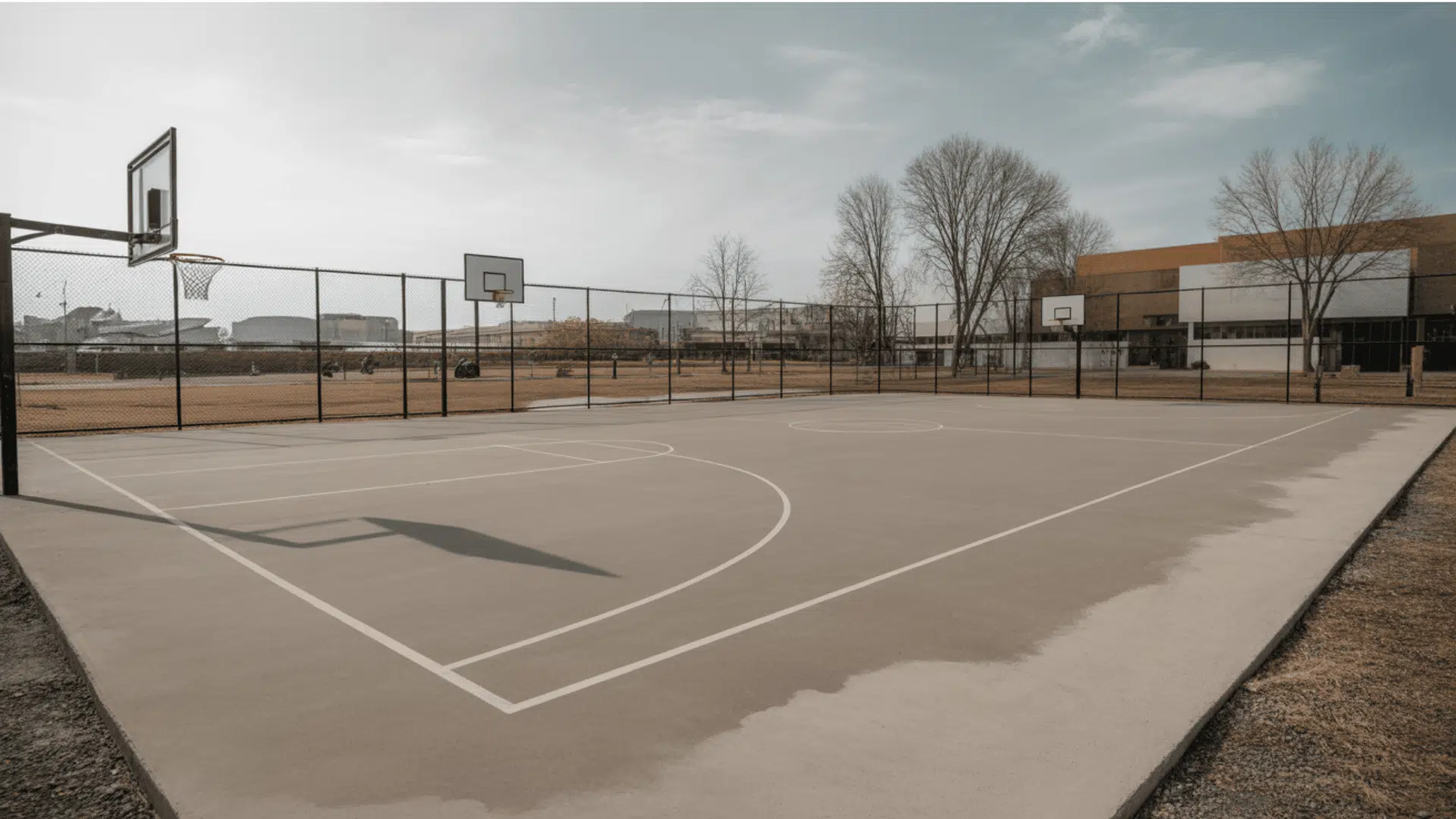
Large slabs require professional crews and proper planning since mistakes get expensive fast.
These heavy-duty surfaces support multiple vehicles or significant structural weight, and the thicker concrete ensures long-term stability even under constant use and harsh weather exposure.
- Size Range: 20×20 to 24×24 feet
- Price Range: $2,400–$4,800 installed
- Common Uses: Two-car garages, RV pads, basketball courts, large workshops
4. Extra-Large Slabs (Over 600 sq ft)
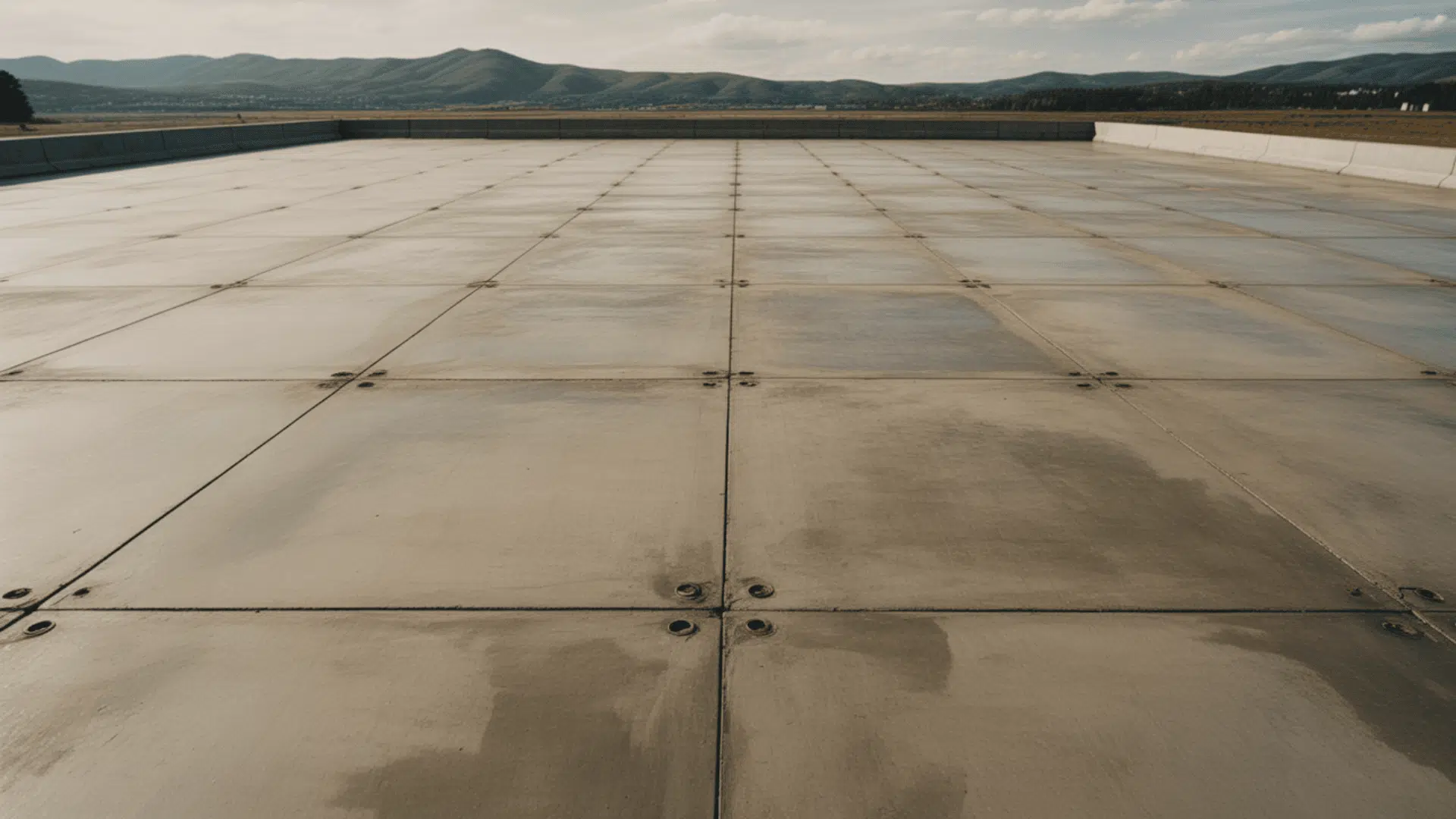
The cost of concrete slab installation jumps significantly due to material volume, reinforcement requirements, and extended labor time, but these foundations last for decades when properly installed and maintained.
- Size Range: 24×30 feet and larger
- Price Range: $4,800+ installed
- Common Uses: Multi-car garages, warehouse floors, commercial spaces, barn foundations
Matching slab dimensions to actual needs prevents overspending while ensuring the finished surface handles its intended purpose.
Types of Concrete Slabs and Their Costs
Different slab types serve specific purposes, and choosing the right one affects both the performance and the cost of concrete slab installation.
Understanding these differences helps match the right slab type to your project needs without overpaying for unnecessary features.
| Slab Type | Cost Per Sq Ft | Best For | Key Features |
|---|---|---|---|
| Slab-on-Grade | $4–$6 | Garages, sheds, patios | Poured directly on prepared ground, the most economical option |
| Monolithic Slab | $5–$8 | Houses, workshops | Foundation and floor poured together, faster installation |
| Stem Wall Slab | $8–$12 | Sloped sites, frost zones | Raised foundation with concrete walls, better drainage |
| Post-Tension Slab | $7–$10 | Large buildings, expansive soil | Steel cables add strength, prevent cracking in problematic soil |
| Waffle Slab | $10–$15 | Commercial spaces | Grid pattern reduces weight, used for large spans |
Key Factors That Affect Concrete Slab Cost
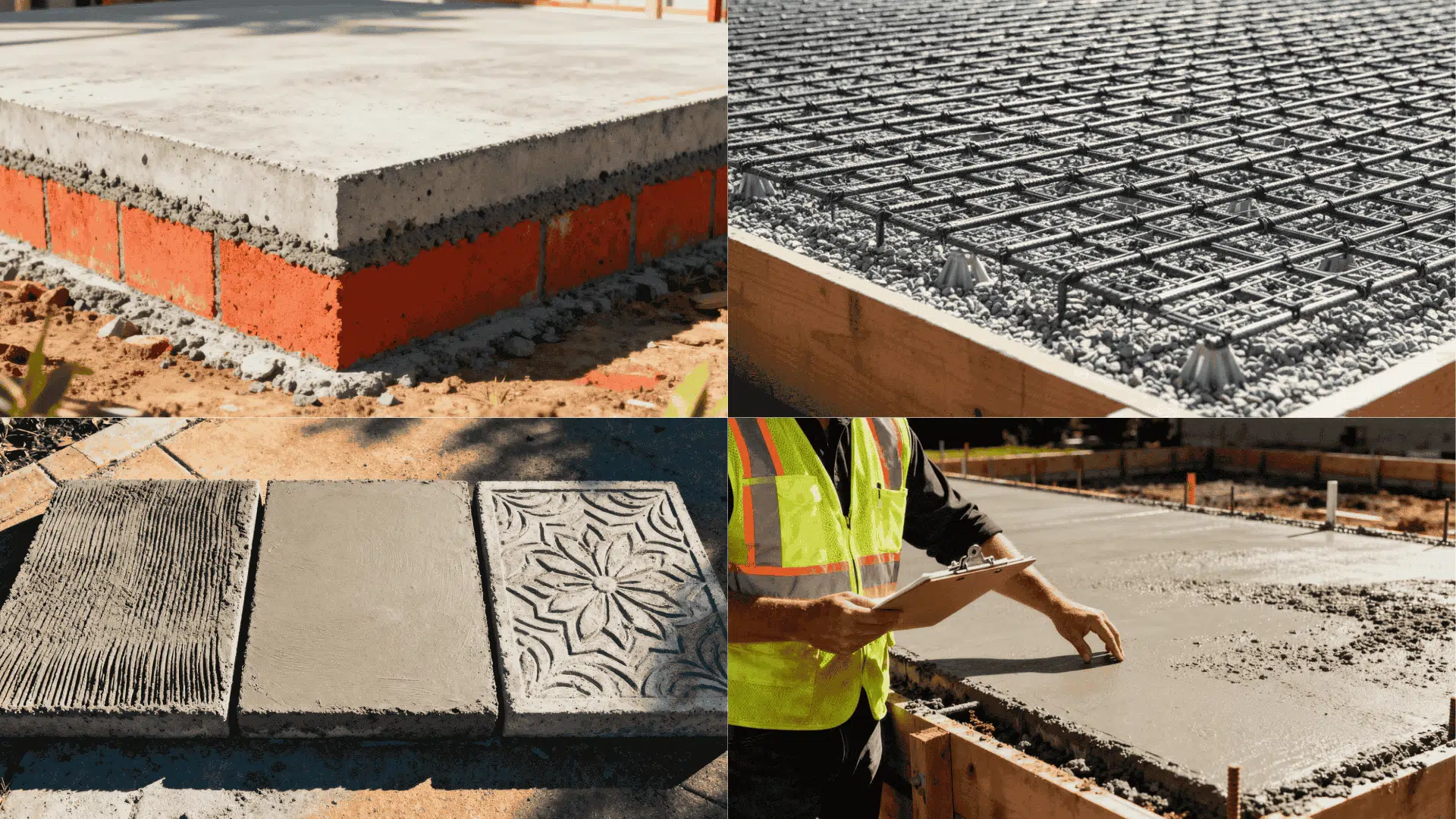
Not all concrete projects cost the same per square foot, and understanding why helps control expenses. Several variables influence the final price tag beyond square footage alone.
1. Slab Thickness
Thicker slabs require more concrete and take longer to pour, thereby increasing material and labor costs.
Most residential projects use a 4-inch thickness for patios and walkways, while garages and driveways need 6 inches to handle vehicle weight without cracking over time.
Determine Concrete Volume
- Formula: Length × Width × Thickness (in feet)
- Convert inches to feet (4 inches = 0.33 ft)
- Example: 20 × 30 × 0.33 = 198 cubic feet
- Convert to cubic yards: 198 ÷ 27 = 7.3 cubic yards
2. Site Preparation Requirements
Ground conditions make or break your budget since problematic soil needs extensive prep work.
Rocky terrain requires excavation equipment, while soft clay needs compacted gravel base layers, and sloped yards demand more grading labor to create level surfaces before pouring begins.
Calculate Square Footage
- Formula: Length × Width
- Example: 20 ft × 30 ft = 600 sq ft
3. Reinforcement Materials
Steel rebar and wire mesh strengthen concrete against cracking and settling, but they add material costs.
Basic residential slabs often skip reinforcement for walkways, though garages and driveways benefit greatly from steel support, especially in areas with freeze-thaw cycles or unstable soil.
Calculate Reinforcement Costs
- Wire mesh: Square footage × $0.50–$1
- Rebar grid: Square footage × $1–$2
- Example: 600 sq ft × $1.50 = $900 for rebar
4. Finishing Options
Basic broom finishes cost less than decorative surfaces since they require minimal extra labor.
Stamped patterns, colored concrete, or exposed aggregate involve additional materials and specialized skills, and these upgrades can double the cost of concrete slab work depending on complexity and design choices.
Calculate Material Costs
- Concrete price per cubic yard: $125–$150 average
- Example: 7.3 yards × $135 = $985.50
- Add 10% waste factor: $985.50 × 1.10 = $1,084
5. Local Labor Rates
Geographic location significantly affects labor costs, as urban areas charge premium rates compared to rural regions.
Coastal cities and metropolitan zones typically see prices 20-30% higher than small towns, and contractor availability during peak construction season also influences what you’ll pay per square foot.
Estimate Labor Costs
- Labor rate per square foot: $2–$4 average
- Example: 600 sq ft × $3 = $1,800
- Total project estimate: Materials + Labor
6. Permits and Inspections
Building codes require permits for most permanent concrete structures, adding administrative fees to project costs.
Small shed pads might avoid permits, but garages and large slabs need approval, and some municipalities charge based on project value, while others use flat fees.
Add Site Prep and Extras
- Gravel base (4 inches): $200–$400
- Permits and fees: $50–$500
- Finishing and sealing: $150–$300
- Final total: All costs combined
7. Concrete Grade and Mix
Different concrete strengths serve different purposes, and higher-grade mixes cost more per cubic yard.
Standard 3,000 PSI works fine for walkways and patios, but driveways need 4,000 PSI strength, and specialized additives for quick-set or cold-weather pours increase prices even further.
Calculate Mix Upgrade Costs
- Standard mix: Base price ($125–$135 per yard)
- Higher PSI: Add $10–$25 per cubic yard
- Example: 7.3 yards × $20 upgrade = $146 extra
8. Location and Accessibility
How easily trucks reach your site significantly affects how much concrete to pour for a concrete slab, since difficult access requires extra equipment or labor.
Backyard projects with narrow gates need wheelbarrows or pumps, adding hundreds to the bill, while front yards with direct truck access keep delivery costs minimal.
Calculate Accessibility Surcharges
- Direct truck access: No extra charge
- Pump truck needed: Add $200–$900 flat fee
- Example: Standard project + $700 pump = total adjustment
DIY Vs Hiring a Professional Contractor
Tackling concrete work yourself significantly reduces labor costs but demands physical effort and skill.
Professional contractors charge more yet deliver guaranteed results with proper equipment and experience, making the cost of concrete slab installation worth it for larger or complex projects.
| Factor | DIY Approach | Professional Contractor |
|---|---|---|
| Cost | $2–$4 per sq ft (materials only) | $6–$10 per sq ft (all-inclusive) |
| Time Required | 2–4 days for small slabs | 1–2 days with crew efficiency |
| Equipment Needed | Rent mixers, tools ($200–$500) | Contractor provides all equipment |
| Skill Level | Moderate to advanced required | Expert techniques ensure quality |
| Warranty | No warranty on DIY work | 1–5 year guarantee is typical |
| Best For | Small patios under 200 sq ft | Garages, driveways, foundations |
Additional Costs Factors to Consider
Hidden expenses can surprise people and quickly push the cost of concrete slab projects over budget. Planning for these extras upfront prevents financial stress midway through construction.
- Gravel Base Installation: Compacted gravel layers provide drainage and stability beneath the slab, typically adding $1–$2 per square foot or $400–$800 for standard projects.
- Vapor Barrier and Insulation: Moisture barriers prevent ground water damage while foam insulation improves energy efficiency, costing an extra $0.50–$1.50 per square foot combined.
- Demolition and Removal: Tearing out existing concrete, asphalt, or structures adds $2–$6 per square foot, depending on material thickness and disposal fees at local facilities.
- Drainage Systems: French drains or proper grading around the slab prevent water pooling, requiring $500–$1,500 extra for materials and professional installation.
- Sealing and Curing Compounds: Protective sealers extend concrete lifespan by preventing moisture penetration and surface damage, costing $0.25–$0.75 per square foot for quality products.
Regional Price Variations
Where you live dramatically affects how much it costs to pour a concrete slab, since material availability, labor wages, and demand fluctuate by region.
| Region | Cost Per Sq Ft | Typical Range | Price Factors |
|---|---|---|---|
| Northeast | $7–$10 | $2,800–$4,000 (400 sq ft) | High labor costs, winter weather challenges |
| Southeast | $5–$7 | $2,000–$2,800 (400 sq ft) | Moderate pricing, longer construction season |
| Midwest | $4–$6 | $1,600–$2,400 (400 sq ft) | Lower labor rates, competitive contractor market |
| Southwest | $6–$8 | $2,400–$3,200 (400 sq ft) | Desert conditions, water costs affect mixing |
| West Coast | $8–$12 | $3,200–$4,800 (400 sq ft) | Highest rates, strict building codes, permits |
Choose the Right Concrete Contractor
Selecting the right concrete contractor is a critical step that can significantly impact the quality, budget, and timeline of your project. With many options to choose from, it’s essential to know what qualifications and qualities to look for.
- Verify licenses, insurance, and 5+ years of experience on similar projects.
- Request client references, portfolio, and site visits to past jobs.
- Ask: “What materials, techniques, and timeline do you propose in writing?”
- Confirm OSHA training, local code knowledge, and equipment for your site.
- Get 3 detailed bids; compare terms, warranties, and payment schedules.
- Red flags: No written estimate, lowball bids, poor communication, or name changes.
- Check online reviews on BBB, Google, and Angi for consistent positive feedback.
- Ensure the contract is clear and covers cleanup, permits, and the change order process.
- Confirm they offer warranties (1-5 years) and post-job support
Money-Saving Tips for Concrete Slab Projects
Smart planning cuts the cost of a concrete slab without sacrificing quality or durability.
Simple strategies like timing your project right and comparing multiple quotes can save hundreds or even thousands of dollars on larger installations.
- Schedule During Off-Season: Fall and winter rates run 10-20% lower than spring and summer peak pricing, and contractors offer better deals when demand drops.
- Handle Site Prep Yourself: Clear debris, remove vegetation, and level the ground before contractors arrive to save $1- $2 per square foot on labor costs.
- Get Three Written Quotes: Comparing estimates from multiple contractors reveals fair pricing and prevents overpaying, plus competition often drives bids lower.
- Skip Decorative Finishes Initially: A standard broom finish keeps costs down now, and you can always add staining or stamping later, once the budget allows.
- Buy Materials in Bulk: Ordering concrete for multiple projects at once, or coordinating with neighbors, significantly reduces per-yard delivery fees for everyone involved.
The Bottom Line
Concrete slab projects range widely in price based on size, thickness, site conditions, and regional markets. The cost to pour a concrete slab depends on the specific project needs.
Smart planning makes all the difference between staying on budget and facing unexpected costs.
Getting multiple contractor quotes, scheduling strategically, and knowing which features justify extra investment leads to successful outcomes.
Ready to move forward? Request detailed estimates from licensed contractors in the area, compare their proposals carefully, and choose professionals with solid references and proven track records for quality concrete work.