The average living room size influences furniture choices and resale value, but people often overlook dimensions until they face an oversized sectional or plan a renovation.
When you’re house hunting, redecorating, or simply curious about how big a living room should be, understanding standard dimensions helps you make smarter design decisions and avoid costly mistakes.
Room sizes fluctuate significantly by home type: apartments naturally differ from sprawling ranch houses, and regional building trends play a surprising role in what builders consider “standard.”
The Average Living Room Size
The average living room size typically falls between 180 and 250 square feet, though this benchmark shifts considerably based on your home’s age and architectural style.
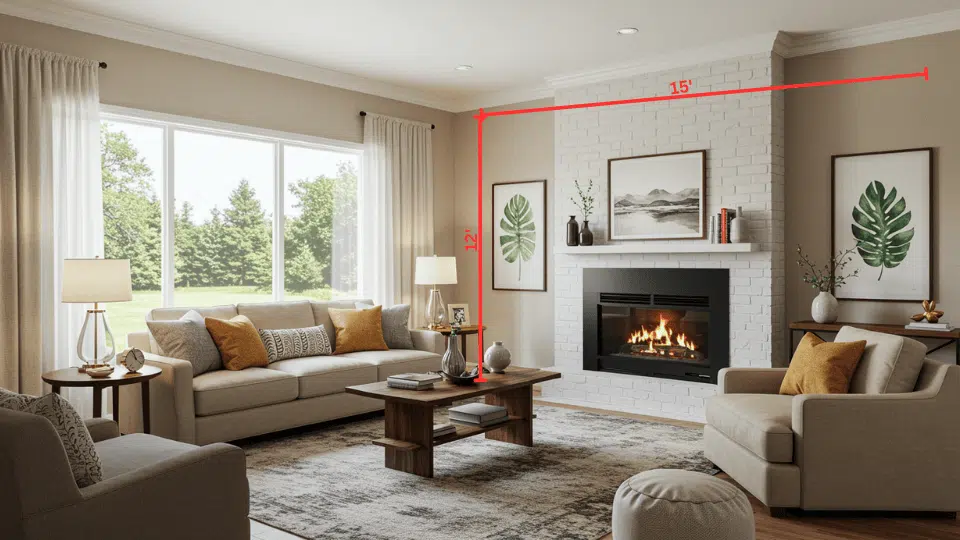
Understanding how big a living room is requires examining construction-era mid-century homes, which often feature compact 12×15-foot spaces, while modern builds lean toward generous 16×20-foot layouts.
Rooms under 180 square feet feel cramped, 180-250 square feet work for most families, and anything exceeding 300 square feet enters luxury territory.
The average size living room balances comfortable seating arrangements with adequate walkways, typically 30-36 inches between furniture pieces, ensuring your space feels inviting rather than cluttered or cavernous.
How to Determine the Ideal Living Room Size for Your Home?
Finding the right living room size isn’t about chasing square footage; it’s about matching the space to your household’s actual needs and lifestyle.
Consider how many people regularly use the space, your entertaining frequency, and how the room connects to adjacent areas, such as kitchens or dining rooms.
- Family Size: Larger households need 250+ sq. ft. for comfortable gathering, while couples manage well with 180-200 sq. ft.
- Furniture Layout: Measure existing pieces first; ensure 30-36 inches between seating and coffee tables
- Traffic Flow: Maintain 3 feet of walkway space along walls and through main pathways
- Room Connections: Open-concept layouts make smaller living rooms feel more spacious than closed-off designs
Different Living Room Sizes
Living rooms don’t follow a one-size-fits-all formula; each size category presents unique design opportunities and challenges.
From visual expansion tricks for compact spaces to zone-creation techniques for generous layouts, each size range demands tailored approaches that turn square footage into livable, inviting environments.
1. Small Living Rooms
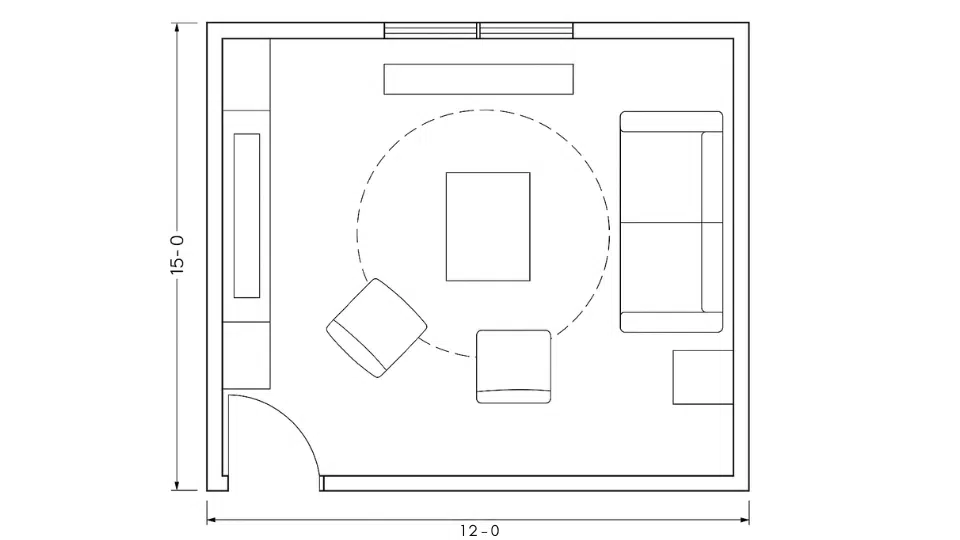
Small living rooms under 180 square feet require strategic design thinking that prioritizes multifunctionality and visual spaciousness.
These compact spaces typically measure 10×12 to 12×15 feet (120-180 sq. ft.) and are perfect for apartments, starter homes, and urban condos where efficiency matters.
Light color palettes and wall-mounted shelving free up valuable floor space for comfortable traffic flow. Use armless chairs, nesting tables, and convertible pieces with vertical storage solutions.
2. Medium Living Rooms
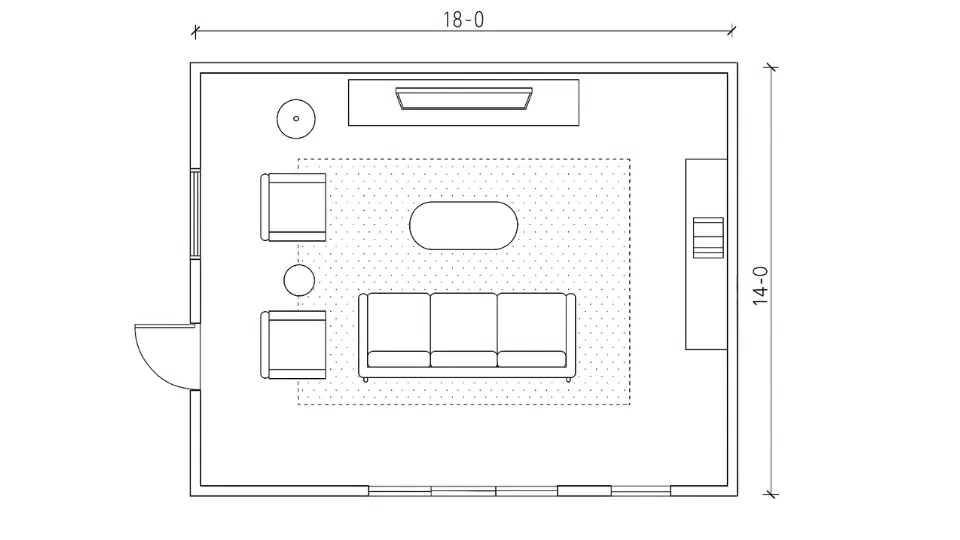
Medium living rooms between 180 and 250 square feet offer the sweet spot for balancing openness with warmth.
These diverse rooms typically measure 12×15 to 14×18 feet (180-250 sq. ft.) and are perfect for single-family homes, townhouses, and families needing flexible gathering spaces.
Use area rugs to anchor zones, position furniture to create pathways, and incorporate varied lighting.
3. Large Living Rooms
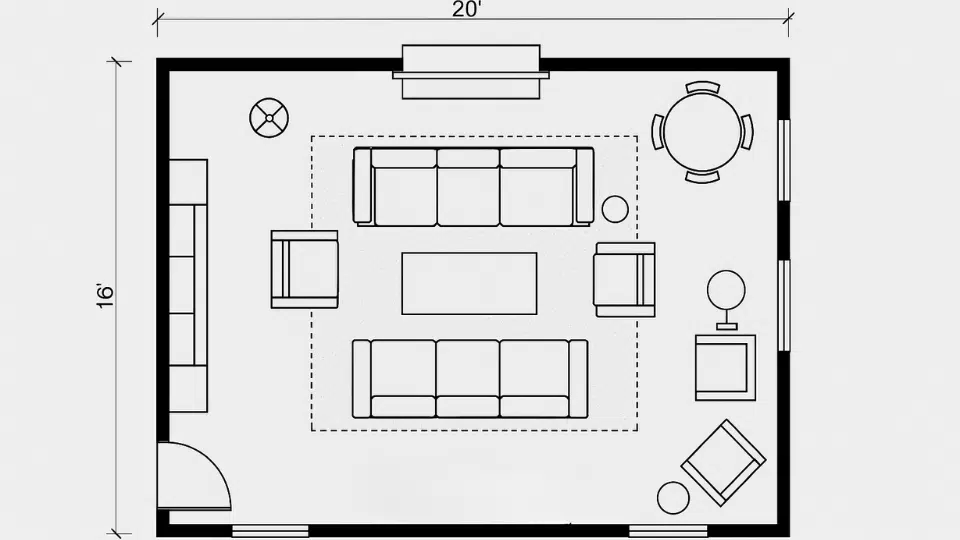
Large living rooms exceeding 300 square feet demand intentional space management to avoid that echoing, underutilized feeling.
These generous spaces typically measure 16×20 feet and larger (320+ sq. ft.) and are perfect for open-concept homes, luxury properties, and households that entertain frequently.
The secret lies in creating visual anchors through substantial furniture groupings and strategic rug placement. Use oversized artwork, taller furniture, and layered lighting to fill vertical space.
Average Living Room Sizes by Home Style
Home architecture dramatically influences living room dimensions, with each property type following distinct spatial standards.
Apartments prioritize efficiency within limited footprints, while custom luxury homes have expansive great rooms.
1. Apartment Living Room Size
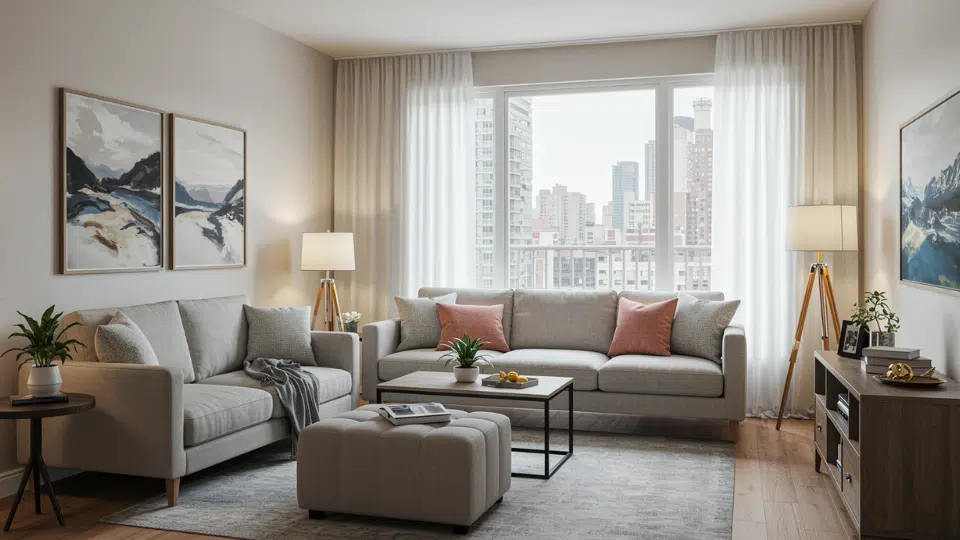
Apartment living rooms typically range from 100 to 200 square feet, with urban high-rises often falling on the smaller end.
These space-conscious designs require creative thinking, with multi-purpose furniture like storage ottomans and sofa beds maximizing functionality without overwhelming the room.
- Design Tip: Use light, neutral colors and furniture with exposed legs to increase visual flow
- Furniture Placement: Float your sofa away from walls and use small-scale sectionals or loveseats
- Best for: Singles, couples, or minimalists who prioritize location and affordability over square footage
2. Townhouse Living Room Size
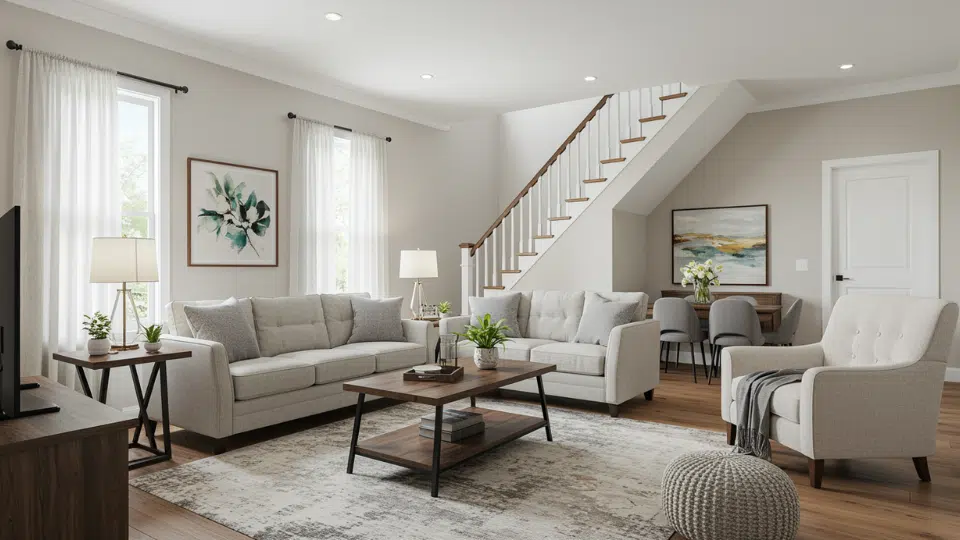
Townhouse living rooms typically measure 150-250 square feet, offering more breathing room than apartments.
Many modern townhomes feature open-concept designs that make the living space feel more generous than its square footage suggests, with connected dining and kitchen areas expanding the perceived size.
- Design Tip: Define your living area with an area rug in open layouts. This creates visual boundaries
- Furniture Placement: Arrange seating to face the focal point while maintaining clear pathways
- Best for: Small families, young professionals, or anyone seeking urban convenience with suburban-style space
3. Single-Family Home Living Room Size
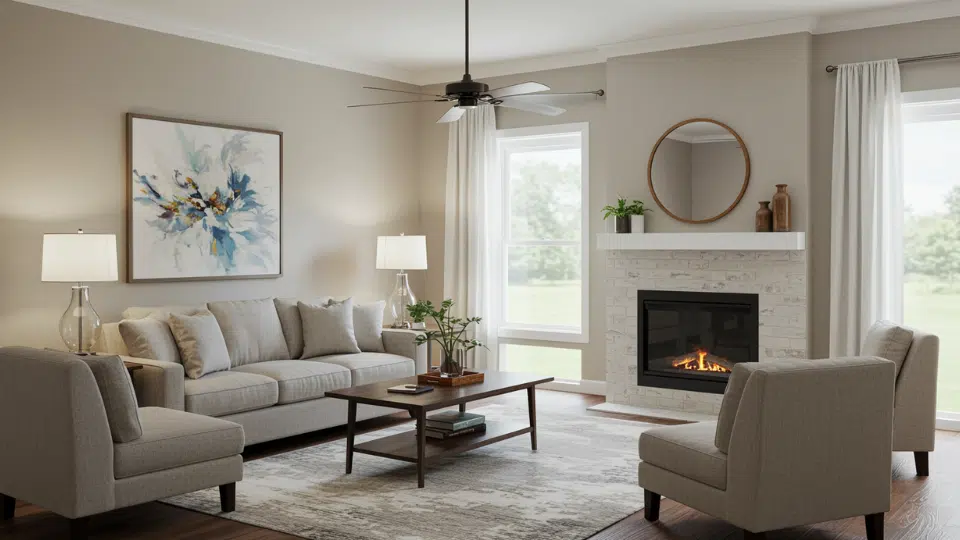
Single-family home living rooms average 250-350 square feet, particularly in suburban developments.
These proportions allow for complete furniture groupings, including a full sofa, loveseat, or armchairs, coffee table, and additional accent pieces, without feeling crowded.
- Design Tip: Create conversation-friendly arrangements by positioning seating in a U-shape or facing configuration no more than 8-10 feet apart
- Furniture Placement: Leave 30-36 inches between your coffee table and seating, and maintain at least 3 feet around the perimeter
- Best for: Growing families, entertainers, or households needing dedicated rooms for different activities
4. Luxury Living Room Size
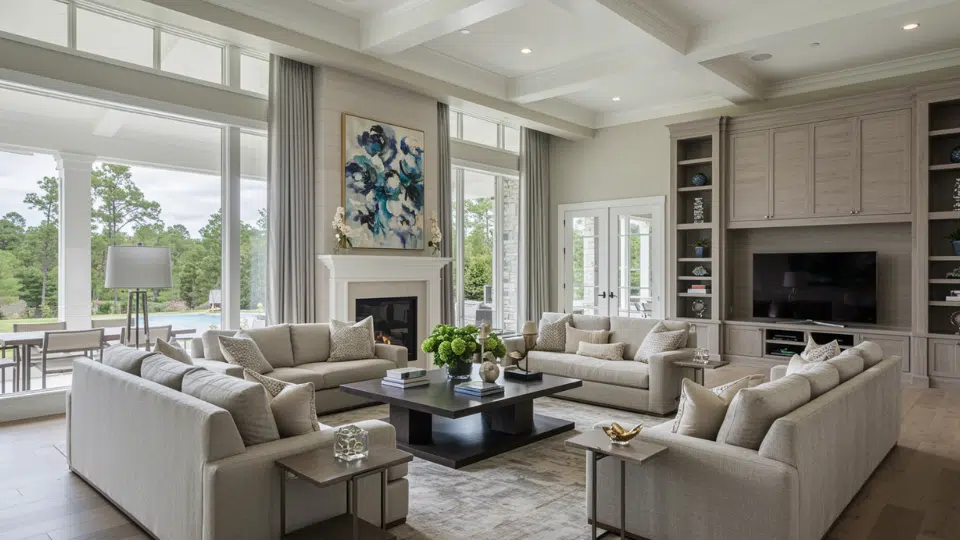
Luxury and custom home living rooms range from 400 to 600 square feet.
These expansive rooms often feature vaulted ceilings, floor-to-ceiling windows, and ample space for multiple distinct seating areas, a formal conversation area, a TV section, and perhaps a reading nook.
- Design Tip: Use substantial furniture and large-scale artwork to fill vertical space. Oversized sectionals and statement chandeliers prevent emptiness
- Furniture Placement: Create multiple “rooms within a room” using area rugs and furniture groupings to define separate functional zones
- Best for: Frequent entertainers, large families, or people who want dedicated spaces for formal and casual gatherings
Tips to Uplift the Living Room
If you’re wondering how big a living room needs to be for certain upgrades or how to work with your existing dimensions, these affordable upgrades work for all sizes.
- Floor lamps in dark corners, table lamps for reading zones, and dimmers on overhead lights give you control over mood and functionality throughout the day.
- Light, neutral colors make small rooms feel more spacious and airy, while bold accent walls or rich jewel tones add drama and coziness to larger spaces.
- Layer different materials, such as area rugs, textured throws, and varied fabrics, to add visual interest and warmth.
- Strategic plant placement brings life, color, and improved air quality to any living room. Tall floor plants fill vertical space in large rooms, while compact succulents and hanging planters work beautifully in smaller spaces.
- Experiment with different layouts to improve traffic flow, and proportion floating furniture away from walls often creates better conversation areas and makes rooms feel more intentional, regardless of square footage.
Final Thoughts
Understanding the average living room size gives you the confidence to design.
Forget the picture-perfect rooms you see in magazines; real homes come in all shapes and sizes. Knowing the average living room size helps you see what’s typical, so you can plan a space that fits your home and lifestyle perfectly.
Use these averages as a guide, not a rule. What matters most is how your living room feels for you, comfortable, inviting, and true to your way of living.