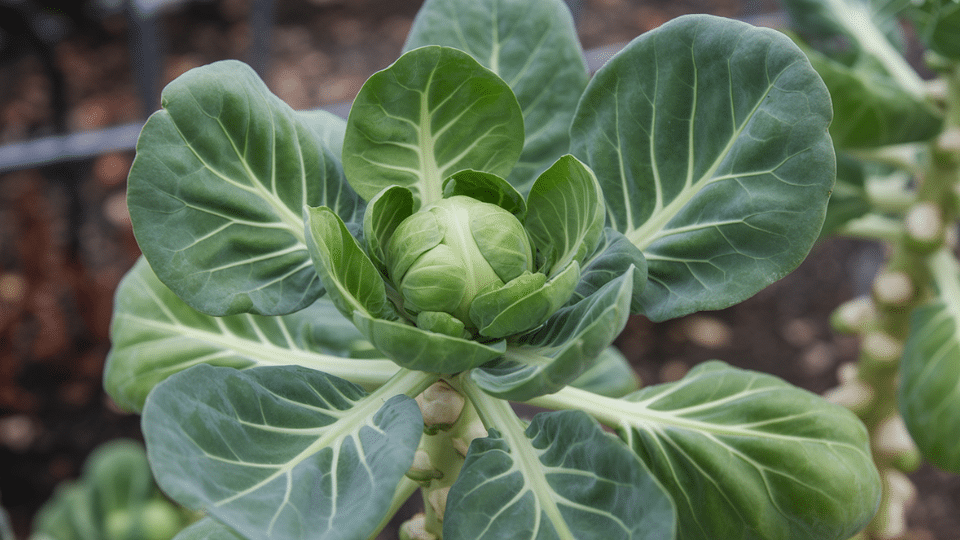
Growing fresh vegetables at home sounds appealing, but many people avoid Brussels sprouts. They’ve heard these mini cabbages are finicky, take forever to mature, and demand expert-level skills.
The truth? Learning how to grow Brussels sprouts is easier than most people think.
These nutritious veggies grow in cool weather and don’t need constant attention. With basic knowledge and a bit of patience, anyone can harvest their own crop.
This guide breaks down how to grow Brussels sprouts from seed to harvest.
Scientific Classification of Brussels Sprouts
Brussels sprouts belong to the Brassicaceae family and share the same species as cabbage, broccoli, and kale. Here’s their complete taxonomical breakdown.
| Taxonomic Rank | Classification |
|---|---|
| Kingdom | Plantae |
| Order | Brassicales |
| Family | Brassicaceae |
| Genus | Brassica |
| Species | Brassica oleracea |
| Variety | var. gemmifera |
| Common Name | Brussels Sprouts |
Benefits of Growing Brussels Sprouts at Home
Growing Brussels sprouts in gardens offers rewards that go far beyond fresh produce. Here’s why people love cultivating this diverse vegetable:
- Extended Growing Season: Brussels sprouts grow in cooler temperatures, making them ideal for fall and winter harvests when most gardens are dormant.
- Superior Taste: Home-grown sprouts taste sweeter and more tender than store-bought varieties, without the bitterness many people dislike.
- Valuable Gardening Skills: Growing Brussels sprouts teaches essential techniques, from seedling care to effective pest management.
- Abundant Harvest: A single plant produces dozens of sprouts over several weeks, providing a steady supply throughout the season.
- Cold-Hardy Crop: Brussels sprouts are remarkably frost-tolerant and often taste better after exposure to cold temperatures.
- Maximum Freshness: Fresh-picked sprouts can be harvested and eaten within hours, preserving optimal nutrition and flavor that store-bought versions can’t match.
Tools and Materials Required for Growing Brussels Sprouts
Gather the right tools and materials before you begin to ensure smooth planting, healthy growth, and a successful Brussels sprouts harvest from start to finish.
| Stage | Tools and Materials |
|---|---|
| Starting Seeds | Seeds or seedlings, seed trays, potting mix |
| Soil Prep | Compost, soil conditioner, garden trowel |
| Planting and Care | Mulch, watering can or hose, balanced fertilizer |
| Support and Maintenance | Stakes or supports, gloves |
| Harvesting | Pruning shears, basket, or container |
Step-by-Step Guide to Grow Brussels Sprouts
Follow this simple guide to grow healthy, flavorful Brussels sprouts from seed to harvest, with practical steps and essential tools for steady success.
Step 1: Prepare Your Site

Choose a sunny area that gets steady light and does not stay soggy after rain. Clear out weeds and rocks so roots can spread easily.
Loosen the top layer of soil with a fork or trowel. Mix in plenty of compost until the bed is crumbly and easy to work. Rake the surface smooth so trays or transplants sit evenly and water soaks in without pooling.
This step takes about 1-2 hours for a small bed, depending on soil condition and how much clearing is needed.
Step 2: Start With Seeds
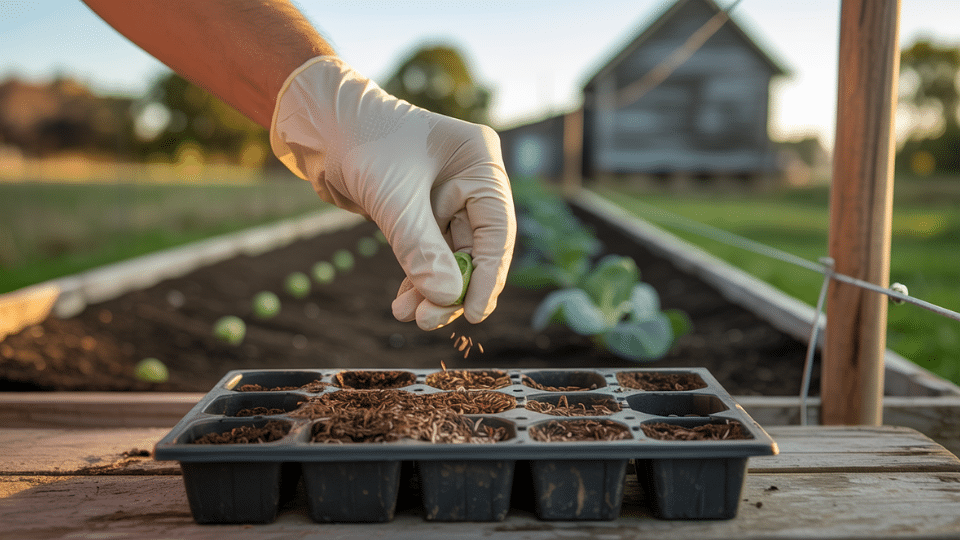
Fill clean seed trays or small pots with a fine potting mix. Make shallow holes and sow each seed about half an inch deep.
Cover lightly and press to ensure the mix contacts the surface. Water gently so the surface is evenly damp, not soaked.
Place trays where they stay warm and bright. Keep the mix moist with light watering until you see steady germination and sturdy little seedlings.
It takes 7-14 days of daily monitoring for seedlings to emerge.
Step 3: Transplant Seedlings
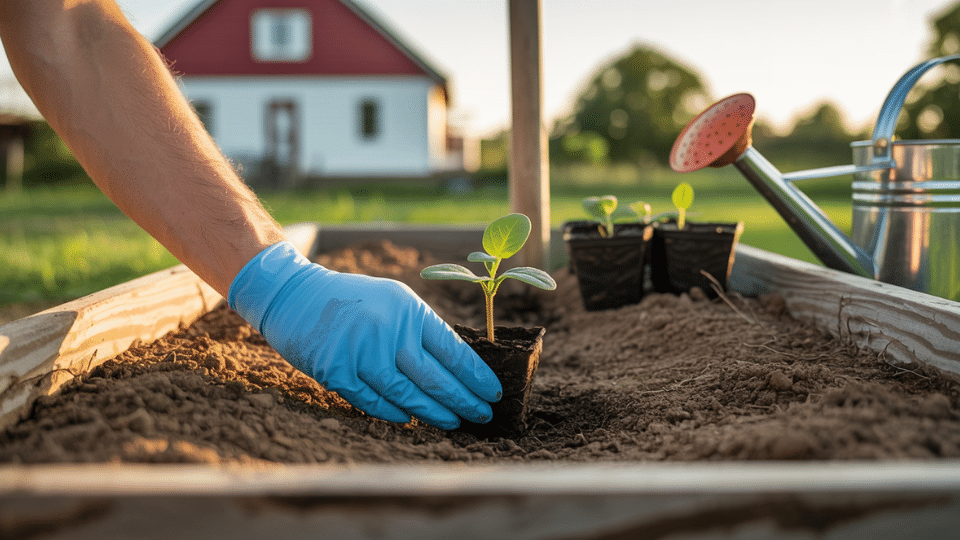
When seedlings have a few true leaves and feel firm, begin setting them outdoors a little each day to adjust.
After several days, choose a mild, calm afternoon for planting. Space holes about 18 to 24 inches apart in rows that you can reach from both sides.
Slip each seedling from its cell, set it at the same depth, and firm soil around the roots. Water the entire bed thoroughly to settle everything.
Adjusting to the environment takes 5-7 days with 15 minutes of sunlight daily, and the actual transplanting requires 1-2 hours for a typical bed.
Step 4: Water and Feed
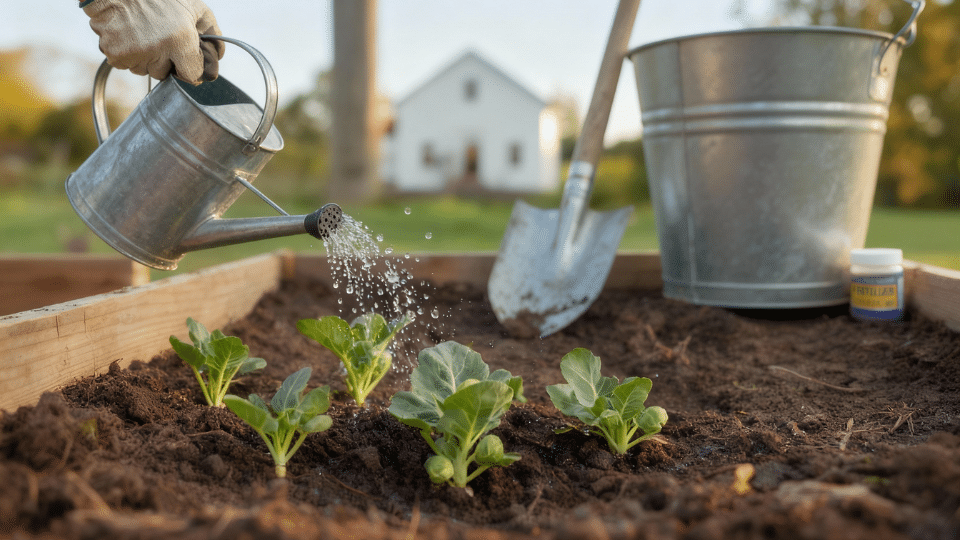
Give plants a deep drink whenever the top inch of soil feels dry to the touch. Aim for steady moisture that reaches the root zone rather than frequent light sprinkles.
After they start growing, offer a gentle feeding on a regular schedule using compost tea or a balanced fertilizer mixed as directed.
Water first, then feed, so roots take it in smoothly. Keep the area tidy so nothing competes for moisture.
On average, watering takes 15 minutes every couple of days, and feeding takes 15 minutes every 2-4 weeks throughout the growing season (100 days).
Step 5: Maintain with Mulch
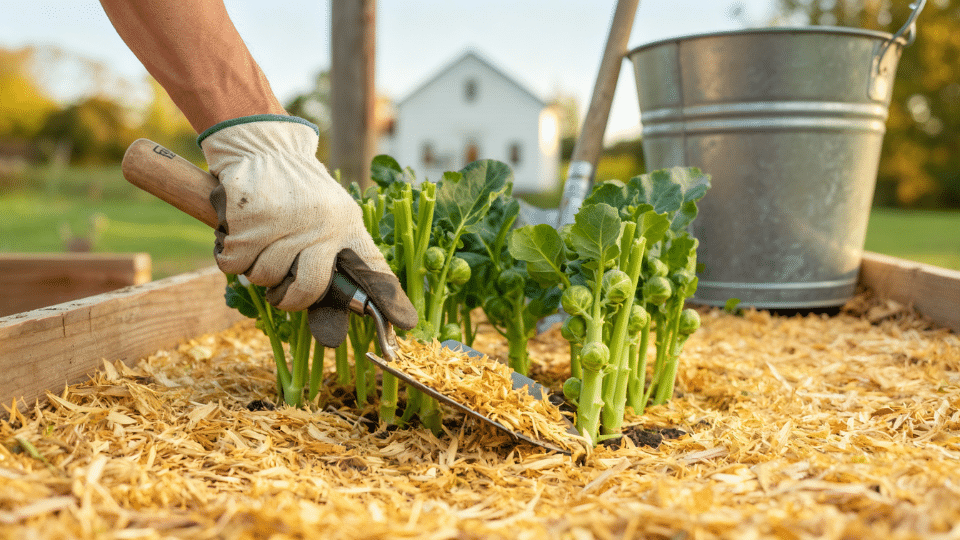
Spread mulch in a soft ring around each stem to hold moisture and keep the surface cool. Check plants weekly and add simple stakes or a light tie if tall stems start to lean.
Snip off yellowing or damaged leaves so air moves freely. Remove any weeds while they are small so roots are not disturbed.
Keep watering steadily and stay consistent with your routine so growth continues without interruptions.
Step 6: Harvest and Enjoy
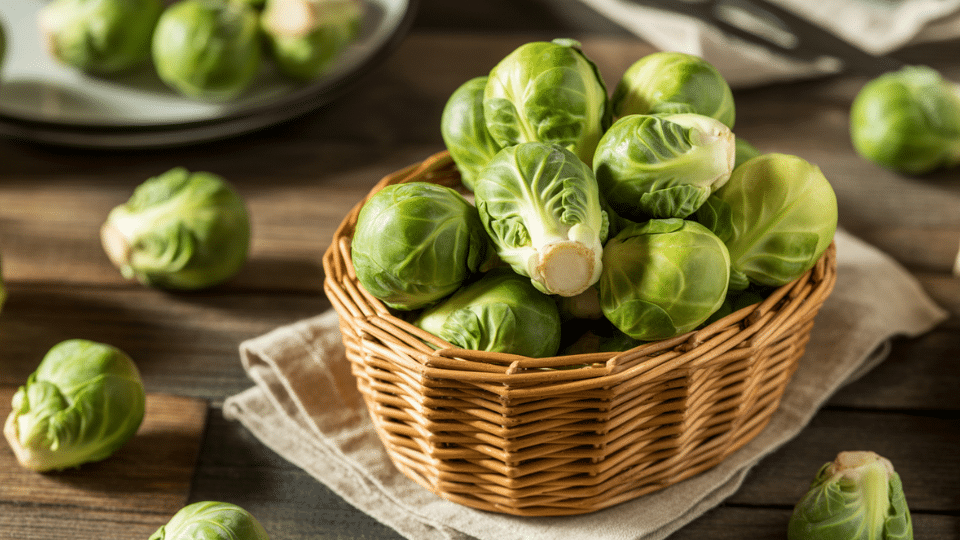
Watch the stalks as small heads begin to firm up from the bottom upward.
When individual sprouts feel tight and measure about 1 to 2 inches, bend and twist them off, or cut them cleanly with a small knife.
Work your way up the stalk over several sessions as more sprouts reach the right feel. Collect them in a bowl, keep them cool, and plan your next picking as the upper sprouts finish.
Tips for a Better Harvest
Maximizing Brussels sprout yields requires attention to timing, spacing, and care throughout the growing season for abundant, flavorful harvests.
- Start at The Right Time: Plant seeds indoors 6-8 weeks before the last spring frost for a fall harvest, as Brussels sprouts need 80-100 days to mature.
- Choose the Right Location: Select a spot with full sun and well-draining, compost-enriched soil for optimal growth.
- Space Plants Properly: Allow 18-24 inches between plants to ensure adequate air circulation and prevent disease.
- Water Consistently: Maintain even soil moisture, providing 1-2 inches of water weekly, especially during sprout development.
- Remove Lower Leaves: Strip the bottom leaves as sprouts form to direct energy toward sprout production and improve airflow.
- Harvest from the Bottom Up: Pick sprouts when they reach 1-2 inches in diameter, starting at the base and working upward.
Best and Worst Companion Plants for Brussels Sprouts
Learning how to grow Brussels sprouts successfully involves strategic companion planting. Here’s a quick reference guide:
Best and Worst Companion Plants for Brussels Sprouts
Learning how to grow Brussels sprouts successfully involves strategic companion planting. Here’s a quick reference guide:
| Category | Plants | Benefits/Effects |
|---|---|---|
| Good Companions | Thyme, sage, rosemary, mint | Aromatic herbs that repel aphids and cabbage moths, helping protect Brussels sprouts in indoor beds. |
| Onions, garlic, chives, leeks | Strong scents confuse pests and reduce insect pressure around sprouts. | |
| Spinach, lettuce | Shallow-rooting greens that do not compete for nutrients and help keep soil moist. | |
| Carrots, beets, radishes | Root crops that use different soil depths allow for balanced nutrient uptake. | |
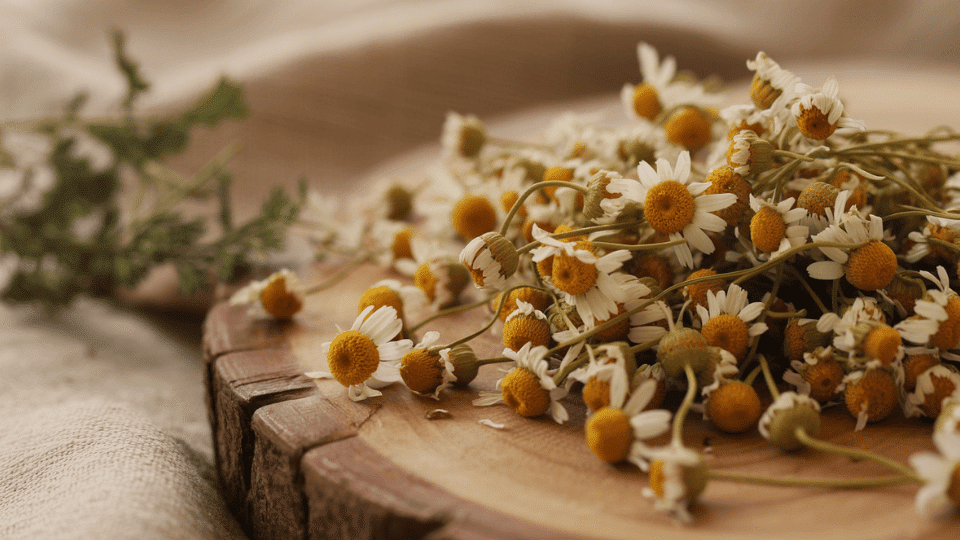
| Chamomile, dill | Attract helpful insects, and may improve overall plant flavor. | |
| Bad Companions | Strawberries | Compete for space and may introduce pests harmful to brassicas. |
| Tomatoes, peppers | Heavy feeders that reduce nutrients available to sprouts. | |
| Pole beans | Can stunt the growth of Brussels sprouts. | |
| Mustard greens | Carry diseases that affect all brassica crops. |
The Bottom Line
Learning how to grow Brussels sprouts brings a satisfying sense of accomplishment as people watch these hardy vegetables develop steadily through the cooler months.
Success depends on consistent care, proper spacing, and attention to watering and feeding.
With patience, anyone can enjoy a fresh supply of flavorful Brussels sprouts right from their own garden, adding a unique and nutritious element to seasonal meals while expanding their gardening skills and experiences.