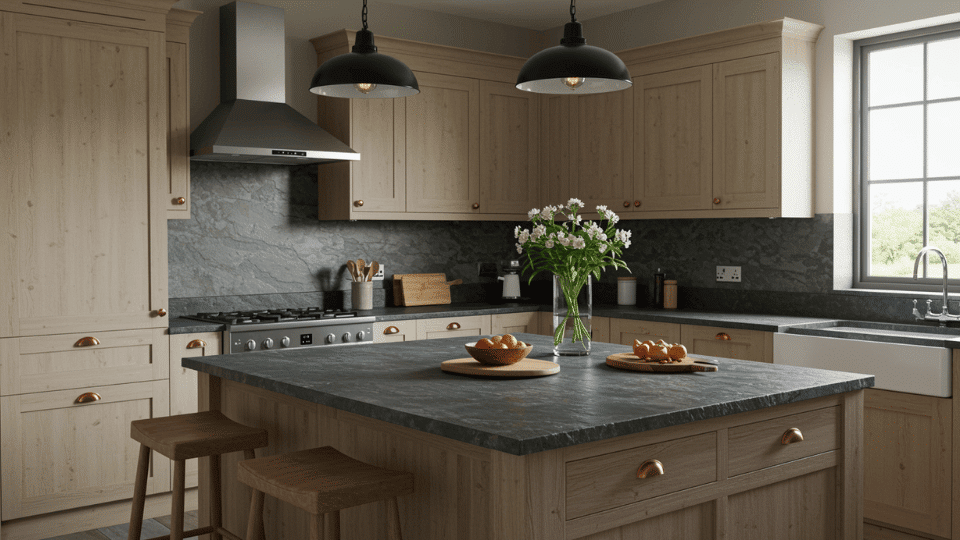
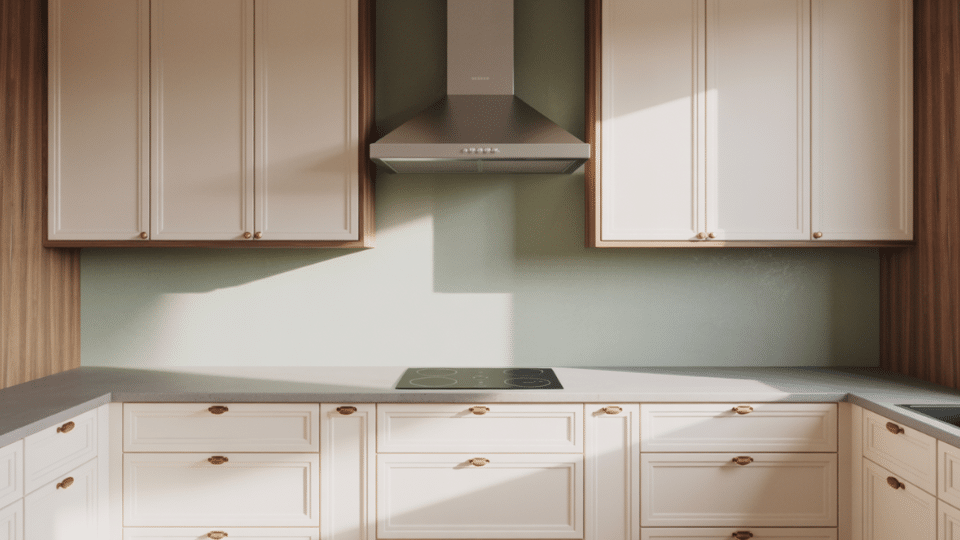
Installing new hardware might seem straightforward until you’re standing there with a drill, wondering exactly where to mark that first hole.
Cabinet handle placement directly affects how your kitchen looks and how smoothly it functions day to day.
The difference between professional-looking cabinetry and amateur work often comes down to measurement precision.
This blog covers proven techniques professionals use, showing you exactly where to position hardware on doors, drawers, and specialty cabinets for results that look intentional and feel natural.
Why Cabinet Hardware Placement Matters?
Getting your cabinet handle placement right isn’t just about looks, though that’s certainly part of it.
The position of your handles and knobs affects how comfortable your kitchen feels to use every single day. Place them too high or too low, and you’ll find yourself reaching awkwardly dozens of times daily.
But get the placement just right, and opening cabinets becomes second nature. Proper kitchen cabinet handle placement also creates visual balance, tying your entire space together.
It’s one of those details that people might not consciously notice, but they’ll definitely feel the difference.
Renovating or building from scratch needs taking time to plan your hardware placement, which pays off in both functionality and style.
Know Your Cabinets and Hardware
Before you start measuring and drilling, it helps to understand what you’re working with. Knowing your cabinet style and hardware options makes cabinet handle placement so much easier and more precise.
1. Types of Cabinets to Choose from
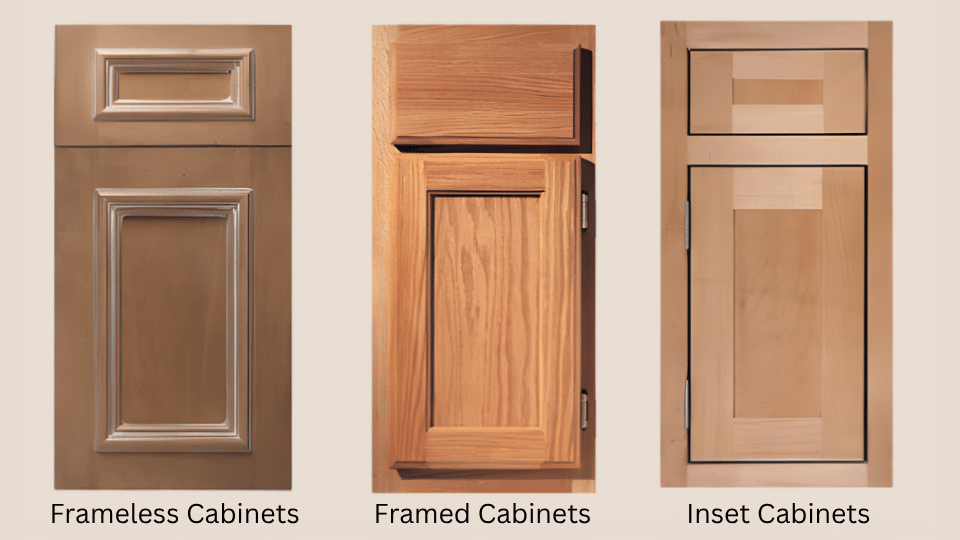
- Framed Cabinets: They have a face frame around the opening, giving you that traditional look with a visible border when doors are open
- Frameless Cabinets: They are sleeker and modern, with doors that cover the entire box, popular in European-style kitchens
- Inset Cabinets: They have doors flush with the frame for a high-end, custom appearance, and overlay cabinets have doors that sit on top of the frame.
Your cabinet type affects where you can place hardware and how much clearance you’ll need
2. Parts of Cabinets to Know
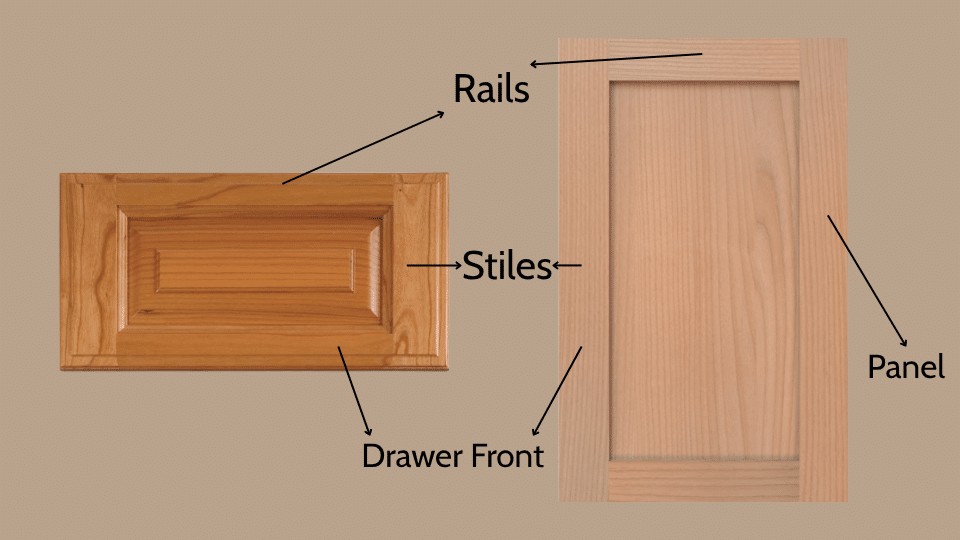
- Rails are the horizontal frame pieces at the top and bottom of your cabinet doors
- Stiles run vertically along the sides, creating the door’s outer frame
- Drawer fronts are the visible face of your drawers; this is where you’ll mount your pulls
- Panels fill the center area between rails and stiles, whether they’re flat, raised, or glass
Understanding these parts helps you measure accurately and avoid drilling into weak spots
3. Different Types of Pulls and Knobs

- Knobs are single-point hardware, perfect for smaller doors and a classic look
- Bar pulls (also called handles) offer a horizontal grip, ideal for drawers and larger doors
- Cup pulls have a curved, bin-style design that works beautifully on drawers, especially in traditional kitchens
- Edge pulls and finger pulls mount on the cabinet edge or recess into it for a sleek, handleless appearance
Cabinet knob placement typically works best on doors, while pulls suit drawers, though mixing both adds visual interest
Placement Rules for Cabinet Doors
Proper cabinet handle placement changes your kitchen from functional to fabulous, balancing accessibility with visual harmony across every door and drawer.
1. Start with Opposite Sides from Hinges
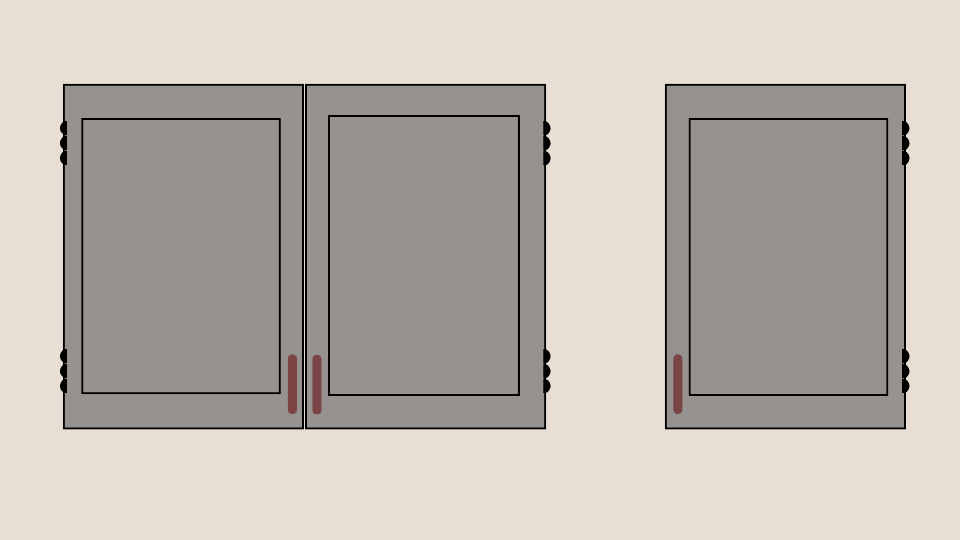
Begin with a simple principle: install hardware on the corner opposite the hinge for natural leverage and smooth opening.
Measure 2½–3 inches from the door edge, adjusting slightly for narrow stiles. This placement keeps handles visually balanced while remaining easy to reach, creating an intuitive flow throughout your kitchen.
The opposite-corner rule works universally, whether you’re working with traditional raised panels or contemporary flat fronts.
2. Overhead and Wall-Mounted Upper Cabinets
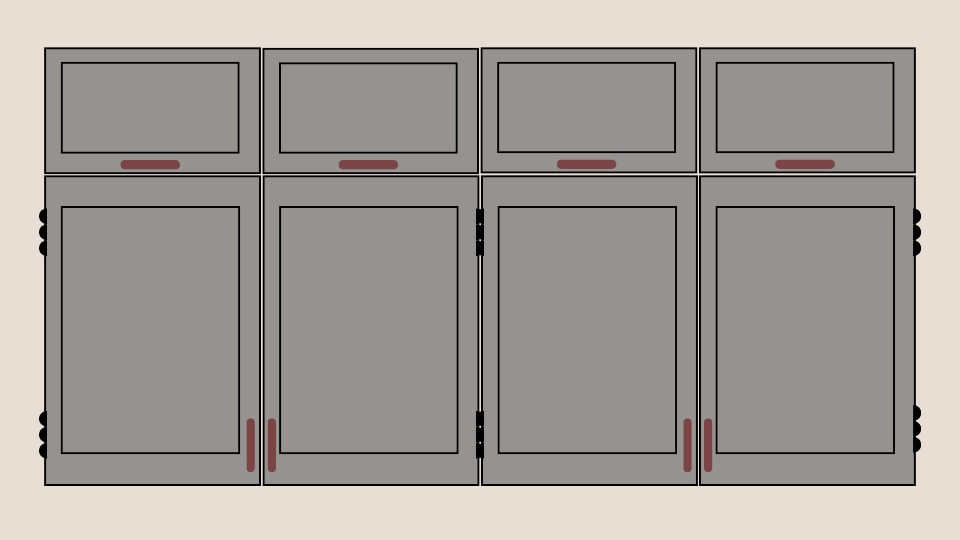
For upper cabinets, position knobs or pulls on the bottom corner opposite the hinge. This keeps hardware at a comfortable height that follows your arm’s natural movement when opening doors.
If you’re working with taller cabinets or have shorter household members, shift the pull slightly lower for better accessibility.
Extra-tall upper units benefit from vertical pulls that offer flexibility along the entire length. This thoughtful approach to kitchen cabinet handle placement ensures everyone can reach comfortably.
3. Base Units in Lower Cabinets
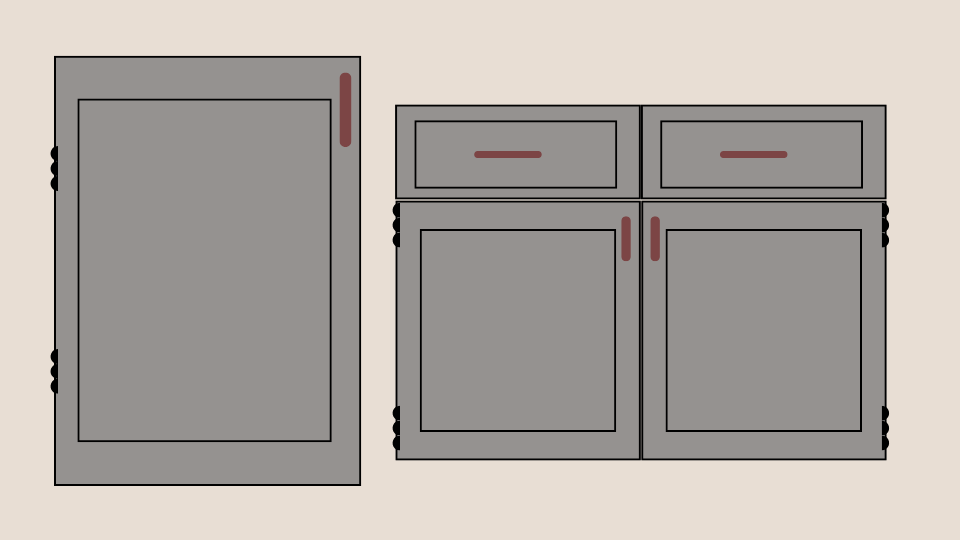
Base cabinets follow the opposite pattern: install handles on the top corner away from the hinge. This positioning keeps hardware within easy reach while standing or bending.
When a drawer sits directly above the door, align the handle’s vertical axis with the drawer pull to create a clean, continuous line.
This attention to cabinet knob placement creates a visual rhythm that feels professionally designed rather than randomly assembled.
4. Tall Pantry and Utility Cabinets
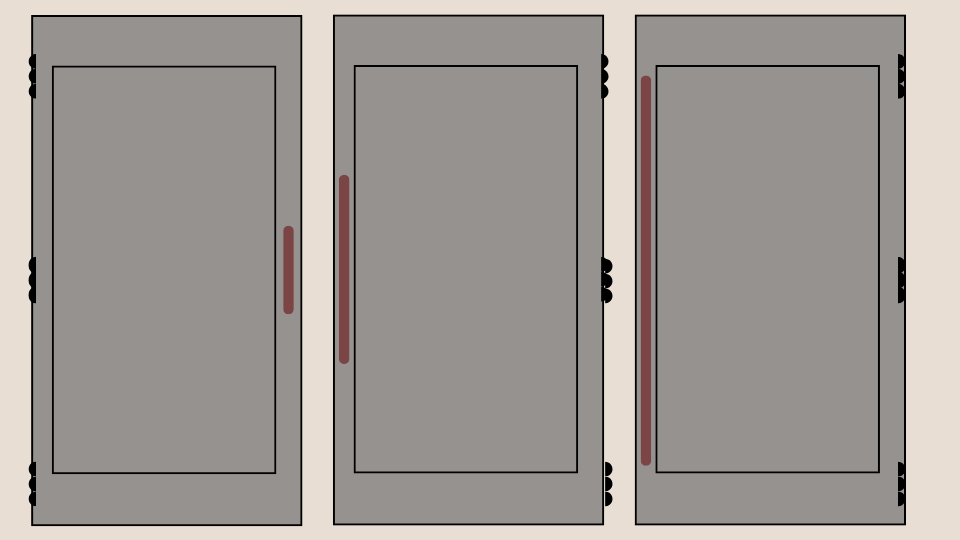
Tall cabinet doors require a different approach; vertical pulls work best for both comfort and proportion.
Position them roughly one-third from the top or centered vertically, depending on door height and your overall appeal.
Long vertical pulls let you grab from multiple heights without stretching awkwardly, while maintaining visual balance on large panels.
Pantry doors especially benefit from this treatment, as you’ll access them frequently throughout the day.
5. Lift-Up and Pull-Down Cabinets
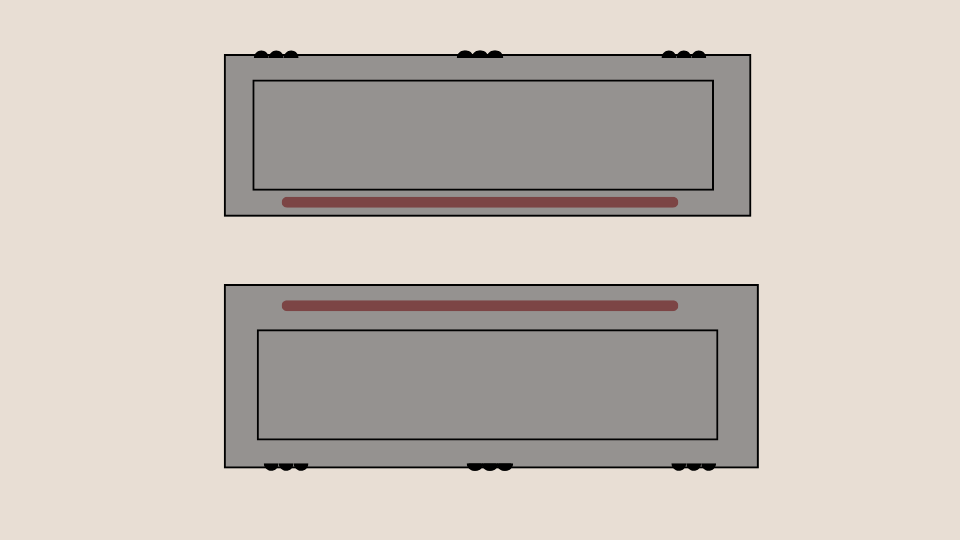
Horizontal cabinet fronts need hardware aligned with their movement direction. Center pulls along the bottom edge for upward-opening doors, or along the top edge for downward-opening mechanisms.
This alignment prevents strain when operating larger, heavier fronts, such as appliance garages.
Long horizontal pulls distributed across the width provide even weight distribution and a satisfying opening action that feels effortless.
The Placement Rules for Drawers
Drawer hardware placement follows different rules than doors, balancing centered symmetry on smaller fronts with proportional distribution across wider spans.
1. Narrow Drawers
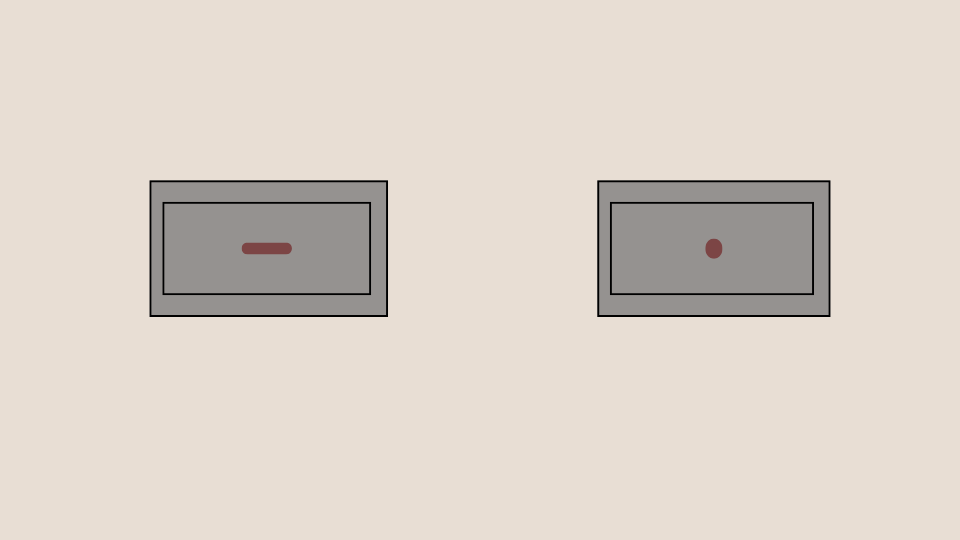
Narrow drawers look best with a single knob or pull centered both vertically and horizontally.
This creates a balanced focal point that’s easy to grasp from any angle. Measure to find the exact center point, then mark your drilling location.
Single-handle placement works beautifully on bathroom vanities, small kitchen drawers, and dresser fronts where simplicity improves rather than diminishes the design.
The centered approach feels intuitive and maintains clean lines across your cabinetry.
2. Wide Drawers
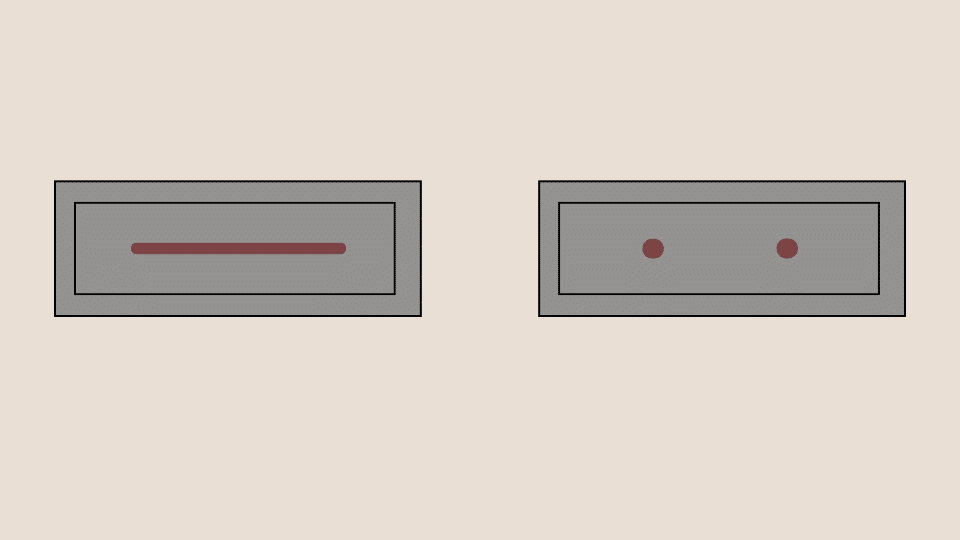
Wider drawers require either two knobs or a single long pull to maintain proper proportion and functionality.
For double knobs, position them roughly one-quarter and three-quarters across the width; this follows the classic rule of thirds, which designers use for visual balance.
If you prefer a single pull, choose one that’s approximately one-third the width of the drawer.
This cabinet handle placement prevents the hardware from looking lost on expansive fronts while providing comfortable grip points wherever you reach.
3. Deep Pot Drawers
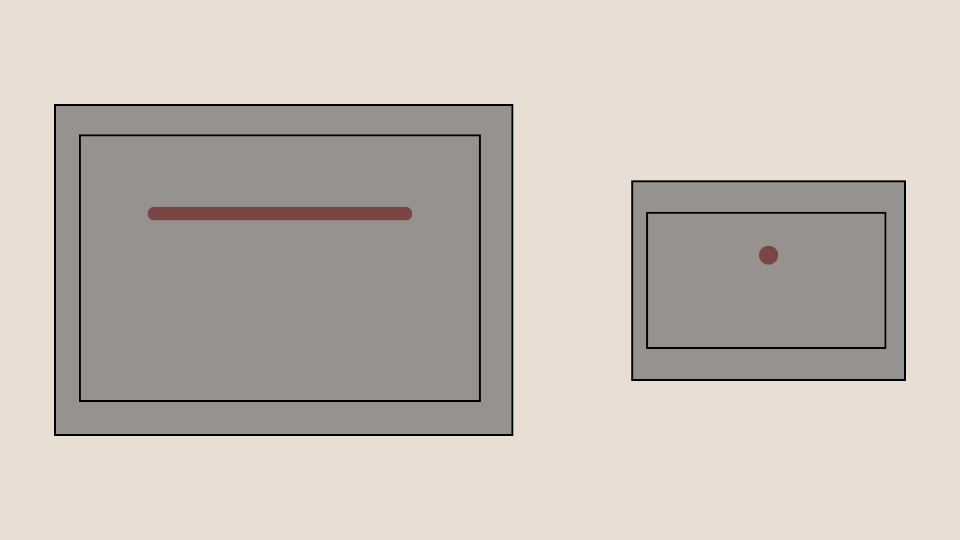
Deep drawer fronts benefit from hardware mounted slightly above the center rather than at the exact midpoint. This higher positioning makes opening easier when you’re standing at counter height, reducing the need to bend down awkwardly.
The adjustment doesn’t need to be dramatic; shifting up an inch or two creates noticeable ergonomic improvement.
This thoughtful approach to kitchen cabinet handle placement shows how small details significantly impact daily comfort and ease of use.
4. Visual Consistency Across Stacked Drawers
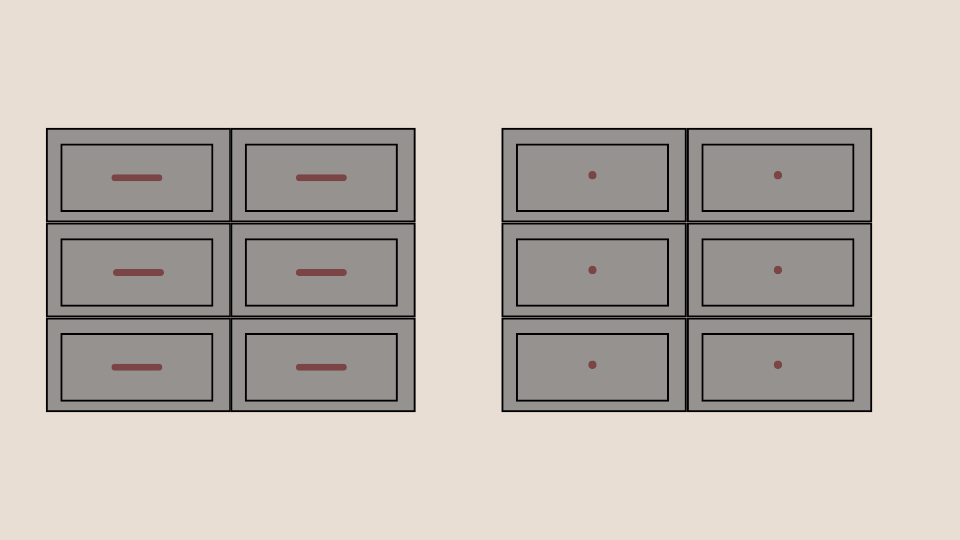
When drawers stack vertically, align all handles along the same vertical axis to create clean sightlines. This means keeping the same horizontal measurement from the edge on every drawer, regardless of whether you’re using knobs or pulls.
Stacked alignment creates a visual rhythm that makes your cabinetry feel cohesive and professionally designed. Use a template or measuring jig to ensure perfect consistency; misaligned handles immediately reveal amateur installation and disrupt the overall appeal.
5. Multi-Drawer Banks and Cabinet Systems
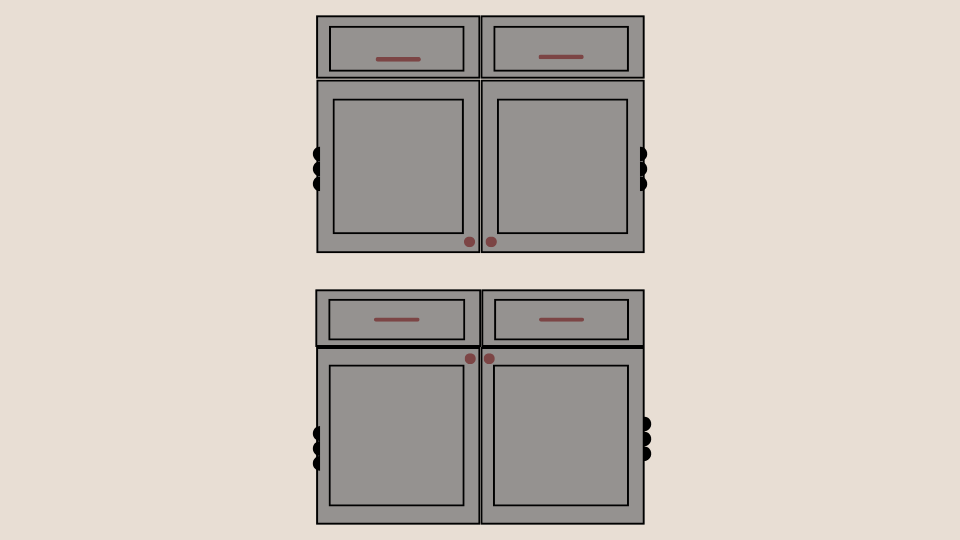
When working with banks of multiple drawers or combination drawer-door units, maintain consistent cabinet knob placement throughout.
If upper drawers use centered pulls, lower drawers should match. If base cabinets have top-corner door handles, align drawer pulls at the same height from the countertop.
This creates horizontal lines that guide the eye smoothly across your kitchen, unifying separate elements into a cohesive whole that feels intentionally designed.
Special Considerations and Troubleshooting
Certain cabinet situations require adapted approaches for best results. Double doors work with two symmetrically placed knobs or one centered pull, depending on the width.
Appliance panels need extra-long pulls for better leverage on heavy fronts, such as refrigerators.
When working with glass, louvered, or curved doors, drill slowly using backer blocks behind glass to prevent cracking, and consider through-bolts for stronger support on delicate materials.
If you mis-drill holes, fill them with matching wood filler, sand smooth, and restain before re-drilling correctly.
Alternatively, cover mistakes with decorative backplates that add visual interest while hiding errors; these work especially well on traditional cabinet styles where extra ornamentation feels intentional rather than corrective.
Tips for Perfect Alignment and Visual Flow
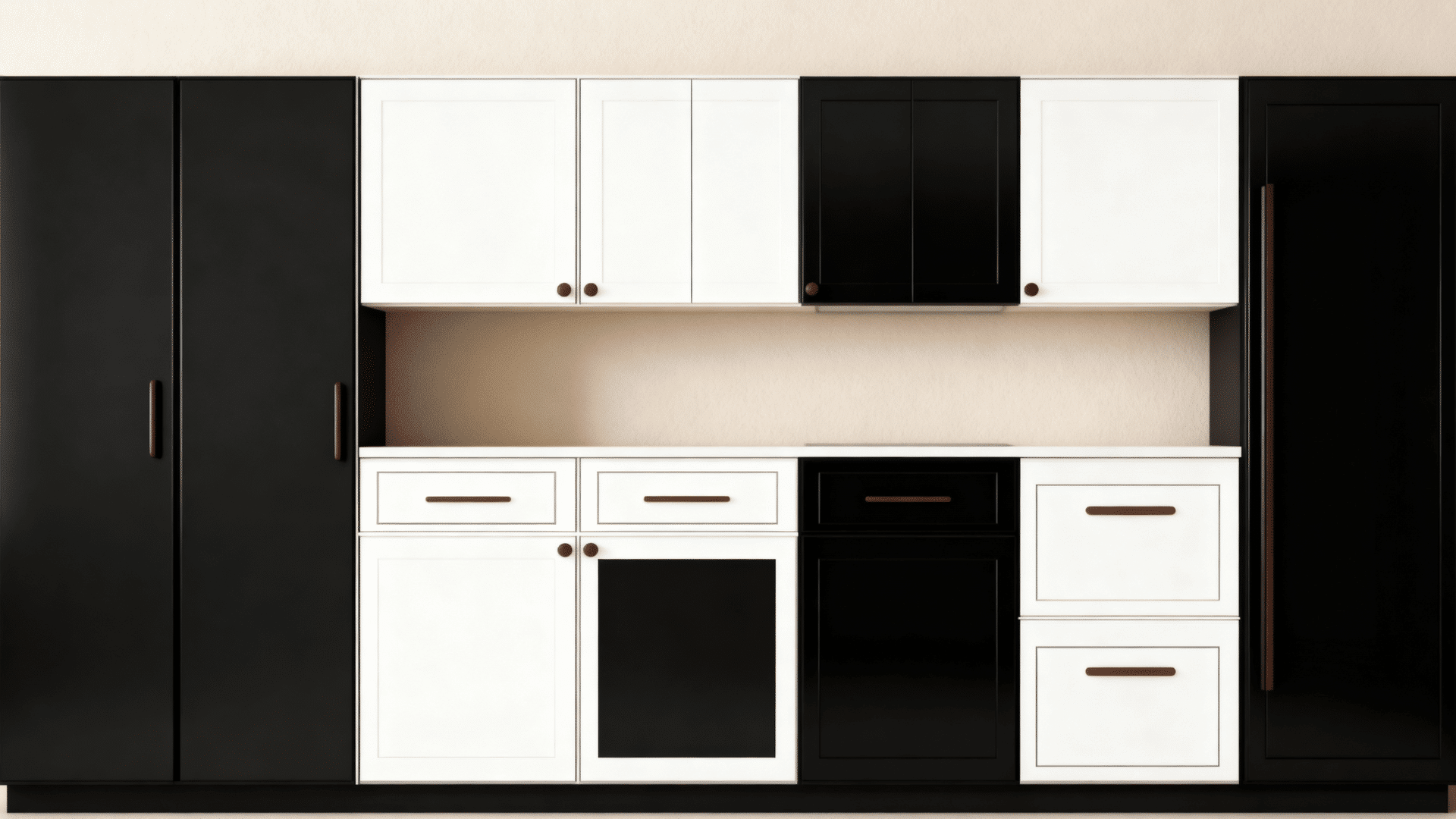
Consistent alignment changes individual hardware pieces into a unified design system that guides the eye smoothly across your entire kitchen.
- Maintain consistent offsets by measuring the same distance from edges across all doors and drawers for professional cohesion
- This uniformity in cabinet handle placement creates visual rhythm throughout your kitchen
- Align horizontal lines of pulls across stacked drawers so they form clean, uninterrupted sightlines
- Use painter’s tape to mock up hardware positions before drilling any permanent holes
- Always use a hardware jig or template to maintain drilling accuracy and prevent costly mistakes
- Templates ensure your cabinet knob placement stays precise across dozens of installations
- Double-check measurements on corner cabinets, where angles can throw off standard spacing
Putting It All Together
Perfect cabinet handle placement comes down to following consistent measurements and thinking through how you actually use your cabinets.
Start with the opposite-corner rule for doors, center your drawer pulls carefully, and maintain alignment across stacked units.
Take time to mock up positions with painter’s tape before drilling, double-check your measurements, and use a template for accuracy.
With these techniques in hand, you’re ready to install hardware that improvise both your kitchen’s functionality and visual appeal.