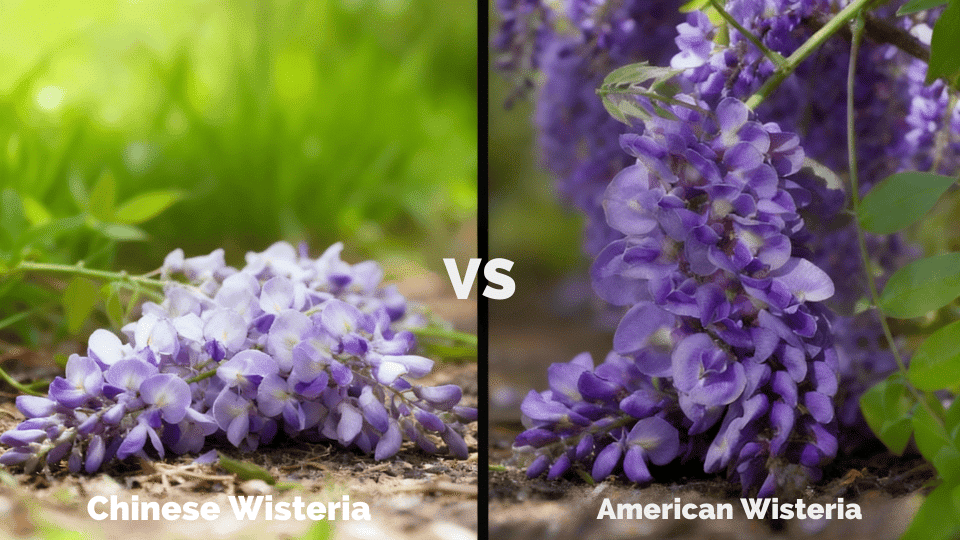
The debate of American wisteria vs Chinese wisteria matters more than you might think.
Both plants produce stunning cascades of purple flowers, but beneath their beautiful exterior lies an important distinction every gardener should understand.
Chinese wisteria spreads aggressively, while American wisteria offers beauty with better behavior.
So, is wisteria invasive? The answer depends on which type you’re considering. Understanding the difference between these lookalikes can save you from future headaches and help protect local ecosystems.
American vs Chinese Wisteria
Understanding the scientific classification of these two wisteria species reveals their biological relationship and why they differ.
| CLASSIFICATION LEVEL | AMERICAN WISTERIA | CHINESE WISTERIA |
|---|---|---|
| Kingdom | Plantae | Plantae |
| Division | Magnoliophyta (Angiosperms) | Magnoliophyta (Angiosperms) |
| Class | Magnoliopsida (Eudicots) | Magnoliopsida (Eudicots) |
| Order | Fabales | Fabales |
| Family | Fabaceae (Leguminosae) | Fabaceae (Leguminosae) |
| Genus | Wisteria | Wisteria |
| Species | W. frutescens | W. sinensis |
American Wisteria
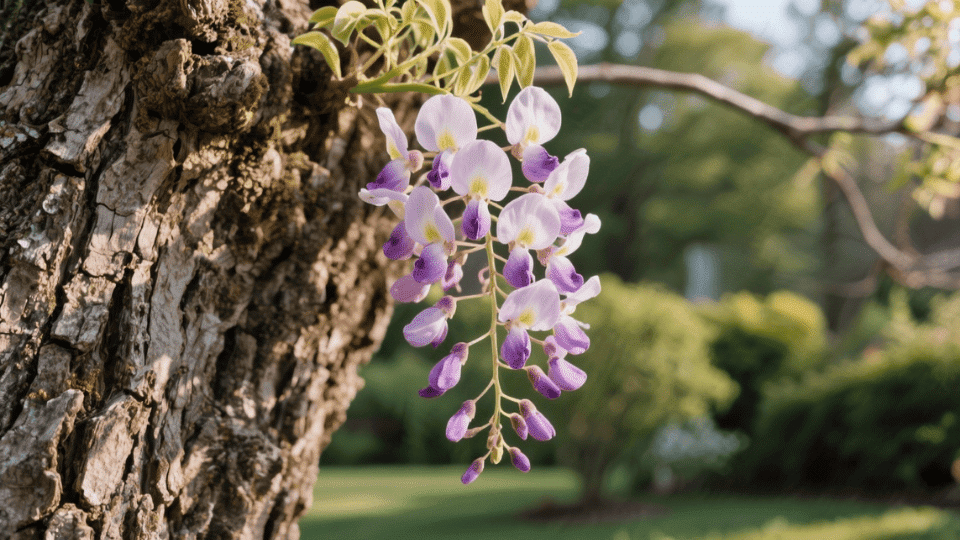
American wisteria offers a well-behaved alternative for those who want stunning blooms without the headaches of an aggressive vine.
When comparing American wisteria vs Chinese wisteria, the native variety grows at a manageable pace and respects boundaries, which makes it perfect for smaller yards and controlled spaces.
1. Native Habitat and Growth Behavior
American wisteria naturally grows in the southeastern United States, where it occurs along stream banks, wetland edges, and moist woodland areas.
- Native range covers southeastern states from Virginia to Florida and west to Texas
- Prefers consistently moist, well-drained soils similar to its natural streamside habitat
- Reaches 15 to 30 feet in length, significantly shorter than invasive varieties
2. Vine and Twining Direction
The way American wisteria climbs tells you a lot about its manners. This species twines clockwise around posts, arbors, and trellises in a predictable spiral pattern.
- Twines clockwise (when viewed from above) around supports
- Develops stems up to 2 to 3 inches thick at maturity
- Less aggressive climbing strength won’t crush gutters or pull down fences
- Can be trained easily on wire frameworks or wooden pergolas
3. Flower and Leaf Characteristics
American wisteria blooms later in the season than Chinese varieties, producing flowers after the leaves have fully emerged. This creates a different visual effect with purple blooms peeking through green foliage.
- Blooms in late spring to early summer (May to June in most regions)
- Produces shorter flower clusters measuring 4 to 6 inches long
- Flowers appear after leaves develop, creating a leafy backdrop
4. Seed Pods and Overall Size
After flowering, American wisteria develops distinctive seed pods that help with identification. These smooth pods lack the fuzzy texture found on Chinese wisteria, making them easy to distinguish.
- Produces smooth, hairless seed pods resembling flat beans
- Pods measure 2 to 4 inches long and turn brown when mature
- Compact growth stays within designated areas with minimal pruning
Chinese Wisteria
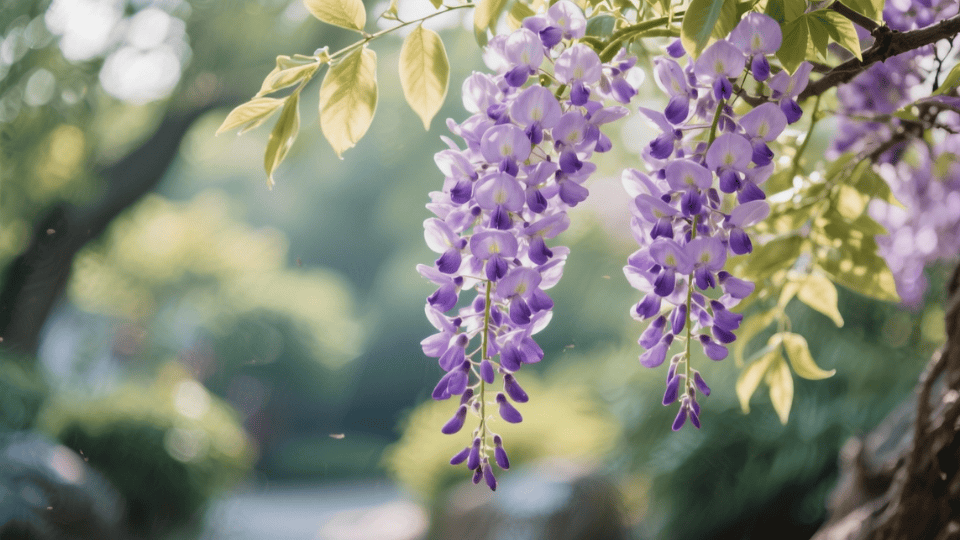
This Asian import produces those iconic cascades of purple blooms that many people picture when they think of wisteria.
Understanding the difference between American wisteria vs Chinese wisteria helps you decide if this plant’s beauty is worth the maintenance demands and environmental risks.
1. Origin and Spread
Chinese wisteria arrived in the United States as a prized ornamental vine during the 19th century. Wealthy estate owners planted it to create romantic, European-style gardens with dramatic flowering displays.
- Native to China, where natural predators and environmental factors control its growth
- Introduced to American landscapes in the 1800s for ornamental purposes
- Has naturalized throughout the Southeast, Mid-Atlantic, and other temperate regions
- Spreads through both seed dispersal and vegetative growth from root fragments
2. Vine and Growth Habit
The aggressive nature of Chinese wisteria becomes obvious once it establishes itself in your landscape. This powerhouse climber can quickly overtake any structure or plant in its path.
- Twines counterclockwise (when viewed from above), opposite to American wisteria
- Grows rapidly with vines extending 10 to 25 feet per year under ideal conditions
- Can reach lengths of 40 to 70 feet, sometimes exceeding 100 feet
3. Flower and Leaf Characteristics
Chinese wisteria puts on its show earlier than native varieties, creating breathtaking displays before leaves emerge.
The long, fragrant flower clusters make this species visually striking, which explains its continued popularity despite concerns about its invasiveness.
- Blooms in early to mid-spring (March to April in most areas)
- Produces impressive flower clusters measuring 6 to 12 inches long
- Flowers emerge before leaves appear, creating dramatic bare-vine displays
4. Seed Pods and Identification Cues
After the spectacular bloom period, Chinese wisteria develops distinctive fuzzy seed pods that help separate it from native species. These pods produce abundant seeds that spread the plant into new areas.
- Produces velvety, fuzzy seed pods covered in short hairs
- Pods measure 4 to 6 inches long and remain on the vine through winter
- Contains numerous seeds that remain viable for years in the soil
- Seed pods explode when mature, dispersing seeds up to 40 feet away
American Wisteria vs Chinese Wisteria: Key Differences
Though both share breathtaking purple blooms, their growth habits and environmental impact differ greatly.
| FEATURE | AMERICAN WISTERIA (W. FRUTESCENS) | CHINESE WISTERIA (W. SINENSIS) |
|---|---|---|
| Native Range | Southeastern U.S. | China |
| Growth Rate | Moderate (15–30 ft) | Rapid (40–70+ ft) |
| Twining Direction | Clockwise | Counterclockwise |
| Bloom Time | Late spring–early summer | Early–mid spring |
| Flower Clusters | 4–6 in, light scent | 6–12 in, strong scent |
| Seed Pods | Smooth | Fuzzy |
| Behavior | Non-invasive, manageable | Invasive, aggressive |
Identifying Wisteria in Your Garden
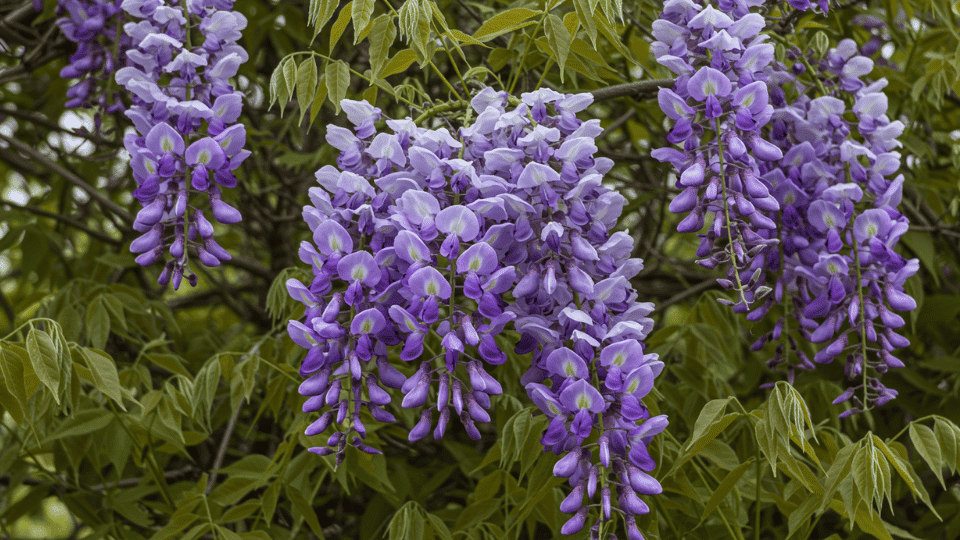
Knowing which wisteria species you have helps you manage it properly and protect your landscape from invasive plants.
Step 1: Observe Twining Direction
Locate where the vine twists around a pole, fence, or tree, then observe from above to determine its spiral pattern.
American wisteria winds clockwise, moving in the same direction as clock hands turning forward, while Chinese wisteria twists counterclockwise, spiraling in the opposite direction as it climbs upward.
Step 2: Look at Bloom Timing
Pay attention to when flowers appear relative to the leaves. American wisteria blooms in late spring or early summer after the foliage has fully developed, creating flowers nestled within green leaves.
Chinese wisteria shows off its dramatic display in early spring on completely bare vines before any leaves emerge.
Step 3: Check Flower Cluster Size
Measure the hanging flower clusters with a ruler or estimate by hand. American wisteria produces modest 4 to 6-inch clusters with a subtle fragrance.
Chinese wisteria creates impressive 6- to 12-inch cascades with a strong, sweet perfume that fills the air.
Step 4: Examine Seed Pods and Leaves
After the blooming season ends, locate the seed pods that develop along the vine. Run your fingers over them to feel the texture.
American wisteria pods feel completely smooth and hairless like a bean, while Chinese wisteria pods have a fuzzy, velvety coating.
Count the leaflets on a single leaf stem. American types have 9 to 15 leaflets, Chinese varieties show 7 to 13 with a glossier appearance.
Is Wisteria Invasive?
The answer depends entirely on which species you’re growing, making proper identification critical for responsible planting.
The Truth About Invasive Wisteria
Both Chinese and Japanese wisteria are invasive across much of the United States. These Asian imports escape from yards into forests, climbing up native trees and blocking the sunlight that understory plants need.
The heavy vines strangle mature trees, creating dense canopies that prevent forest regeneration. Seeds spread through waterways and wildlife, establishing new colonies miles from the original planting site.
Safe Alternatives
- Choose American Wisteria: For beautiful blooms without environmental guilt, as this native species supports local pollinators and stays where you plant it
- Select ‘Amethyst Falls’ Cultivar: For the most compact growth, reaching only 15 feet with prolific blooming that starts in the first year
- Consider ‘Blue Moon’ Variety: For cold climates, as it survives Zone 4 winters and produces fragrant blue-purple flowers throughout summer
- Plant ‘Aunt Dee’ for Maximum Flowers: Featuring abundant 6-inch clusters and repeat blooming from late spring through fall
Responsible Growing and Maintenance
Understanding the differences between American wisteria vs Chinese wisteria is only half the battle. These practices will help you maintain a healthy, responsible landscape.
- This native species grows in areas with at least 6 hours of direct sunlight daily and moist, well-drained soil. Install supports before planting, as retrofitting later can damage established plant vines.
- Trim in late winter by cutting side shoots back to 3 to 4 buds from the main stem. Follow up with summer pruning in July or August, shortening new growth to maintain shape and maximize those purple cascades.
- If you’re wondering if wisteria is invasive and need to remove Chinese species, cut all vines at the base during the growing season. Return every 2 to 3 weeks throughout spring and summer to cut new shoots that emerge.
- Remove remaining root fragments by digging 12 to 18 inches deep. Amend the soil with organic matter and plant native alternatives, such as crossvine or trumpet honeysuckle, to support local wildlife.
Final Thoughts
The American wisteria vs Chinese wisteria choice is simple: if you want beauty without the aggressive spread that makes gardeners wonder “is wisteria invasive,” choose the American variety.
Chinese wisteria requires constant pruning, more work than most gardeners want.
Both varieties take years to bloom, but the wait rewards you with stunning purple cascades. Choose the right wisteria for your space and enjoy the show.