I once assumed finishing butcher block countertops was straightforward, but there’s more to it than you’d think.
The right finish protects your wood from water damage, stains, and daily wear. Different finishes offer different benefits, and choosing the wrong one could shorten your countertop’s lifespan.
Some finishes are food-safe, while others create tougher barriers against moisture. Ready to find the best finish for your butcher block countertops?
Why is Proper Finishing Important?
A proper butcher block finish creates a protective barrier that preserves the wood’s structural integrity and prevents costly damage.
Without sealing, spills penetrate deep into the grain within minutes, leading to dark water rings and permanent discoloration that sanding cannot remove.
The right butcher block countertop finish also determines how the surface can be used. Food-safe oils allow direct food preparation, while polyurethane creates a waterproof barrier for wet areas near sinks.
Knowing how to finish butcher block countertops correctly ensures the wood maintains its rich color and smooth texture through years of meal preparation.
Properly sealed surfaces resist knife marks better and clean up easily with simple soap and water.
Types of Finishes
Choosing the right finish for your butcher block countertop depends on your usage needs, desired look, and maintenance preferences, with several effective options available to protect and enhance the wood.
1. Oil Finishes
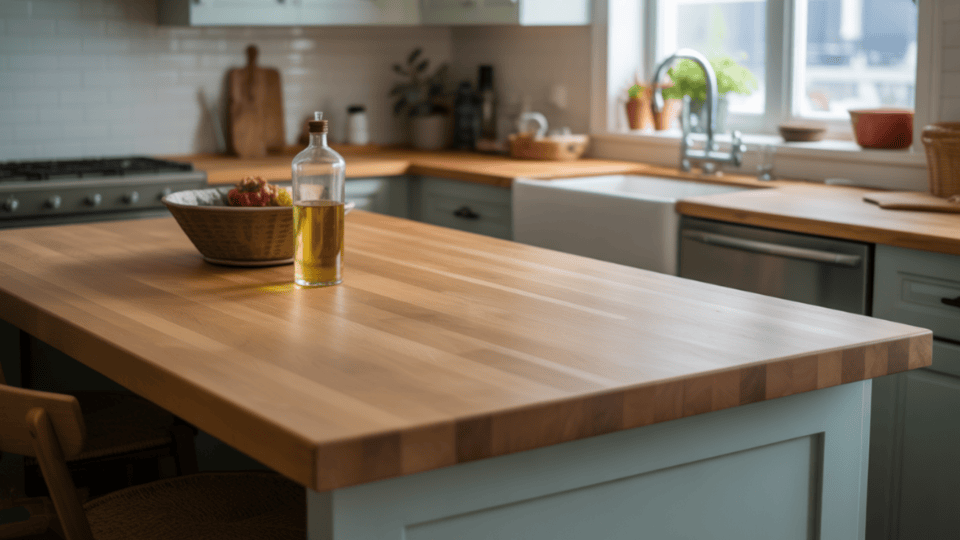
Oil finishes soak into the wood fibers to condition and protect from within, leaving no surface film.
These treatments maintain the wood’s natural texture and allow direct food contact, making them the traditional choice for working butcher blocks.
- Safe for direct food preparation and cutting
- Increases wood grain and natural color depth
- Requires reapplication every 4-6 weeks initially, then monthly
How to apply: Apply oil generously, let it absorb for 20-30 minutes, then wipe away excess. Coat daily for 3 days, weekly for 1 month, then monthly for ongoing maintenance.
Recommendations:
- Howard Butcher Block Conditioner: Food-safe mineral oil and beeswax blend that conditions and protects in one application.
- Waterlox Original Tung Oil Sealer: Pure tung oil formula that penetrates deeply and builds durable water resistance with multiple coats.
2. Film Finishes
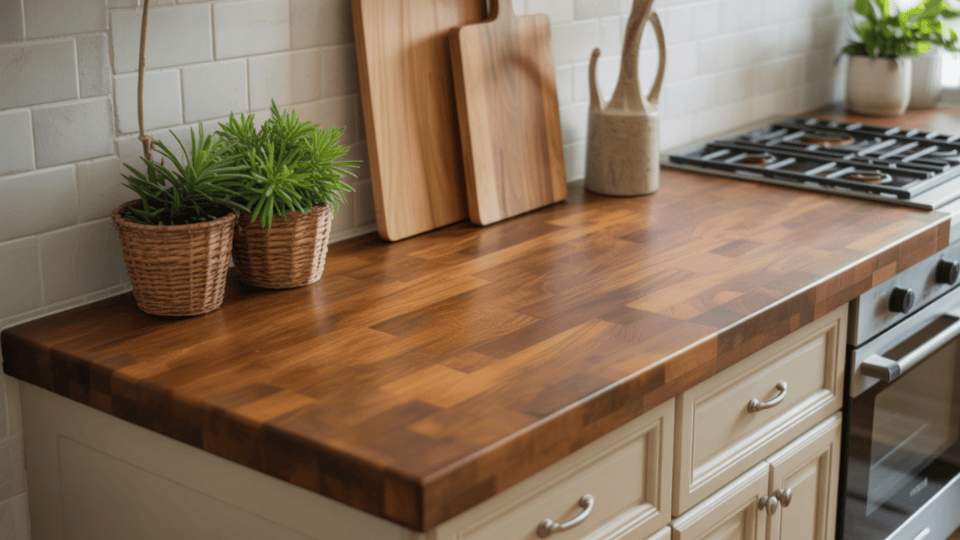
Film finishes create a hard, protective coating on top of the wood surface that completely seals the grain. Polyurethane ranks as the most durable option, forming a plastic-like barrier that repels water, wine, and acidic foods.
- Maximum protection against water damage and stains
- Lasts for years without reapplication once cured
- Cleans easily with standard kitchen cleaners
- Not safe for direct food contact or cutting surfaces
How to apply: Apply thin, even coats and let dry 4-6 hours (water-based) or overnight (oil-based). Lightly sand with 220-grit paper between each layer, for a total of 3-4 coats.
Recommendations:
- Minwax Polycrylic Water-Based Protective Finish: Clear, fast-drying polyurethane that won’t yellow and cleans up with soap and water.
- General Finishes High Performance Water-Based Top Coat: Professional-grade polyurethane with superior durability and self-leveling properties for smooth application.
3. Staining the Wood Before Finishing
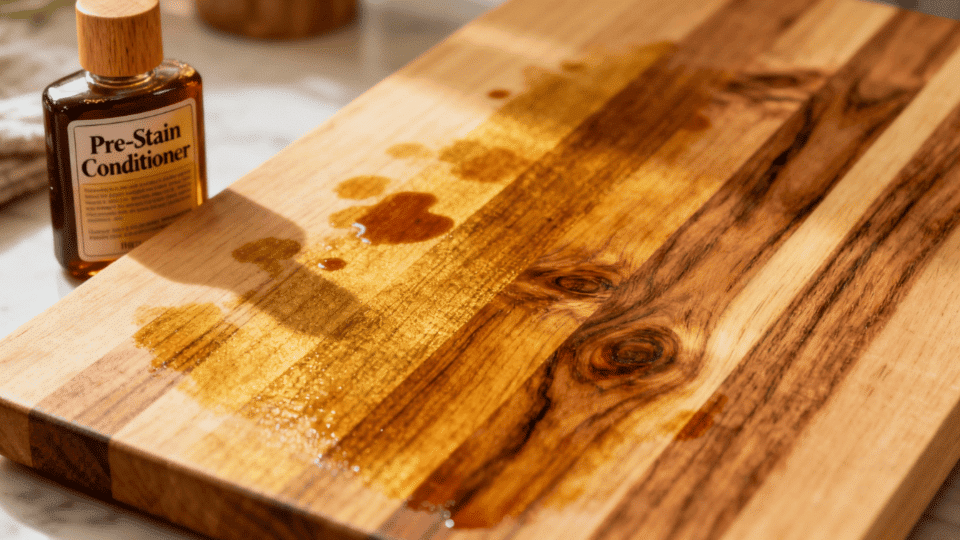
Staining changes the wood’s color before applying the protective butcher block countertop finish. This optional step works best when matching existing cabinetry or achieving a specific appeal.
- Test stain on the underside or scrap piece first
- Apply pre-stain conditioner to prevent a blotchy appearance
- Choose gel stains for more controlled, even coverage
How to apply: Apply the wood conditioner for 15 minutes, then wipe off the excess. Brush on the stain evenly with the grain, remove excess after the dwell time, then let dry for 24 hours before applying your chosen butcher block countertop finish.
Recommendations:
- Minwax Pre-Stain Wood Conditioner: Prevents blotchy stain absorption on softwoods and uneven grain patterns.
- General Finishes Water-Based Wood Stain Conditioner: Ensures even color penetration and works with both water and oil-based stains.
Maintaining Your Finished Butcher Block Countertop
Understanding how to finish butcher block countertops includes knowing the long-term commitment each option demands.
- Oil Maintenance: Reapply mineral oil monthly during the first year, then quarterly once the wood fully saturates; add oil whenever water stops beading on the surface to maintain proper protection
- Film Finish Care: Polyurethane and similar film finishes last 3-5 years before requiring complete refinishing through sanding and recoating the entire surface
- Staining Prevention: Wipe spills immediately with mild dish soap and warm water, and never leave standing water, wet dishcloths, or hot pots directly on the surface, as prolonged contact causes permanent staining and warping
Community Discussion
Gathered from discussions on Reddit and Facebook woodworking communities, reflecting real user experiences with butcher block finishing.
Q:What finish will truly protect a birch butcher-block from water, without frequent reapplication, and still be food safe?
One user used Waterlox Original, followed by a satin topcoat on walnut counters. They reported it has held up extremely well over two years with daily use despite the strong odor during application and the difficulty of spot repairs.
Q: Is oil plus beeswax a viable finish for a high-use kitchen countertop around a sink?
A commenter mentioned they tried beeswax + oil for a while, but around the sink the surface wore quickly and needed frequent reapplication. They eventually switched to Waterlox for durability.
Q: How often should one reapply tung oil on a butcher‐block countertop to keep it looking good?
One user said: apply tung oil daily during the first week, then weekly for the rest of that month, and after that only when wear shows (around once a month) to maintain the surface.
Q: Can you seal a butcher-block countertop with a polyurethane finish after using tung oil?
A commenter warned that sealing over tung oil may not bond properly: “I would not recommend tung oil and then sealant, as the tung oil would interfere with the bonding of the sealant.”
Q: For a heavily used area like by the sink, what finish strategy should I consider?
One DIYer suggested that for high-traffic wet zones, a more stable surface like quartz might be better than butcher block; if you go with wood, accept higher maintenance or choose a more robust finish.
Q: Does the low-maintenance claim for butcher-block finishes hold true in real life?
According to one user: “No matter what you choose, you will have to do maintenance.” They noted that with a durable finish, you might expect to spend a couple of hours per year, but high-use areas still require closer attention.
Q: How did people achieve long-term durability with a butcher-block finish under daily use?
A post described finishing a 3 × 9 slab of reclaimed oak with Waterlox, taking two weeks for the process, and after 6 + years of daily use, the surface shows almost no wear, highlighting the benefit of thorough prep and slow, careful application.
Conclusion
Mastering how to finish butcher block countertops transforms raw wood into a functional kitchen centerpiece that stands up to daily demands.
The choice between oil and film finishes comes down to personal priorities: food-safe versatility versus maximum water protection.
Taking time to sand properly, apply thin coats, and maintain the butcher block finish ensures years of reliable performance. Each butcher block countertop finish offers distinct advantages when matched to specific kitchen habits.