Planning to paint a room but wondering how long it’ll actually take? It’s a common question with a not-so-simple answer.
Your timeline varies based on room size, prep work, coats needed, and skill level; a small bedroom can take hours, while a large living room can stretch into a whole weekend.
The difference between a quick job and a quality finish? It’s all in the details.
How Long Does It Take to Paint a Room?
Most DIY painters need 2-4 hours for a small bedroom, 4-6 hours for a standard bedroom, and 6-8 hours for an average living room.
Professional painters work significantly faster, completing small rooms in 1-2 hours, medium bedrooms in 2-3 hours, and larger living spaces in 3-4 hours.
These estimates cover basic painting with one coat on prepared walls. Your actual painting time will vary based on ceiling height, number of coats needed, prep work requirements, and room complexity.
- Small room (10×10 ft): 2-4 hours DIY and 1-2 hours professional
- Large room (20×20 ft): 8-12 hours DIY and 4-6 hours professional
Key Factors That Affect How Long It Takes to Paint a Room
Not all painting projects are created equal; the time it takes varies based on several important factors. Understanding what speeds up or slows down your project helps you plan accurately and avoid frustration.
1. Room Size and Surface Area
A 10×12 bedroom with standard 8-foot ceilings gives you roughly 320 square feet of wall area, but bump those ceilings to 10 feet, and you’re suddenly painting 400 square feet.
Each window frame requires careful cutting in, and ornate molding can easily double the time you spend on trim work alone.
2. Preparation Works Requirement
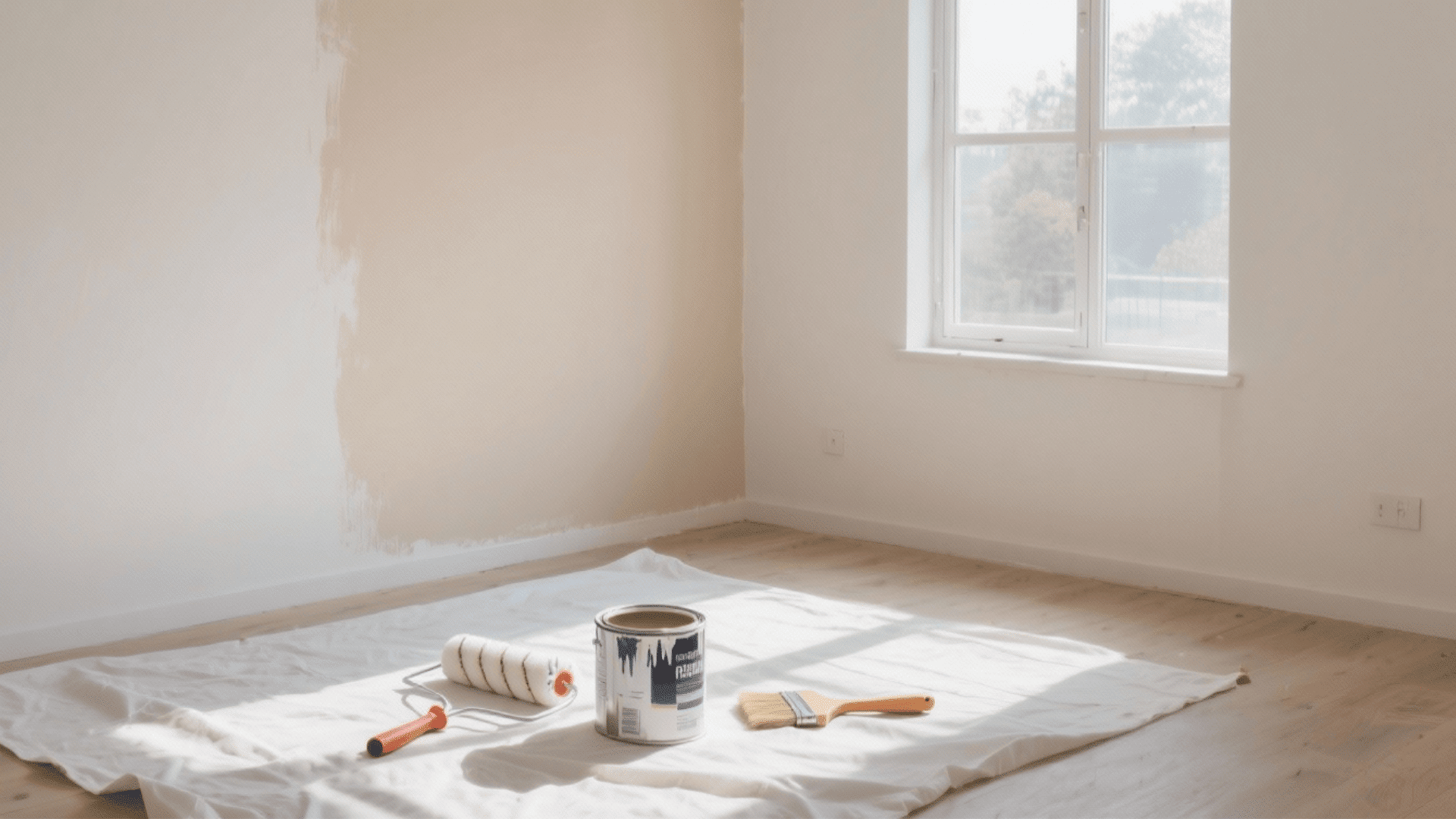
Moving furniture, laying drop cloths, masking off trim, cleaning walls, removing outlet covers, patching holes, and sanding rough spots; all of this happens before you even open a paint can.
Skipping or rushing prep almost always costs you more time later when you’re fixing drips, uneven coverage, or paint bleeding under tape. Trust me, an extra hour of prep saves you three hours of touch-ups.
3. Number of Coats, Primer, and Color Change
Deciding between spot-priming and full-priming depends on your situation. Fresh drywall always needs primer, and so do repairs or patches; otherwise, those areas will show through as dull spots even after two coats of paint.
Dark-to-light color changes typically require primer plus two full coats of your new color, sometimes three if you’re going from navy to white.
4. Cutting In and Trim Work
Cutting in around ceilings is one of the most time-intensive steps, typically requiring 45-60 minutes for the first coat and 30-40 minutes for the second coat in an average-sized room.
Painting baseboards and other trim work adds another 30 minutes to your timeline, while windows and doors can vary significantly depending on how many are present and their complexity.
5. Room Complexity and Features
Multiple windows and doors dramatically increase your timeline, since each opening requires careful edge work and may require multiple coats on the frames and casings.
Built-in shelving, cabinets, and architectural details like crown molding or wainscoting add layers of complexity that can double or triple your painting time.
6. Experience Level
A professional painter with years of experience can typically complete a standard 12×12 room in 4-6 hours, moving efficiently through prep, cutting in, rolling, and cleanup with practiced precision.
In contrast, a DIY beginner tackling the same room should expect to spend 10-16 hours due to unfamiliarity with techniques, tools, and the overall workflow.
DIY Painter vs Professional
Understanding where your time goes helps set realistic expectations and reveals why professionals complete projects so much faster than DIYers.
| TASK | DIY PAINTER | PROFESSIONAL PAINTER |
|---|---|---|
| Prep Work (taping, covering furniture, filling holes) | 1-2 hours | 30-45 minutes |
| Cutting In (edges, corners, trim) | 1-2 hours | 20-30 minutes |
| Rolling Walls (first coat) | 1-2 hours | 30-45 minutes |
| Drying Time Between Coats | 2-4 hours | 2-4 hours |
| Second Coat (cutting and rolling) | 2-3 hours | 45-60 minutes |
| Cleanup (removing tape, washing tools) | 30-45 minutes | 15-20 minutes |
| Total Time (Standard 12×12 Bedroom) | 8-13 hours (spread over 2 days) | 3-5 hours (same day completion) |
Pro Tips to Speed Up Your Room Painting Process
Want to cut down on how long it takes to paint a room without sacrificing quality? A few smart strategies can shave hours off your timeline while still delivering professional-looking results.
- Prep everything before you start: Move furniture, tape trim, and patch holes in one go before opening any paint cans.
- Use quality tools: A good, angled brush and thick roller cover help paint glide evenly and reduce the number of strokes needed for coverage.
- Work with a helper: One person can cut the edges while the other rolls the walls, cutting your total time in half through parallel workflows.
- Choose fast-drying paint: Low-VOC latex paints usually recoat in 2 to 4 hours, compared to 6 to 8 hours for oil-based options.
- Paint in ideal conditions: Between 50 and 85°F with low humidity for quicker, smoother drying between coats and better paint flow.
- Skip unnecessary details: If your baseboards are already white and in good condition, tape them off instead of removing them.
When Painting Takes Longer Than Expected
Real-world painting projects rarely match optimistic online timelines, and understanding what slows you down helps you plan accurately.
- High Humidity and Temperature: Humidity above 70% doubles the drying time between coats to 6-8 hours. Cold rooms below 50°F cause paint to thicken, while temperatures above 85°F create lap marks that require repairs.
- Dramatic Color Transitions: Dark-to-light changes require 3-4 coats instead of 2, adding 4-6 hours. Primer becomes essential, adding another 2-3 hours plus drying time.
- Textured Surfaces: Textured walls absorb more paint and slow your pace by 30-50%. Patching damage adds 1-3 hours of prep.
- Misleading Estimates: Online “2-hour” timelines assume perfect conditions with no prep, furniture moving, or taping. They also ignore that quality results need two coats, immediately doubling timeframes.
Safety Notes: Never underestimate safety when painting, good ventilation and proper gear are as important as the paint itself. Keep windows open or use fans for airflow, wear a mask to avoid fumes, and protect your skin and eyes with gloves and goggles.
Community Tips on Time Required for Painting a Room
When everyday DIYers share their timelines, the answers are refreshingly honest. The consensus across Reddit, Quora, and Facebook threads is that painting usually takes longer than expected, once you factor in patching, taping, drying, and cleanup.
Below are five common questions, along with quick takeaways from those community conversations.
1. How long should I plan just for prep work in an average bedroom?
For a typical 10×12 or 12×12 bedroom, budget 1-3 hours for prep alone. That includes moving or covering furniture, laying drop cloths, removing switch plates, cleaning dusty walls, filling nail holes, sanding rough spots, and taping trim.
2. How long should the primer dry before I apply the first coat of paint?
Most water-based primers need around 2 to 4 hours before you roll on color. In humid or cool rooms, drying can stretch closer to 6 hours. You want the surface fully dry to the touch, not tacky, so the topcoat bonds properly and does not peel, streak, or drag while you roll.
3. How many total days should I block off to repaint a standard bedroom properly?
For a full refresh with patching, two coats, and trim touch-ups, plan 1 to 2 days. Day one usually handles prep, primer if needed, and the first coat. Day two is best for the second coat, detail work, and cleanup. Spreading it out keeps fatigue low and results cleaner.
4. How long does it take to paint walls, ceiling, and trim in one room?
A DIY painter should expect 8 to 12 hours of hands-on work to cover walls, ceiling, and trim in an average bedroom. Cutting in around ceilings and baseboards alone can take several hours. Add rolling two coats, brushing doors and frames, plus cleanup, and it easily fills a long day.
5. When can I move furniture back after painting a room?
Most latex paints are dry to the touch within 2 to 4 hours, but it is safer to wait 4 to 6 hours before moving furniture back in. Keep items a few inches away from the walls until the next day to prevent soft paint from sticking to headboards, dressers, or curtains.
6. How long should I wait before taping over fresh paint for an accent wall or second color?
Fresh paint can feel dry yet still be delicate. Wait at least 24 hours before applying painter’s tape on a newly painted surface. Use high-quality low-tack tape, press the edge gently, and remove it slowly at an angle. This reduces the risk of your new color peeling off while unmasking.
7. How long does it take paint to dry in a humid room like a bathroom or kitchen?
In humid spaces, drying and curing slow down noticeably. A coat that dries in 2 to 4 hours in a bedroom may need 6 to 8 hours in a damp bathroom. Ventilate with an exhaust fan or open window, avoid hot showers, and allow a full day before heavy use or scrubbing.
Wrapping It Up
So, how long does it take to paint a room? It depends on your specific situation, but most rooms take anywhere from 4 to 12 hours of actual work, spread over 1-3 days, when you factor in drying time.
Small rooms take a weekend; larger spaces need patience. Plan, prep, and don’t rush.
If you’re a first-timer or seasoned DIYer, giving yourself enough time ensures better results. Now that you know what to expect, grab your supplies and start transforming that space!