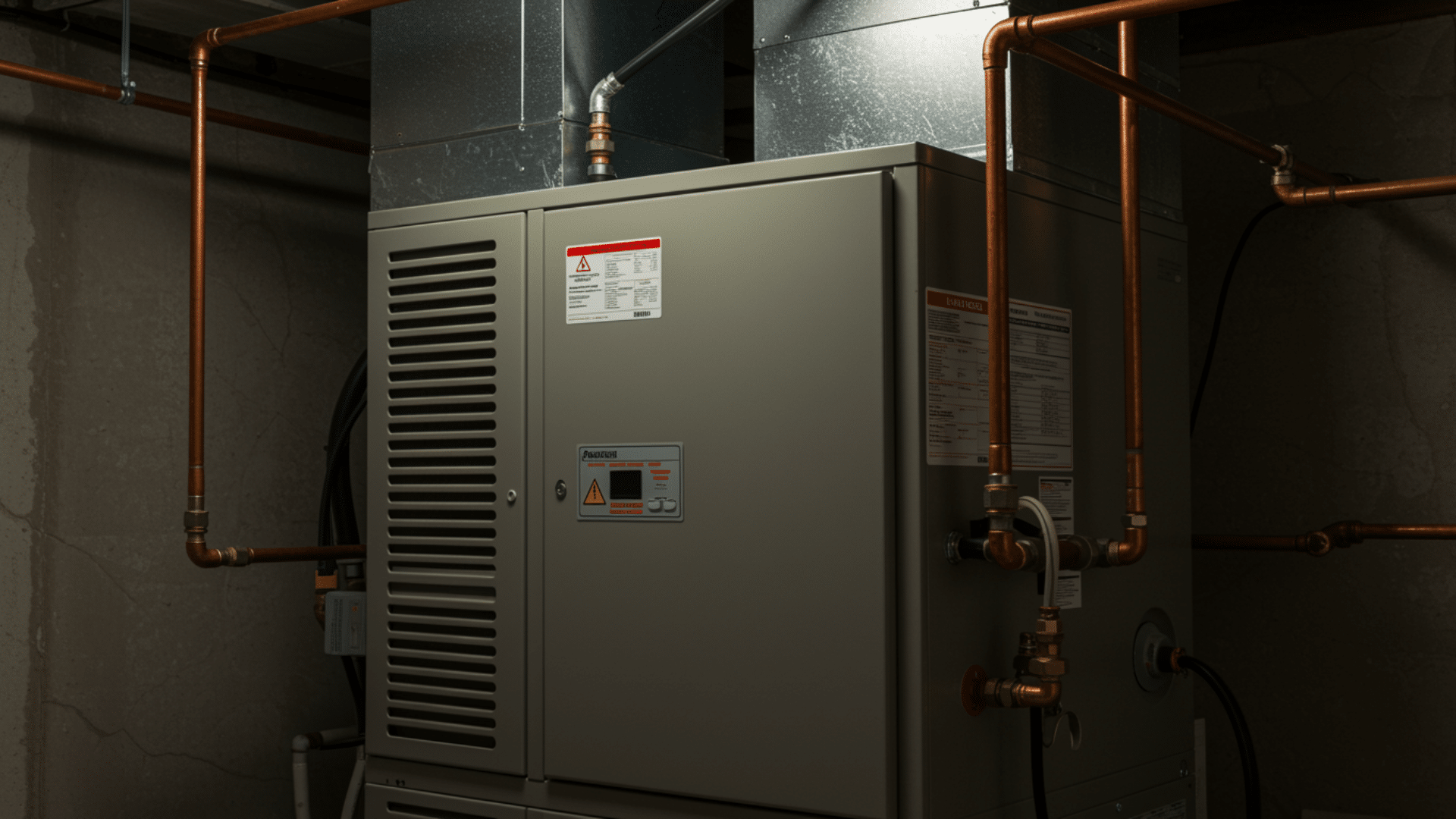
Ever wonder what that large metal box in your basement actually does? Most people walk past it every day without a second thought, yet it’s quietly working to keep their entire home comfortable.
When winter hits and temperatures drop, this mysterious machine kicks into action.
But here’s the interesting part: not all furnaces work the same way, and the type you have affects everything from your energy bills to how warm your bedroom feels on a freezing night.
So, what exactly is a furnace? The answer might surprise you more than you’d expect.
How a Furnace Heats Your Entire House?
A furnace in a house serves as the central heating system, warming your entire home during cold weather.
Typically located in the basement, attic, or utility closet, this essential appliance generates heat and distributes it through ductwork to every room.
The furnace serves as your home’s heat source, burning fuel (such as natural gas or oil) or using electricity to generate warmth. Once heated air is produced, a blower fan pushes it through vents, maintaining comfortable indoor temperatures.
Think of it as your home’s heating heart working behind the scenes to keep everyone cozy and warm throughout the winter months.
Key Furnace Parts and Components
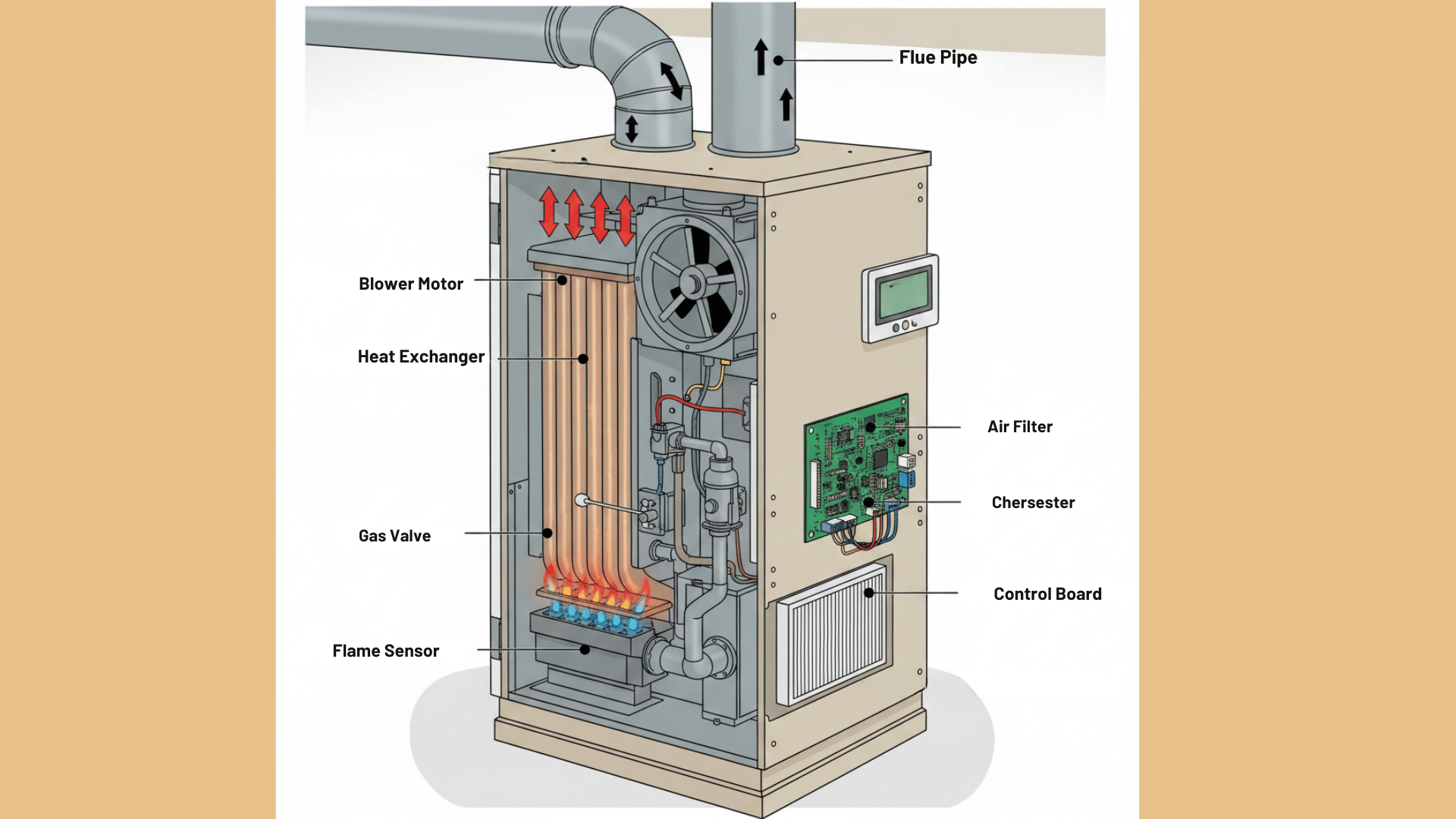
Understanding what a furnace is means knowing its key components that work together to heat your home safely and efficiently:
- Heat exchanger: Safely warms the air without mixing in combustion gases, ensuring your family breathes clean, heated air throughout the home.
- Burner: Ignites natural gas or oil to generate the heat needed, creating flames that warm the heat exchanger for distribution.
- Blower motor: Distributes heated air through your ductwork to every room, maintaining a consistent temperature and comfortable airflow throughout your space.
- Thermostat: Controls when heating cycles start or stop based on your temperature settings, acting as the command center for home comfort.
- Flue pipe: Vents dangerous combustion gases and carbon monoxide outside your home, protecting your family from harmful fumes and ensuring safe operation.
- Control board: Coordinates all furnace operations electronically, like a brain, processing sensor signals and managing heating sequences efficiently.
- Combustion chamber: Contains the high-temperature flames where fuel burns, providing a reinforced space that directs heat safely to the exchanger.
- Gas valve: Regulates the flow of fuel to the burner, opening and closing in response to heating demands to ensure proper combustion and energy efficiency.
- Flame sensor: Detects the presence of flames and immediately shuts off gas if ignition fails, preventing dangerous gas leaks and ensuring safe operation.
- Air filter: Captures dust, debris, and airborne particles before they circulate, protecting your equipment and improving your home’s overall air quality.
Choose the Right Furnace Fuel for Your Home
When learning about what a furnace is in a house, you’ll see different fuel options available. Each type has unique benefits depending on your location, budget, and energy availability.
| FURNACE TYPE | FUEL SOURCE | BEST FOR |
|---|---|---|
| Gas Furnace | Natural gas | Homes with gas line access, lower operating costs |
| Electric Furnace | Electricity | Areas without gas availability, easier installation |
| Oil Furnace | Heating oil | Rural areas, properties with oil tank storage |
| Propane Furnace | Propane gas | Remote locations, backup heating systems |
How a Gas Furnace Works Step by Step
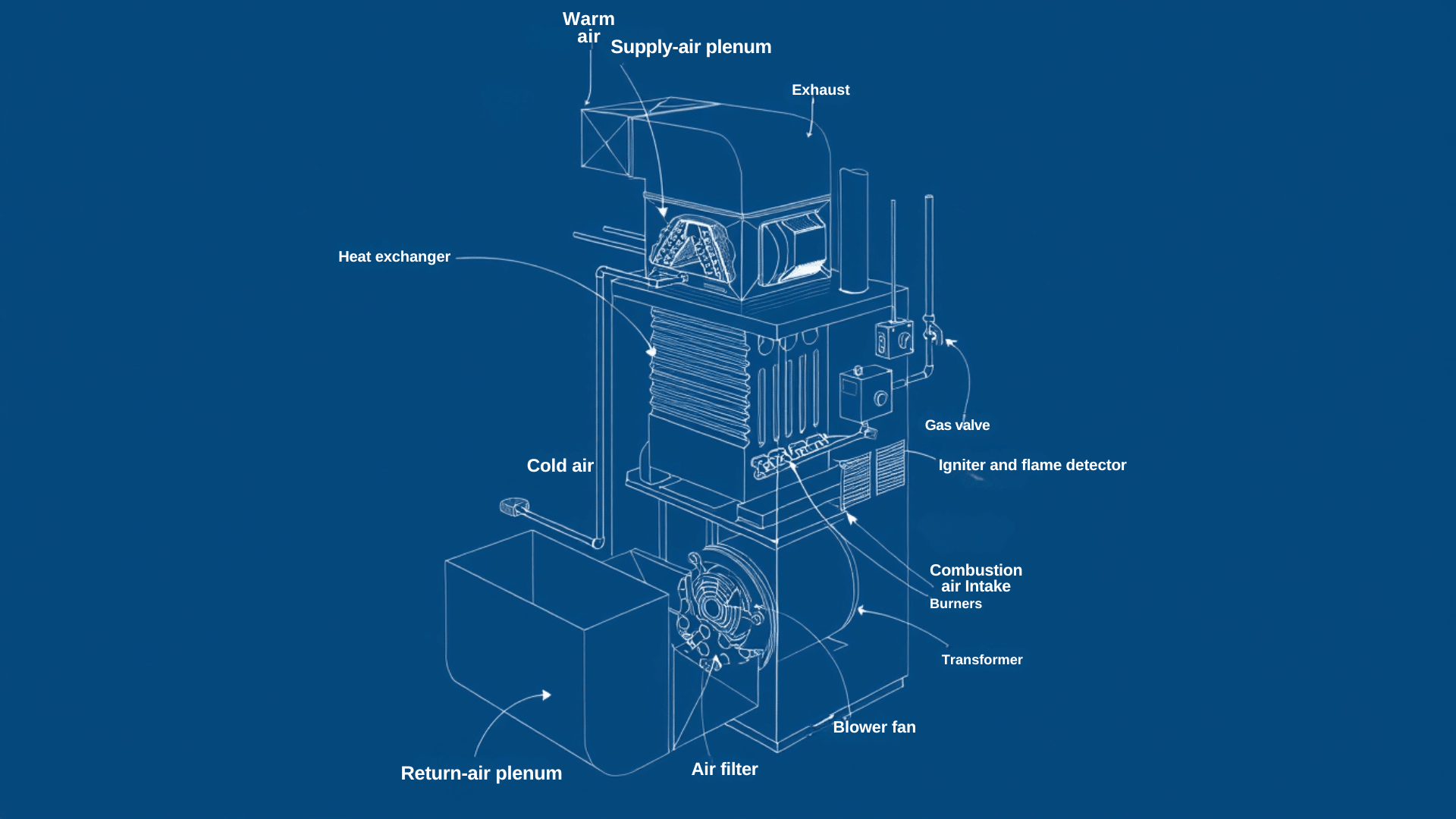
Understanding how a furnace operates helps you appreciate how this system keeps your home warm. A gas furnace follows a precise sequence to generate and distribute heat safely.
Step 1: Thermostat Signals the Need for Heat
When your home’s temperature drops below the thermostat setting, it sends an electrical signal to the furnace control board.
This signal activates the heating sequence, telling the system it’s time to warm things up. The control board then begins coordinating all components, preparing them for the heating cycle ahead.
Step 2: Gas Valve Opens and Ignition Begins
The gas valve receives instructions from the control board and opens to release natural gas into the combustion chamber.
An electronic igniter or pilot light creates a spark that ignites the gas, producing flames. Within seconds, the burner assembly is fully lit and ready to generate heat for your home’s comfort.
Step 3: Heat Exchanger Warms the Air
Flames from the burner heat up the metal heat exchanger, which becomes extremely hot. Cool air from your home passes around this heated exchanger, warming up without ever touching combustion gases.
This separation ensures clean, safe air circulates throughout your living spaces while maintaining efficient heat transfer.
Step 4: Blower Motor Distributes Heated Air
Once the heat exchanger reaches the proper temperature, the blower motor kicks in. This powerful fan pulls air through the furnace and pushes it into your ductwork system.
Warm air then flows through vents in every room, raising temperatures and creating comfortable conditions throughout your entire house.
Step 5: Exhaust and Cycle Completion
Combustion creates harmful byproducts that the flue pipe safely vents outside your home. Meanwhile, your thermostat continuously monitors room temperature.
When the desired warmth is reached, the system signals it to stop. The gas valve closes, flames extinguish, and the blower clears remaining warm air before shutting down completely.
The entire heating process repeats automatically whenever your home needs warmth. This efficient cycle maintains consistent temperatures without requiring manual intervention.
Different Furnace Staging Types
Not all furnaces operate the same way when heating your home. Understanding what is a furnace staging system helps you choose the right efficiency level for your needs. Here’s how different staging options affect performance:
- Single-stage furnaces: Run at full power every time they turn on, providing consistent heat output but less flexibility. These basic models work on a simple on-off system, making them the most affordable option for homeowners.
- Two-stage furnaces: operate at low capacity during mild weather and at high capacity during extreme cold. This flexibility reduces energy waste and maintains more stable temperatures throughout your living spaces.
- Modulating furnaces: Adjust heat output in small increments from 40% to 100% capacity based on precise heating demands. They provide the most consistent comfort and the highest efficiency ratings available today.
- Variable-speed blowers: Work with multi-stage systems to precisely control airflow, reducing noise and improving air circulation. These motors run more efficiently than standard blowers, significantly lowering electricity costs.
- Smart staging benefits: Multi-stage furnaces reduce temperature swings, lower utility bills, and extend equipment lifespan through gentler operation cycles.
What Makes a Furnace Different from Other Heating Options
When deciding what is furnace best for compared to other heating options, understanding key differences matters. Each system has unique characteristics that affect installation, operation, and comfort levels.
| Heating System | Heat Distribution | Energy Source | Best Application |
|---|---|---|---|
| Furnace | Forced air through ducts | Gas, oil, electric, propane | Whole-home heating, quick warmth |
| Boiler | Hot water through radiators/pipes | Gas, oil, electric | Radiant heat, older homes |
| Heat Pump | Air transfer (heating & cooling) | Electricity | Mild climates, dual functionality |
| Space Heater | Direct room heating | Electric, propane | Small areas, supplemental heat |
How Furnace Efficiency Affects Heating Costs
Furnace efficiency measures how well your system converts fuel into usable heat for your home. The AFUE (Annual Fuel Utilization Efficiency) rating shows this percentage higher numbers mean better performance.
Standard furnaces operate at 80% AFUE, wasting 20% of fuel through exhaust. High-efficiency models reach 90-98% AFUE by capturing more heat before venting. These advanced units cost more upfront but significantly reduce monthly heating bills.
Your climate and usage patterns determine whether upgrading makes financial sense. Cold regions with long winters benefit most from high-efficiency systems, while milder areas may not recoup the investment quickly.
Common Furnace Problems People Face
Even well-maintained furnaces experience issues that affect heating performance. Recognizing these common problems helps you address them quickly before they worsen.
- Dirty air filters: Clogged filters restrict airflow, forcing your system to work harder and potentially overheat. Replace filters every 1-3 months to maintain proper operation and efficiency.
- Thermostat malfunctions: Incorrect settings or dead batteries prevent your furnace from receiving proper heating signals, leading to inconsistent temperatures throughout your home.
- Ignition failures: Faulty igniters or pilot lights stop the burner from lighting, leaving you without heat during cold weather when you need it most.
- Blower motor issues: Worn bearings or electrical problems cause the blower to run constantly, stop working entirely, or make loud grinding noises.
- Cracked heat exchanger: This serious safety concern allows combustion gases to mix with household air, requiring immediate professional repair or replacement.
Conclusion
Now you know what a furnace is and how its parts work together to heat your home. From the heat exchanger to the thermostat, each component keeps you comfortable and safe.
Understanding your furnace helps you maintain it properly and catch problems early. Regular maintenance ensures efficient operation and prevents breakdowns during cold weather.
Don’t wait until winter hits; schedule a professional inspection today to keep your heating system running smoothly all season long.