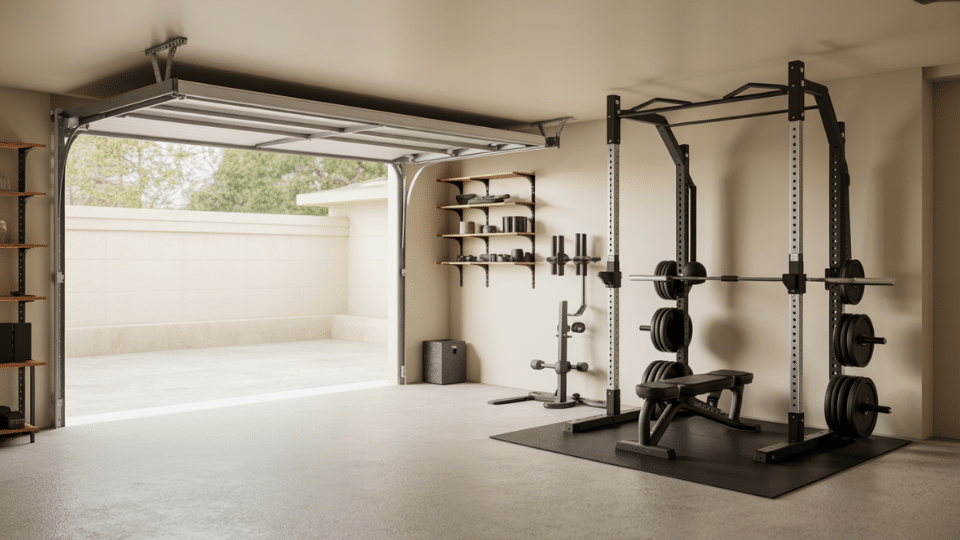
I’ve spent years helping fitness enthusiasts change cramped garages into powerful training environments. Most people think they need an entire garage to build a proper gym, but that’s simply not true.
Today, I’m sharing half garage gym ideas that prove you can create an exceptional workout space while keeping room for your car, tools, and storage.
These garage gym setup strategies combine smart design with practical functionality, turning limited square footage into your personal fitness sanctuary without compromise.
How to Plan a Half Garage Gym?
Planning a half garage gym setup starts with choosing the right section of the garage and defining fitness goals. Consider which half offers better lighting, ventilation, and clearance for movement.
Decide whether the focus is strength training, cardio, or a mix of both. Next, plan the layout by creating zones, one for weights and another for cardio equipment.
Install rubber tiles or stall mats for flooring to protect the concrete and absorb impact. Ensure proper ventilation to keep the space comfortable during workouts.
Add adequate lighting for safety and visibility. Smart planning turns a compact garage space into a fully functional training area that meets specific fitness needs.
Creative and Easy Half Garage Gym Ideas
Here are easy-to-incorporate half garage gym ideas that blend creativity, practicality, and style. Perfect for maximizing limited space while building a motivating, functional workout zone at home.
1. Fold-Away Functional Gym
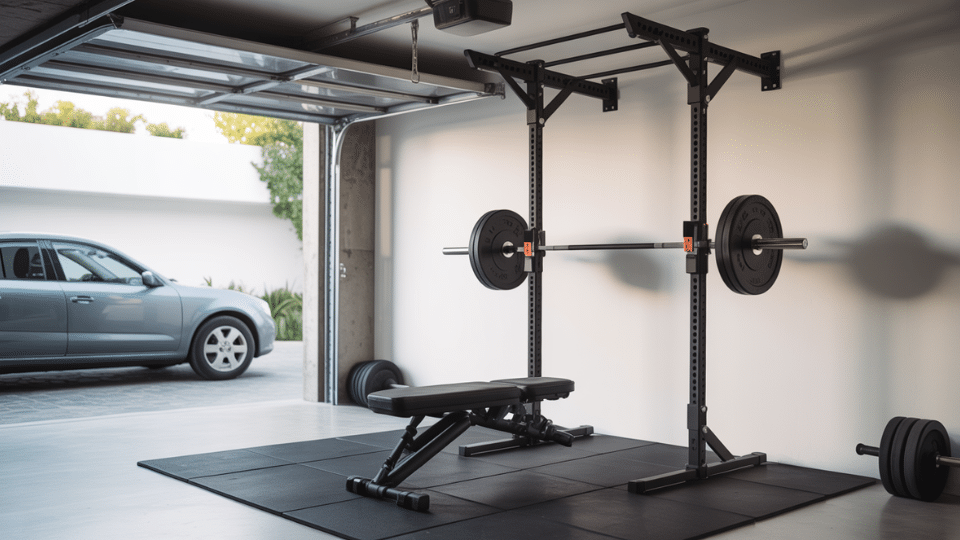
A foldable wall-mounted squat rack, pull-up bar, and collapsible bench create a complete training station that folds flat against the wall when not in use.
It’s a perfect solution for shared garages, offering serious workout capability without occupying permanent space. Durable, compact, and sleek, it lets you lift heavy, then reclaim your garage instantly for cars, tools, or projects.
2. Compact Cardio Corner
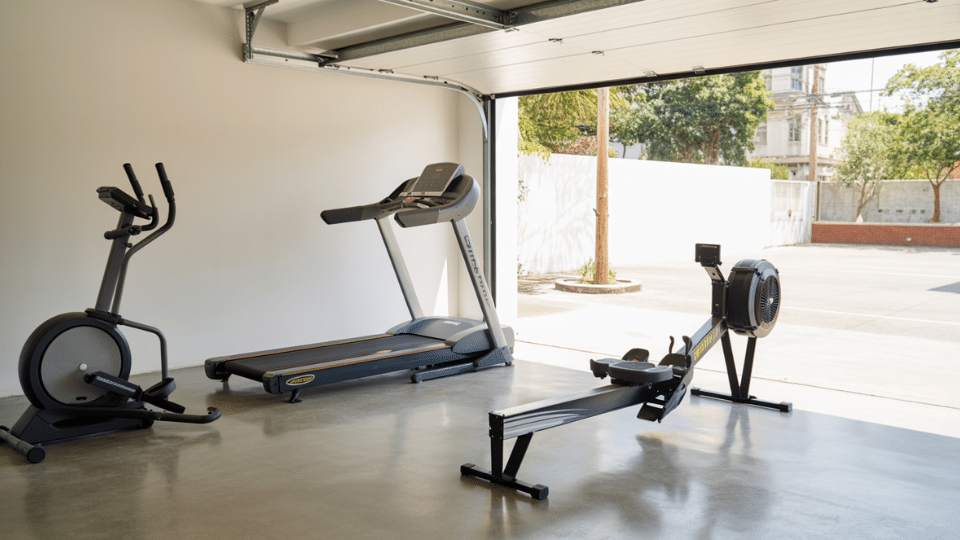
Dedicate one corner of your garage to a compact cardio station featuring a foldable treadmill, air bike, or upright rower.
Each machine is stored vertically or on wheels, keeping the area clutter-free. It’s designed for high-intensity sessions in tight spaces, maintaining a balanced look between fitness and function while preserving room for storage or parking.
3. Dual-Use Wall (Gym and Storage)
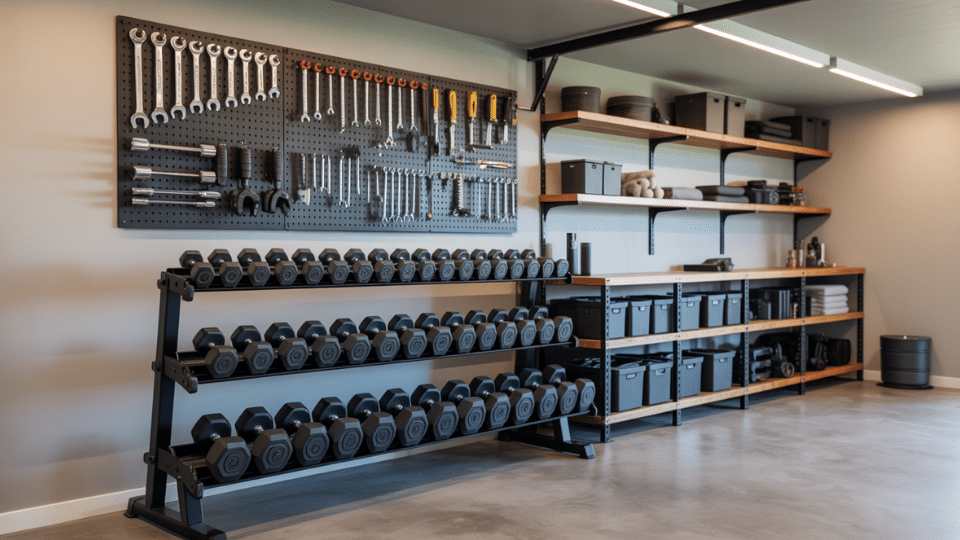
Combine two essentials, fitness and storage, on a single wall. One section neatly holds weights, resistance bands, and attachments, while the other organizes tools and garage essentials.
Slat walls, shelving, and pegboards create symmetry and efficiency. This design ensures your gym feels integrated, tidy, and stylish without compromising on everyday functionality or space.
4. Hybrid Fitness and Mobility Zone
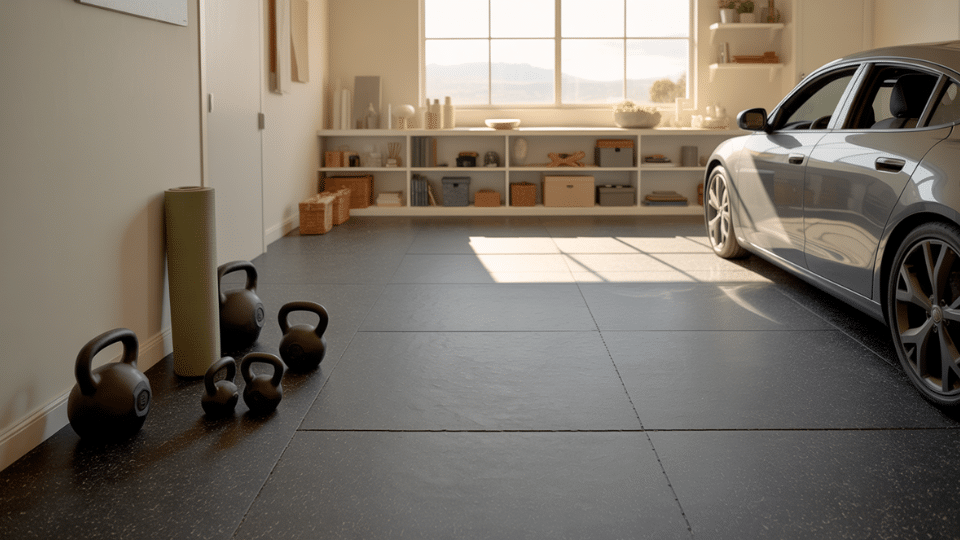
Change half your garage into a flexible, rubber-floored zone for strength, yoga, or mobility work. Keep the layout open with light, portable equipment that moves easily.
This dual-purpose space supports both performance and recovery, offering a balanced home gym that adapts to your routine while preserving room for vehicles and storage.
5. Vertical Rack and Overhead Storage
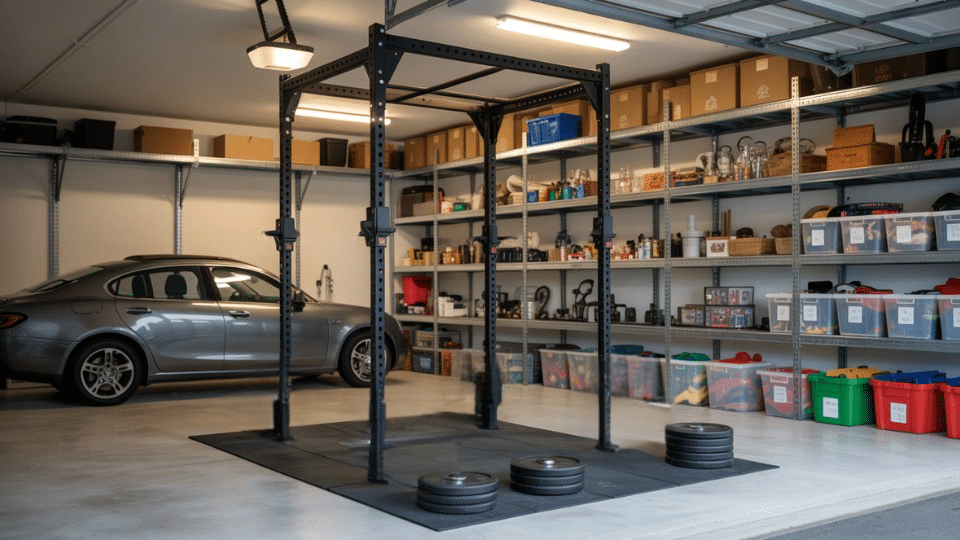
Stack functions vertically by pairing a half rack below with overhead storage shelves. The result is an efficient, layered design that maximizes space while keeping gym gear organized and accessible.
Overhead bins store tools or boxes, while the rack provides full lifting capability. Ideal for garages that need strength, order, and clean aesthetics.
6. Calisthenics and Suspension Setup
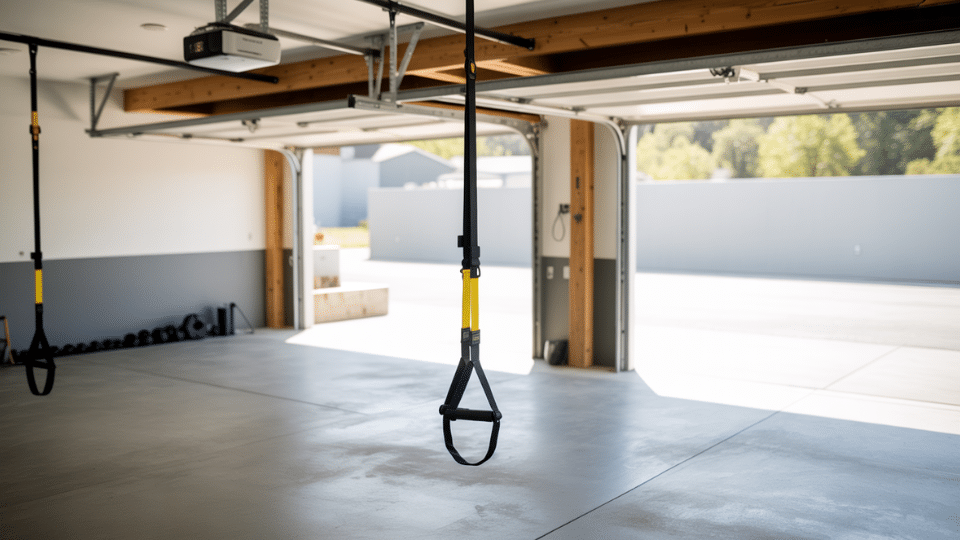
Mount a ceiling pull-up bar and TRX or gymnastic rings for a minimalist bodyweight setup that uses zero floor space. This configuration allows versatile, full-body workouts without heavy equipment.
When you’re done, unclip and store everything in seconds. Perfect for small garages, it keeps your environment clear, functional, and visually balanced.
7. Window-Side Wellness Nook

Use a bright corner of the garage near a window for light training and stretching. Equip it with mats, kettlebells, or bands to make the most of natural light and open air.
The result feels calm and energizing, part yoga space, part gym, blending lifestyle and design for a refreshing, uplifting environment.
8. Functional Split Layout
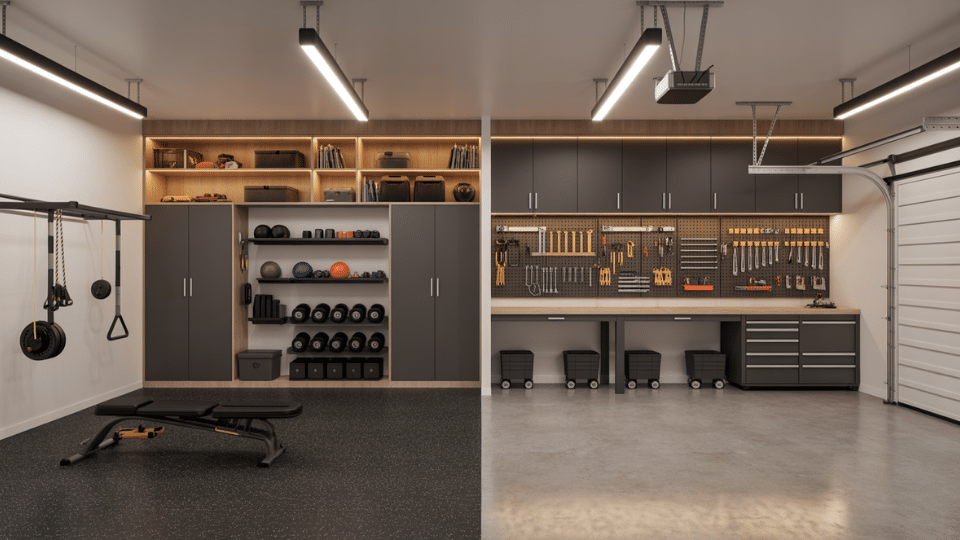
Physically divide your garage into two defined zones, one for fitness, one for storage or workshop use. Contrasting flooring or lighting makes each section distinct yet harmonious.
This balanced setup maintains order and flow, allowing your gym and workspace to coexist seamlessly without clutter or loss of utility on either side.
9. Gym-Recovery Combo
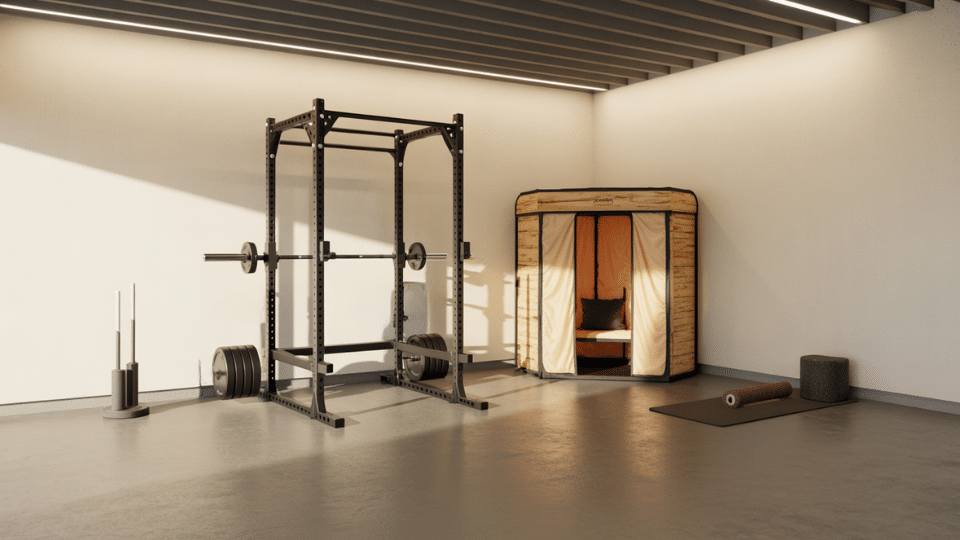
Integrate recovery right beside your training gear. Add a compact sauna tent, ice bath, or massage station next to your rack or bench.
This complete wellness corner encourages balance between intensity and restoration, fitting perfectly in limited garages. It changes a simple home gym into a holistic space for strength, relaxation, and rejuvenation.
10. Turf Strip Training Zone
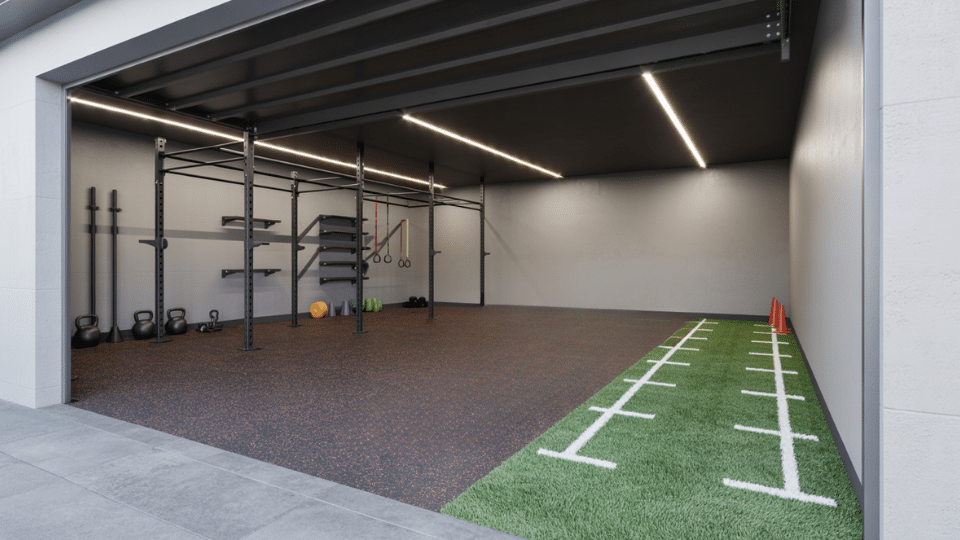
Lay a narrow turf strip down one side of your garage for sled pushes, mobility drills, or agility training. The bright texture adds energy and function while keeping the rest of the floor clear for vehicles or work.
It’s durable, low-maintenance, and ideal for athletes seeking variety in compact home gyms.
11. Convertible Yoga and Strength Setup
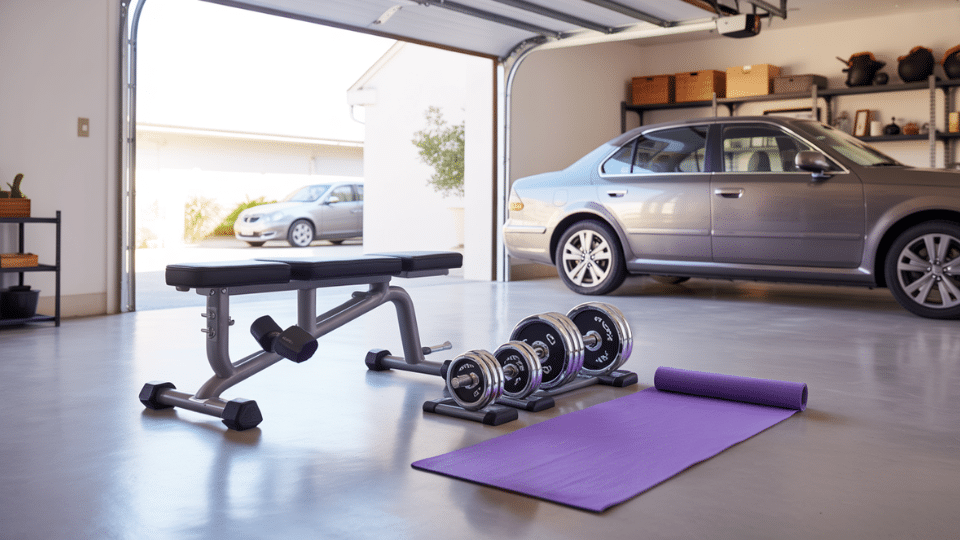
Use foldable benches, adjustable dumbbells, and rolling storage to effortlessly switch between yoga flow and resistance training.
The layout stays lightweight and mobile, perfect for shared garages. It offers freedom, flexibility, and design harmony, a home gym that adapts instantly to your workout or relaxation mood.
12. Adjustable Dumbbell and Bench System
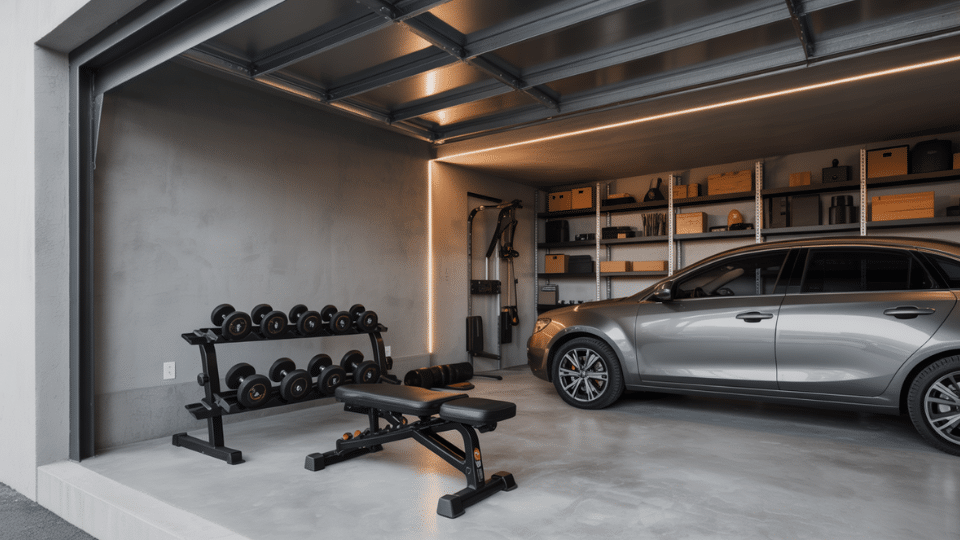
One adjustable bench and a single pair of adjustable dumbbells can replace a full rack of weights. This compact system keeps your gym tidy while covering all major exercises.
It’s efficient, stylish, and ideal for people who value minimalism without sacrificing versatility or performance in limited garage space.
13. Pegboard and Grip Wall
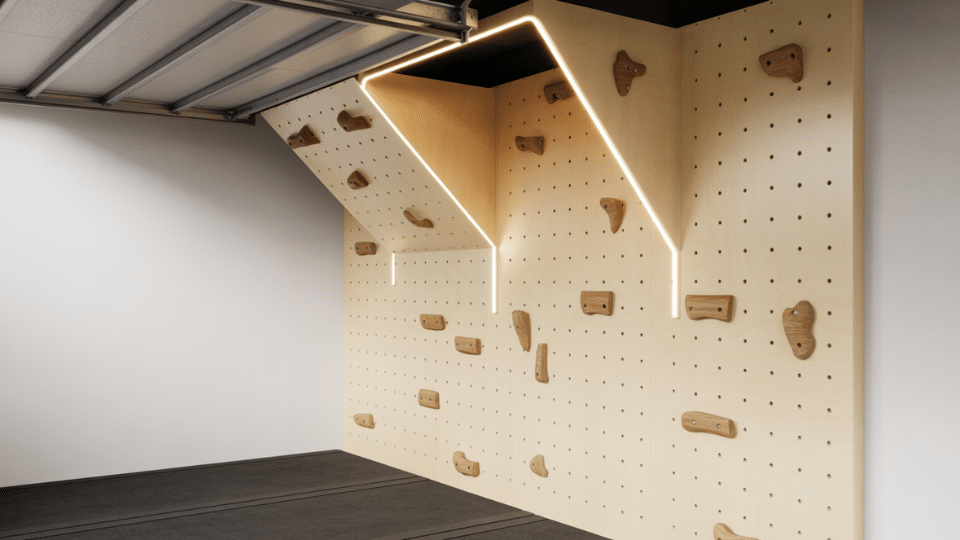
Add a vertical pegboard turn climbing grip wall for upper-body and core training. It challenges balance, grip, and coordination while freeing up floor space.
This design-forward element also adds visual texture, turning a simple garage wall into a striking, functional workout feature that’s engaging and uniquely personal.
14. Home-Studio Hybrid
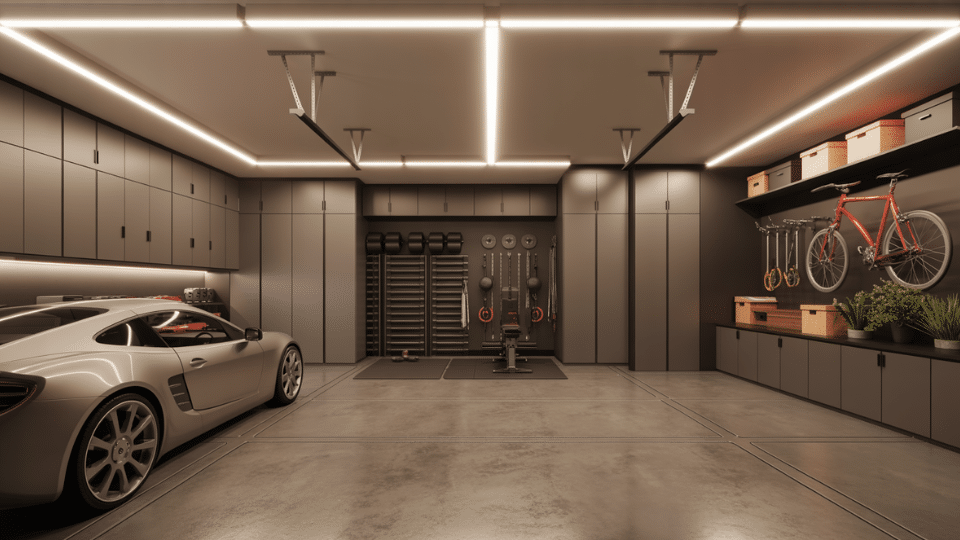
Blend performance and polish by adding mirrors, LED lighting, and sleek cabinets. This approach turns your garage gym into a designer studio, bright, clean, and motivating.
It proves that functionality can be beautiful, creating a fitness space that inspires consistency and pride while fitting seamlessly with your home’s aesthetic.
15. Mirror Wall Expansion
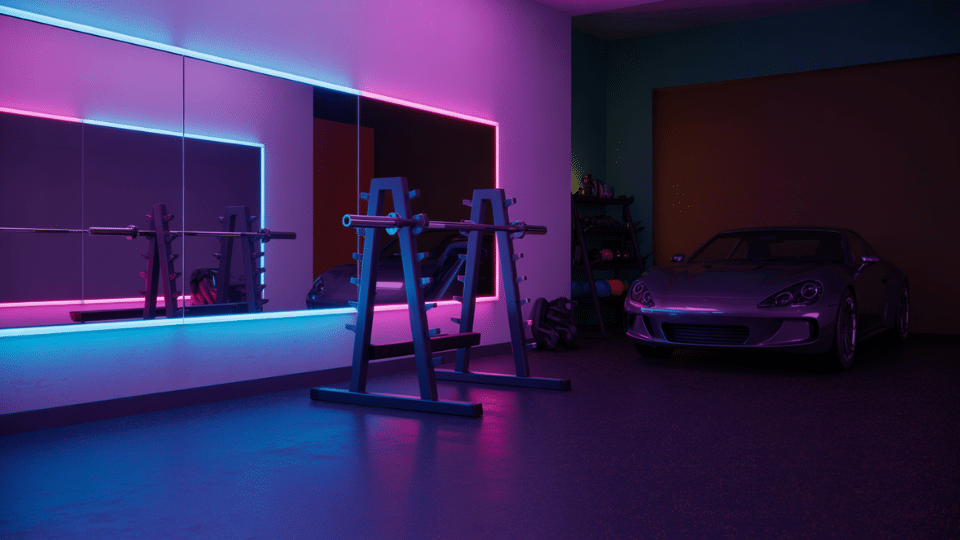
Line one wall of your gym area with full-height mirrors to expand the space visually and amplify the glow of your ambient lighting.
The reflections improve both brightness and depth, creating a dynamic atmosphere that feels open, modern, and motivating. It’s a simple upgrade that turns your garage into a professional, inspiring fitness zone
16. Smart Wall Gym (Digital System)
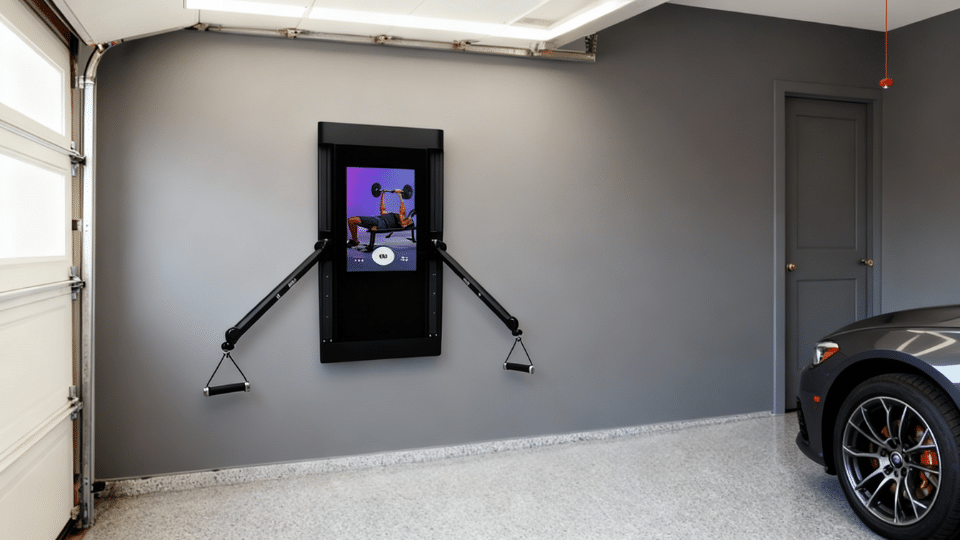
Install a wall-mounted digital training system like Tonal or Tempo. It provides guided resistance workouts with adjustable load, built-in coaching, and zero clutter.
Perfect for tech-savvy users, this system combines intelligent programming and sleek design, modifying an unused wall into a fully interactive, space-saving fitness hub.
17. Rolling Equipment Platform
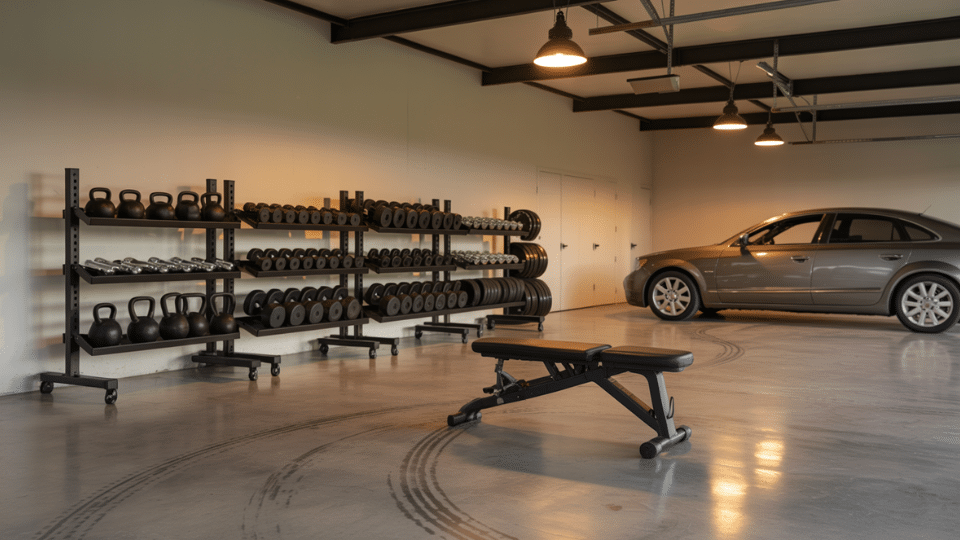
Mount your gym essentials, bench, plates, and kettlebells on wheeled carts or low platforms. When finished, simply roll them against the wall to free the floor.
This mobile setup suits shared garages perfectly, providing full workout flexibility without ever compromising access, organization, or overall garage function.
18. Clean Industrial Zone
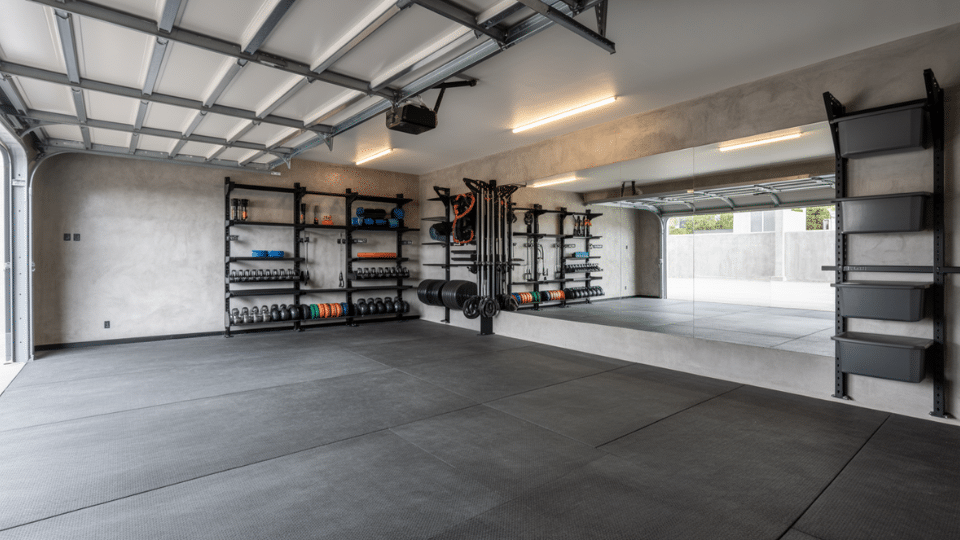
Adopt a clean industrial aesthetic using grey rubber tiles, metal shelving, and hidden storage bins. It’s simple, durable, and visually cohesive, integrating seamlessly with the garage’s functional nature.
The neutral palette and organized layout project calm efficiency, creating a gym that’s rugged yet refined for everyday workouts.
19. Family-Friendly Convertible Gym
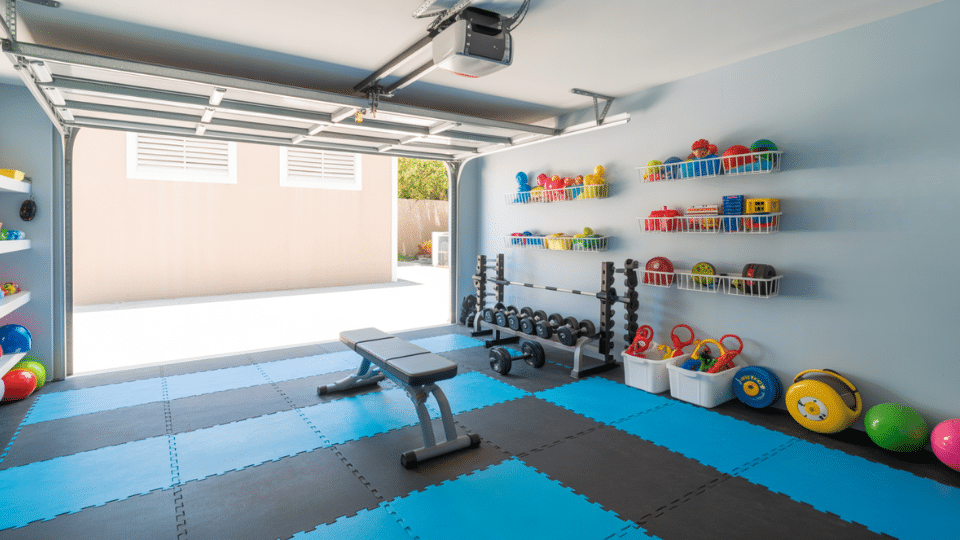
Design your gym with soft flooring, rounded corners, and adjustable equipment to make it safe for family use. Everything stores neatly when not needed, allowing the space to shift between workouts and playtime.
It’s approachable, comfortable, and ideal for families prioritizing wellness without sacrificing safety or flexibility.
Community Advice for Half Garage Gym Setup
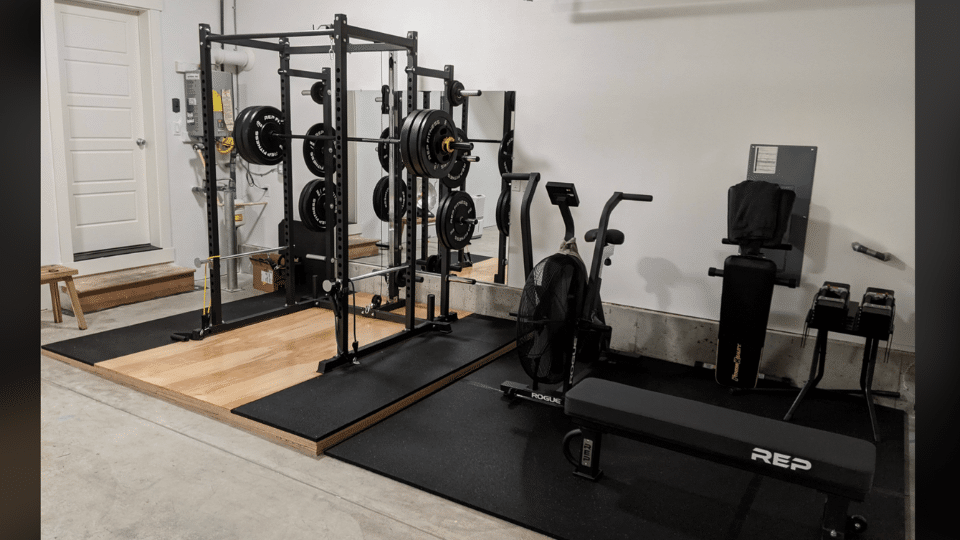
Below are the advice and experiences shared by people on Reddit and Facebook communities who have built, or wish to build, a gym in their garage.
1. What’s the first step when planning a half-garage gym?
Begin by measuring the usable space, noting width, depth, and ceiling height, plus any obstructions. This helps you pick equipment that actually fits your layout.
2. How should you decide on equipment for your garage gym?
Determine your primary fitness goal (strength, cardio, mixed) and choose compact multi-functional gear accordingly. Prioritize essentials rather than filling the space with lesser-used machines.
3. What flooring considerations matter in a half‐garage gym?
Concrete floors need protective cushioning; rubber mats or horse-stall mats reduce impact, noise, and equipment wear. They also make the space more comfortable.
4. When you’re on a budget, how can you save on building your home gym?
Buy used equipment, repurpose items you already have, DIY storage or mats, and build gradually rather than all at once.
5. Why is ventilation and climate control important in a garage gym?
Garages often lack insulation; without proper airflow, you’ll deal with extreme temperatures or poor air quality during workouts. Fans, vents, or heating help.
6. How can you maximise floor space in a limited half‐garage gym?
Use vertical storage (hooks, wall racks), foldable equipment, designate clear zones, keep the central floor open for movement, and use mirrors to make the space feel larger.
7. What mindset helps you maintain usage of your home gym?
Treat it as a dedicated space: clear clutter, personalize it (motivational décor), keep the layout simple and usable, and build the habit of going without excuses.
The Bottom Line
Creating a functional half garage gym setup doesn’t require sacrificing your entire garage.
I’ve shown you how strategic planning, vertical storage, and multi-purpose equipment modify compact spaces into effective training areas.
These half garage gym ideas prove that size limitations don’t limit your fitness potential. Start by defining your fitness goals, measuring your available space, and building gradually.
Take the first step today by measuring your space and selecting one foundational piece of equipment. You’ll soon have a personalized training area right at home.